
The United States healthcare system is often viewed as a paradox of world-leading medical innovation and staggering financial inefficiency. While the U.S. Spends more on healthcare per capita than any other nation, a significant portion of these resources is leaked through a complex web of fraud, bribery, and systemic corruption. For those of us in the global medical community, the American model provides a cautionary tale of what happens when profit incentives are decoupled from patient outcomes.
At the heart of this issue is not merely the occasional “bad actor” but a structural vulnerability. From the strategic “upcoding” of patient records to multi-billion dollar pharmaceutical settlements, corruption in American healthcare has evolved into a sophisticated corporate strategy. For many large entities, the legal penalties associated with fraud are no longer deterrents. they are simply the cost of doing business.
As a physician and journalist, I have observed that the American approach to healthcare enforcement creates a stark, two-tiered system of justice. On one side are the “amateurs”—individual practitioners or modest clinics who are often sentenced to decades in prison for Medicare fraud. On the other side are the industry giants, who navigate their transgressions through deferred prosecution agreements and financial settlements that, while appearing massive, often represent only a fraction of the profits generated by the illicit activity.
The Two-Tiered System of Healthcare Justice
The disparity in how the U.S. Government handles healthcare fraud is most evident when comparing individual prosecutions to corporate settlements. Small-scale providers who invent fake patients or bill for services not rendered frequently face severe criminal penalties. However, when the fraud is systemic and corporate, the legal mechanism shifts from the criminal courtroom to the negotiation table.

The pharmaceutical industry provides the most glaring examples of this trend. For years, several of the world’s largest drug companies have settled allegations regarding the off-label promotion of medications—marketing drugs for uses not approved by the Food and Drug Administration (FDA). In 2012, GlaxoSmithKline (GSK) paid $3 billion to resolve criminal and civil liabilities related to the promotion of certain prescription drugs and failure to report safety data. Similarly, Pfizer and Johnson & Johnson have both entered into settlements exceeding $2 billion for similar promotional misconduct.
This pattern extends to hospital management. HCA Healthcare, one of the largest operators of hospitals and surgery centers in the U.S., faced a series of massive settlements in the late 1990s and early 2000s totaling approximately $1.7 billion over allegations of fraudulent billing practices. These cases highlight a recurring theme: when the scale of the fraud is large enough, the entity becomes “too big to jail,” and the resolution is almost always financial rather than carceral.
The Mechanics of Upcoding in Medicare Advantage
While pharmaceutical fraud often makes the headlines, a more insidious form of corruption has emerged within the Medicare Advantage (MA) programs. These are private insurance plans that contract with the government to provide Medicare benefits. The financial incentive for these plans is tied to the Risk Adjustment Factor (RAF), a score that determines how much the government pays the plan based on the perceived health status of the patient.
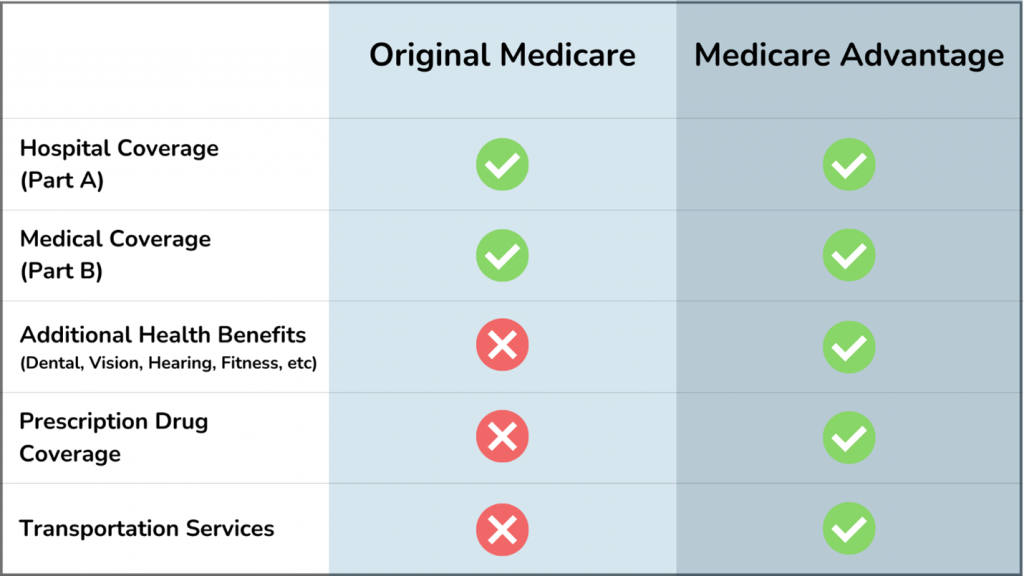
The corruption occurs through a process known as “upcoding.” This happens when a plan exaggerates a patient’s health complications to increase their RAF score, thereby triggering higher payments from the Centers for Medicare & Medicaid Services (CMS) without actually providing additional care. The Department of Justice (DOJ) and HHS have repeatedly identified instances where plans were paid for “sicker” patients who were, in reality, stable or healthy.
The scale of this issue is immense. Investigations, including those reported by the Wall Street Journal, have suggested that billions of dollars in overpayments may have been generated through these practices. For example, when a large medical group is acquired by a major insurer, there is often a sudden, unexplained spike in the average RAF score of the patient population—suggesting a systematic effort to maximize government reimbursement rather than a sudden decline in patient health.
The challenge for regulators is that auditing these claims is incredibly resource-intensive. When CMS attempts to recover overpayments, they often face protracted legal battles. In some instances, court rulings have limited the government’s ability to impose broad fines, requiring them instead to audit individual cases—a process that is often too slow to keep pace with the speed of corporate billing.
When Fines Become a Business Expense
The fundamental failure of the current enforcement regime is the “Return on Investment” (ROI) for fraud. If a company generates $20 billion in additional revenue through an illegal billing scheme but settles the resulting lawsuit for $100 million, the “fine” is effectively a 0.5% tax on their illicit gains. This creates a perverse incentive to continue the fraud.
A poignant example of this can be seen in the case of electronic medical record (EMR) vendors. Practice Fusion, a provider of EMR software, entered into a $154 million settlement in 2020 to resolve allegations that it accepted payments from Purdue Pharma to nudge doctors toward prescribing OxyContin. While the fine was substantial, it underscores how deeply corporate interests can penetrate the clinical tools doctors use daily, potentially compromising patient safety for financial gain.
This “cost of doing business” mentality erodes trust in the healthcare system. When executives are not held personally accountable—through prison sentences or permanent bans from the industry—there is little reason for the corporate culture to change. The result is a system where the “little guy” is punished to create the illusion of enforcement, while the systemic architects of fraud remain untouched.
Reimagining the Financial Architecture of Care
To truly combat corruption in American healthcare, the focus must shift from punishing individual symptoms to curing the systemic disease. The current “fee-for-service” or “fee-for-transaction” model is a breeding ground for fraud because it incentivizes volume over value. Every additional test, procedure, or diagnosis code represents a potential payment.
A more resilient structure would be a shift toward a government-financed flat-fee system or a capitated payment model. In this scenario, a provider or organization is paid a fixed annual amount to manage the total care of a patient. This flips the incentive: instead of benefiting from “upcoding” or unnecessary procedures, the provider benefits from keeping the patient healthy and avoiding expensive, unnecessary interventions.
We have already seen the potential for this in certain Accountable Care Organizations (ACOs), where providers are held responsible for the total cost of care. When a provider is financially responsible for a patient’s outcome, they are far more likely to identify and stamp out fraudulent subcontractors or unnecessary, high-cost treatments that do not improve health.
However, structural change requires a cultural shift. The underlying ethics of healthcare must return to the clinical oath: the patient’s well-being must be the sole priority. This requires removing the profit motive from the core delivery of essential health services. When healthcare organizations operate on fixed budgets and staff are paid salaries rather than bonuses based on billing volume, the incentive to commit fraud vanishes.
The path forward is not simply more audits—though those are necessary—but a fundamental redesign of how care is funded. Until the financial reward for fraud is lower than the risk of prosecution, the cycle of “cheat, settle, and repeat” will continue to drain the resources of the American public.
The next critical checkpoint for healthcare transparency will be the upcoming annual reports from the Office of Inspector General (OIG) regarding Medicare Advantage overpayments, which will reveal whether current audit strategies are successfully recovering lost funds. We must continue to demand that accountability extends beyond the checkbook and into the boardroom.
Do you believe the current system of financial settlements is an effective deterrent for corporate healthcare fraud? Share your thoughts in the comments below or share this analysis with your professional network.
- CAR T-Cell Therapy for Autoimmune Diseases: Safe Pregnancies and Healthy Babies
- 15 Best Countries for Cancer Treatment: Top Destinations for Care
- Havenwood Heritage Heights Concord NH: Fitness Centers, Outdoor Activities, and Health Services for Seniors (news-usa.today)
- PCOS to PMOS: Why the Name Change Matters for Women’s Health (archynewsy.com)