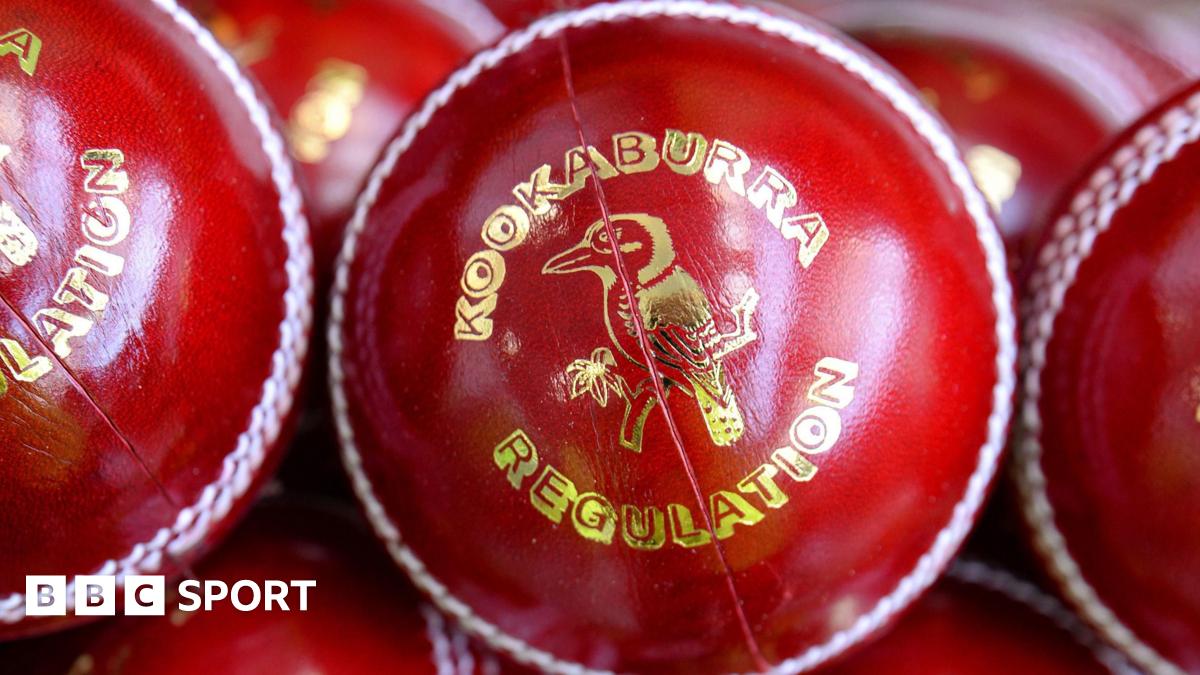
County Cricket Returns to Customary Dukes Ball After Kookaburra Experiment Fails to Deliver
The England and Wales Cricket Board (ECB) has confirmed a return to exclusively using Dukes cricket balls for the County Championship, effectively ending a three-year experiment with kookaburra balls.This decision, reached by the Professional Game Committee (PGC), signals a notable shift in approach for England’s premier domestic competition.
For the past three seasons, Kookaburra balls were trialed in select rounds of matches, aiming to better prepare English players for the challenges of overseas conditions. Though, the experiment ultimately proved unpopular, largely due to a perceived imbalance favoring batters over bowlers.You’ll see the full impact reflected in the 2026 season, where all 14 rounds will be played with the traditional Dukes ball.
Why the Change? A Batting Paradise Emerged
The core issue stemmed from the characteristics of the two ball types. Dukes balls, hand-stitched and renowned for their seam movement, traditionally offer more assistance to bowlers. Conversely, Kookaburra balls are machine-made and commonly used in australia, New Zealand, and South Africa, generally softening quicker and offering less assistance.
This difference translated into markedly higher scores during Kookaburra rounds.Consider these points:
* Average first-innings totals soared to 430 during Kookaburra matches earlier this summer.
* An notable 59 individual centuries were recorded.
* Surrey posted a staggering 820-9 declared against Durham, highlighting the batting dominance.
While the intention was to encourage faster bowling and a greater role for spin, the reality was often less compelling cricket. Though spin bowlers did deliver more overs, the overall effect was a noticeable decline in competitive balance.
The Experiment’s Origins and Limited Success
The introduction of the Kookaburra ball began modestly with two rounds in 2023,expanding to four rounds in both 2024 and 2025. The underlying theory was sound – exposing players to different conditions would enhance their adaptability. However, the resulting run-fests didn’t align with the desired outcome of developing well-rounded cricketers.
Ultimately, directors of cricket from all 18 first-class counties voiced their preference to discontinue the trial in October, paving the way for this week’s official announcement.
Beyond the Ball: Championship Structure Remains Unchanged
This decision to revert to the Dukes ball arrives alongside the rejection of proposed changes to the County Championship’s structure. A proposed shift to a 12-team top flight and a 6-team bottom tier,with 13 matches per side,was ultimately dismissed.
Therefore, the Championship will maintain its current format:
* 10 teams in Division One.
* 8 teams in Division Two.
* All teams will play 14 matches.
This demonstrates a commitment to the existing framework, while addressing the immediate concern of ball selection to ensure a more balanced and engaging competition for players and fans alike. the return to the Dukes ball represents a clear signal that prioritizing competitive cricket remains paramount for the future of the County Championship.
Worth a look