
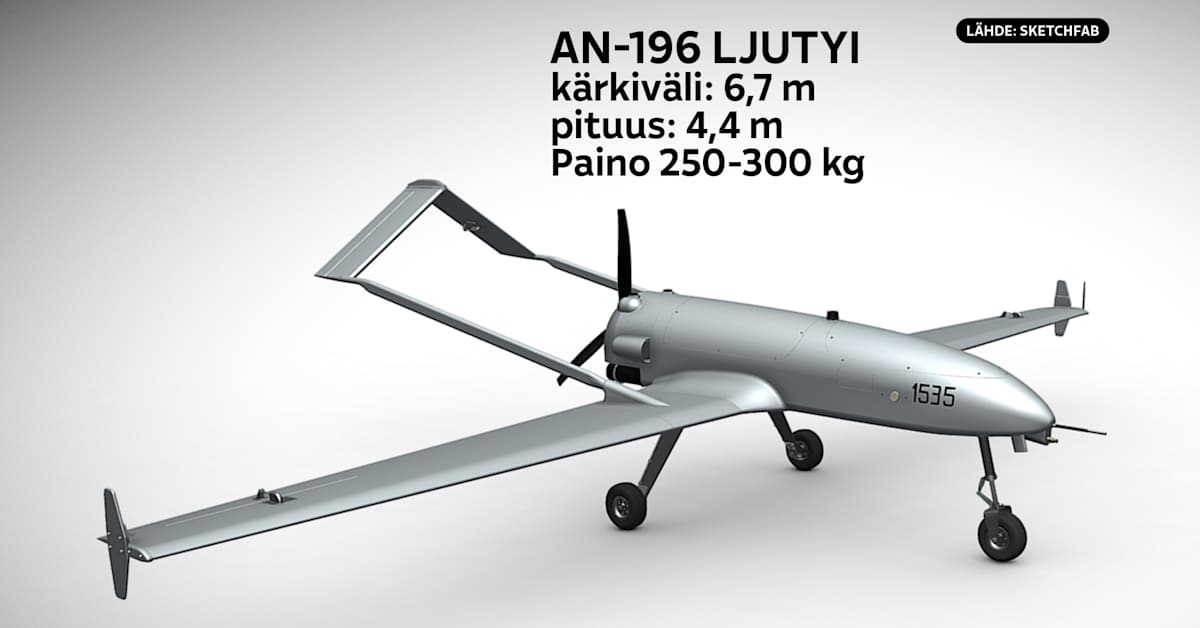
A discrepancy in the identification of a drone that crashed in Kouvola, Finland, has raised new questions about the origins and strategic implications of the incident. While initial reports identified the aircraft as a Ukrainian AN-196, a former defense official argues that the wreckage actually belongs to a smaller, cheaper model known as the Chaika.
The debate centers on a drone that fell in the Kouvola region on Sunday, March 29, 2026. According to Jyri Kosola, a former research leader for the Finnish Defence Forces and retired engineer colonel, the physical characteristics of the crashed aircraft do not align with the larger AN-196 model. Kosola’s analysis suggests that the drone that crashed in Kouvola is instead a Chaika, a distinction that fundamentally changes the understanding of where the aircraft could have been launched.
The primary point of contention is the aircraft’s range and size. While the AN-196 is capable of traveling between 1,000 and 2,000 kilometers, the Chaika has a maximum range of only 750 kilometers. This limitation means that if the drone is indeed a Chaika, it could not have been launched directly from Ukrainian territory, as the distance exceeds the aircraft’s operational capacity according to analysis provided to Yle.
Technical Differences and Identification
Jyri Kosola based his findings on a comparison between images published by the Finnish Air Force and data from open sources. He noted that the most significant difference is the overall size of the aircraft. The Chaika drone features a wingspan of 2.5 meters and is constructed from inexpensive materials. In contrast, the AN-196 is substantially larger, with a wingspan of 6.7 meters as detailed by the former research leader.

Beyond the dimensions, Kosola pointed to the structure and placement of the wings as key identifiers that separate the two models. These structural differences lead to the conclusion that the aircraft identified by some as an AN-196 is, in fact, a different model entirely. This shift in identification moves the investigation from a matter of long-range flight to a question of logistics and smuggling.
Strategic Implications of the Launch Site
The identification of the drone as a Chaika introduces a military-strategic puzzle: if the drone could not have flown from Ukraine due to its 750-kilometer range, where did it originate? Kosola suggests that the most strategically logical explanation is that the drone was smuggled into a neighboring territory before being launched.
Specifically, Kosola believes Ukraine smuggled the drone into Belarus or Russia. He notes that Ukraine has previously succeeded in smuggling drones into Russian territory, making this a viable tactic. He dismissed the likelihood of the drone being launched from the sea, arguing that the lack of terrain obstacles makes maritime launches easier to detect and monitor via Yle’s reporting.
Kosola argues that the drone was unlikely to have been launched from the territory of a country friendly to and supportive of Ukraine, as doing so would involve an “enormous risk” for the Ukrainian forces.
Details of the Kouvola Incidents
The situation in Kouvola involved more than one aircraft. On the afternoon of Sunday, March 29, the Finnish Air Force detected slow-moving objects approaching Finland’s territorial waters after 8:13. This resulted in F/A-18 Hornet fighters being deployed on an identification mission according to Ilta-Sanomat.
Two drones ultimately fell in the region: one north of Kouvola, approximately 10 kilometers from the city center, and another in Luumäki. The drone that fell north of Kouvola was the one initially identified by visual observation as a Ukrainian AN-196. The Air Force stated that this specific drone was not shot down to avoid collateral damage.
The second drone, which fell in Luumäki, was detected via radar but not seen visually. The origin of this second aircraft remains unknown. Jyri Kosola has estimated that the drone in Luumäki exploded, while residents near the northern Kouvola crash site reported hearing explosion sounds during the night between Sunday and Monday as reported by Ilta-Sanomat. Official confirmation of these explosions from authorities has not been provided.
Comparison of Drone Specifications
| Feature | Chaika (Lokki) | AN-196 |
|---|---|---|
| Wingspan | 2.5 meters | 6.7 meters |
| Range | 750 kilometers | 1,000 – 2,000 kilometers |
| Materials | Inexpensive materials | Not specified |
| Origin Capability | Cannot reach from Ukraine | Can reach from Ukraine |
Authorities have cautioned the public not to touch any drone debris found in the terrain and to contact the police immediately if parts are discovered.
The investigation into the origin and purpose of these flights continues as experts and officials reconcile the technical specifications of the wreckage with the operational realities of the region. We will provide updates as official statements from the Finnish Defence Forces or police are released.
World Today Journal encourages readers to share this story and abandon comments regarding the security implications of unmanned aerial vehicles in European airspace.