
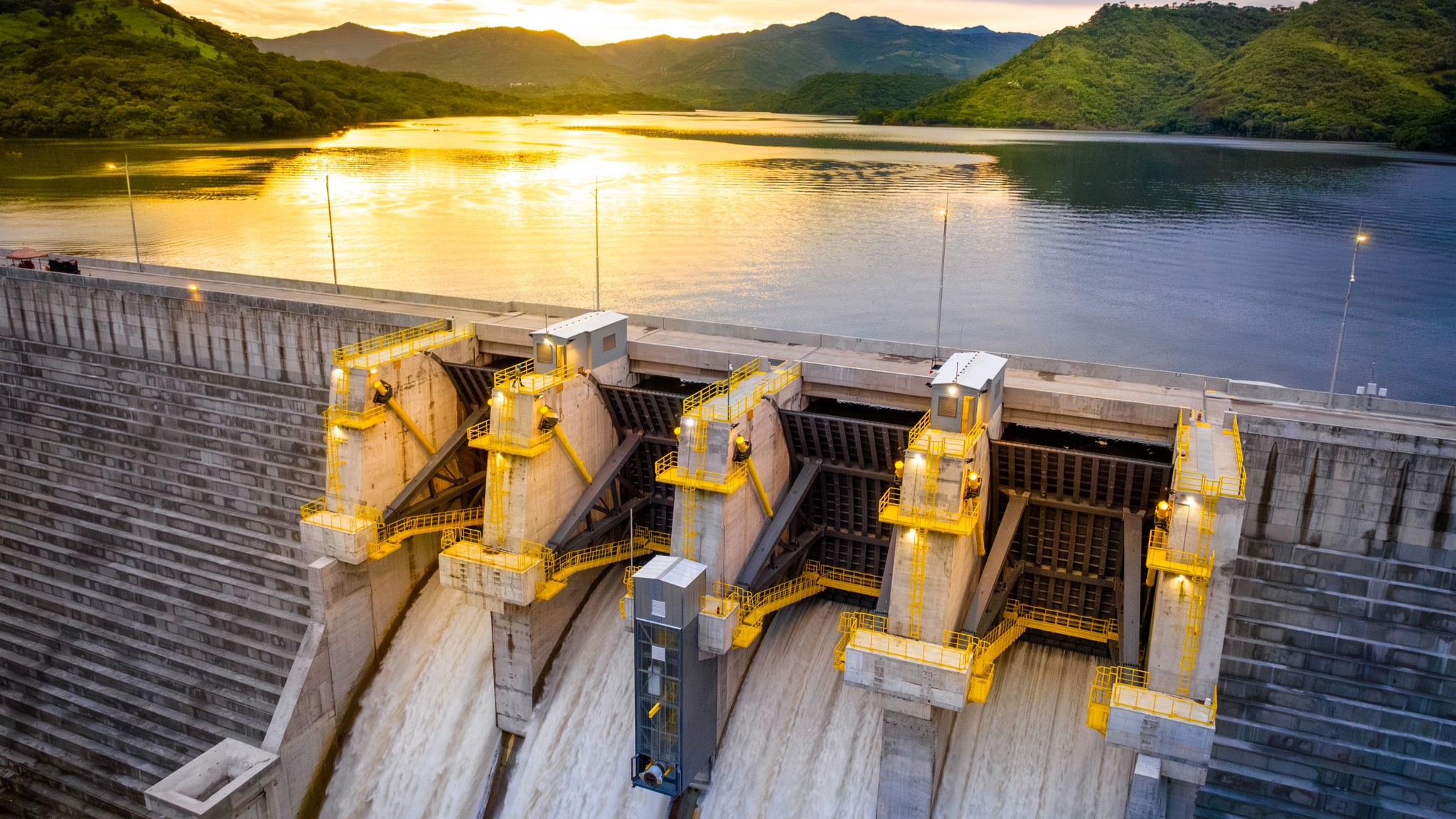
The Itaipú hydroelectric dam, stretching nearly 8 kilometers along the Paraná River on the Brazil-Paraguay border, remains one of the most significant feats of engineering in the modern era. Often cited in global discussions about renewable energy leadership, the binational facility continues to draw attention for its scale, output, and role in the evolving competition between South America and Asia in clean power generation.
According to verified sources, the dam’s coronation length measures 7,919 meters — just under 8 kilometers — making it a prominent landmark in discussions about large-scale infrastructure. Its artificial reservoir spans approximately 1,350 square kilometers and holds 29 billion cubic meters of water, a volume sufficient to supply millions with drinking water while supporting regional fisheries, and tourism.
Constructed between 1975 and 1984, Itaipú was inaugurated on May 5, 1984, and has since operated continuously as a joint venture between Paraguay and Brazil. The project required 12.3 million cubic meters of concrete and incorporates steel comparable to 380 Eiffel Towers, underscoring its immense material footprint.
The facility contains 20 generating units — ten operating at Paraguay’s 50 Hz frequency and ten at Brazil’s 60 Hz — each with a nominal voltage of 18 kilovolts. This dual-frequency capability allows the plant to serve both national grids directly, a technical adaptation necessitated by the differing electrical standards of the two countries.
In terms of energy production, Itaipú has consistently ranked among the world’s most productive hydroelectric plants. It generated 103 terawatt-hours (TWh) in 2015 alone and has produced over 2.5 billion megawatt-hours (MWh) cumulatively since operations began, according to historical performance data. This output has enabled the dam to supply approximately 75% of Paraguay’s electricity demand and about 15% of Brazil’s, highlighting its critical role in regional energy security.
While China’s Three Gorges Dam holds the title of the world’s largest hydroelectric facility by installed capacity, Itaipú is frequently recognized as the second-largest and remains a benchmark for operational longevity and efficiency. Its binational governance model, established through the Itaipú Treaty, has facilitated decades of cooperative management despite occasional diplomatic tensions over energy pricing and distribution.
The reservoir created by the dam has also had notable environmental and social impacts. Flooding during reservoir filling displaced communities and altered local ecosystems, though the resulting lake has since become a hub for recreational boating, sport fishing, and ecotourism initiatives in both Brazil and Paraguay.
Recent reports indicate ongoing maintenance and modernization efforts to extend the plant’s operational life and improve efficiency, including upgrades to turbine systems and spillway mechanisms. These efforts aim to ensure Itaipú remains competitive amid growing investments in solar, wind, and other renewable technologies across the globe.
As of April 2026, no major structural changes or capacity expansions have been officially announced for the Itaipú complex. The binational entity continues to publish annual performance reports detailing generation metrics, maintenance schedules, and environmental compliance, which are publicly accessible through its official channels.
For readers seeking authoritative updates on Itaipú’s operations, technical specifications, or binational governance, the official website of Itaipu Binacional provides verified data in multiple languages, including historical production figures and real-time operational status.
What does Itaipú’s enduring presence in global energy discussions reveal about the future of transnational infrastructure projects in an era of climate-conscious development?
Share your thoughts in the comments below, and support spread informed perspectives by sharing this article with your network.