
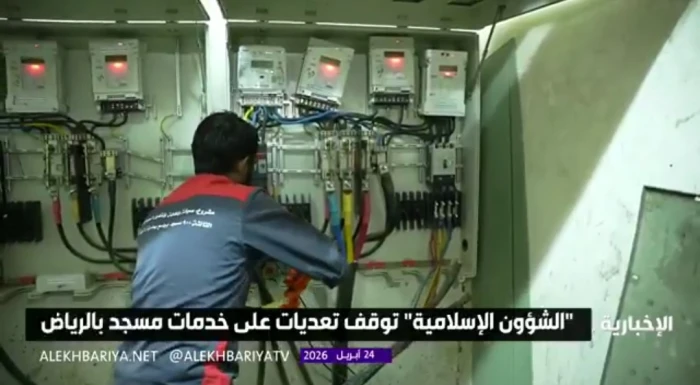
In a recent enforcement action in Riyadh, Saudi authorities have taken steps against commercial establishments and migrant worker accommodations found to be illegally tapping electricity and water from a mosque in the city’s Second Industrial City area. The operation, which drew attention through circulating video footage, highlights ongoing efforts to address utility theft in rapidly developing urban zones.
The incident occurred in the Second Industrial City of Riyadh, a designated zone for mixed-use development that includes residential, commercial, and industrial facilities. This area has seen significant growth in recent years, particularly in infrastructure supporting both local businesses and expatriate worker communities. Authorities routinely monitor such zones for compliance with municipal regulations, including proper utility connections and adherence to safety standards.
Video evidence shared online showed officials inspecting properties where unauthorized connections to the mosque’s power and water supplies had been established. The footage prompted immediate intervention by municipal teams, who moved to disconnect the illegal taps and initiate formal procedures against those responsible. Such actions are typically carried out under the jurisdiction of Riyadh’s municipal authorities, which oversee urban planning, building codes, and public service integrity across the city’s districts.
Although the specific identities of the establishments involved have not been publicly disclosed in official statements, the crackdown aligns with broader municipal campaigns aimed at reducing resource loss and ensuring fair utility distribution. Unauthorized connections not only constitute a violation of service provider regulations but likewise pose potential safety risks, including electrical overloads and water pressure imbalances that could affect entire blocks.
Local utilities in Riyadh, including the Saudi Electricity Company and the National Water Company, maintain strict protocols against tampering with meters or bypassing official connections. Penalties for such violations can include fines, service disconnection, and, in repeated cases, legal prosecution. These measures are intended to deter misuse and protect the integrity of public infrastructure.
The Second Industrial City, where the incident took place, is known for its integrated approach to urban planning, combining worker housing, retail outlets, and administrative offices within a planned layout. Developments like the Al Lam residential complex, previously noted for its scale and services, exemplify the type of mixed-use projects found in the zone. Such areas are designed to support workforce stability while maintaining access to essential services, though they require vigilant oversight to prevent misuse of shared resources.
Municipal officials have emphasized that inspections and enforcement actions are ongoing, particularly in areas with high concentrations of temporary or shared accommodations. Public awareness campaigns often accompany these efforts, reminding residents and business owners of the legal and ethical obligations tied to utility consumption. Reporting mechanisms are also in place for citizens to suspect irregularities, which can trigger further investigations.
As of the latest available information, no formal charges or court proceedings have been announced in connection with this specific case. Authorities typically follow a process that begins with on-site intervention, followed by documentation, notification of violations, and an opportunity for violators to rectify the situation before escalating to penalties. Any updates on sanctions or follow-up actions would be issued through official municipal channels.
This incident underscores the challenges faced by fast-growing cities in balancing development with regulatory compliance. As Riyadh continues to expand under national urbanization initiatives, maintaining equitable access to utilities remains a priority for both service providers and governing bodies. Continued vigilance, combined with community cooperation, is seen as essential to preserving public trust and infrastructure reliability.
For the most current information on municipal regulations, utility policies, or ongoing enforcement efforts in Riyadh, residents and stakeholders are encouraged to consult the official websites of the Riyadh Municipality, the Saudi Electricity Company, and the National Water Company. These sources provide verified updates on service standards, reporting procedures, and public notices related to urban management.
We invite our readers to share informed perspectives on this topic. If you have relevant insights or experiences regarding utility regulation in urban environments, please consider contributing to the discussion in the comments section below. Sharing this article can also help raise awareness about the importance of responsible resource use in growing communities.