
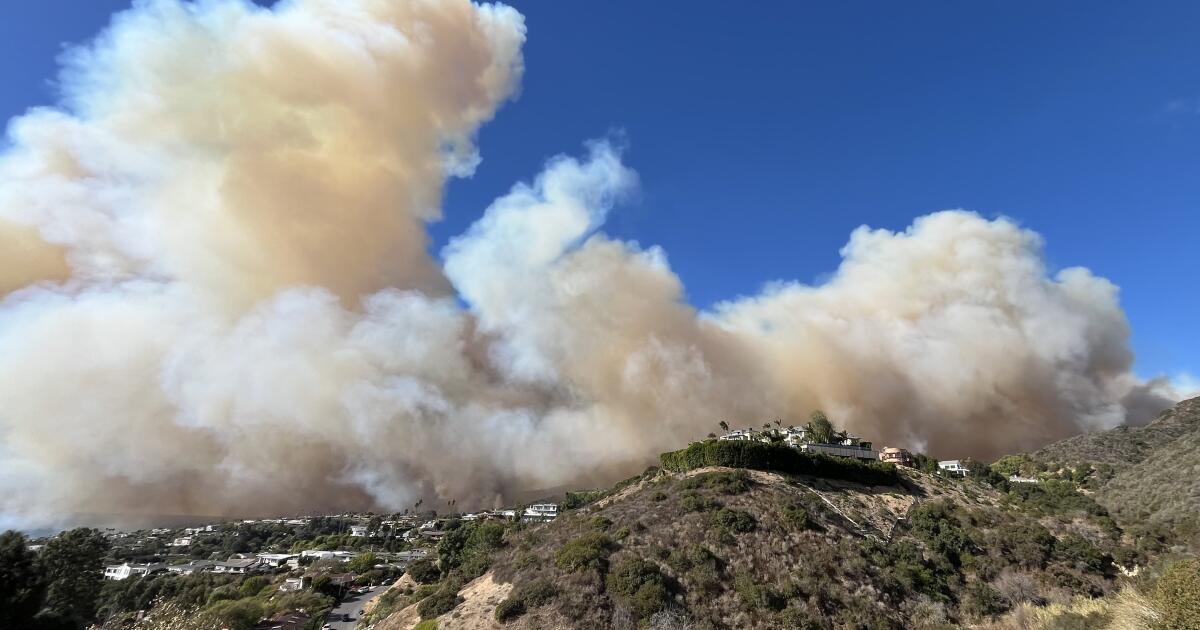
LAFD Palisades Fire Report: A Case Study in Public Trust and Operational Transparency
The aftermath of the 2022 Palisades Fire has exposed a troubling pattern within the Los Angeles Fire department (LAFD): a deliberate shaping of narrative over a commitment to clear accountability. Recent revelations surrounding the departmentS After Action Report – and the author’s subsequent withdrawal of endorsement – raise serious questions about the integrity of internal investigations and the public’s right to know.
This isn’t simply about editing a document; it’s about a potential erosion of trust, and a concerning precedent for how critical incidents are analyzed and communicated. As a long-time observer of fire service operations and public safety communications, I’ll break down the key issues, the implications, and why this situation demands a thorough and independent review.
the Genesis of a Crisis Dialogue Plan
The story began with a proactive, yet ultimately problematic, move. In an email dated August 2nd, LAFD Assistant Chief Kairi Brown established a workgroup focused on managing public relations surrounding the Palisades Fire. The immediate priority? The After Action Report. Brown rightly recognized the intense scrutiny from media, politicians, and the community, emphasizing the need for a “unified response” and a “clear and consistent” message.
The intent – controlling the narrative – isn’t inherently wrong. However, the execution, as events unfolded, reveals a troubling prioritization of perception over truth.
From Draft to Distortion: The Editing process
Independent consultant, Peter Cook, was tasked with authoring the report. He delivered his initial draft in early August, seeking feedback from interim Fire Chief Ronnie Villanueva. Villanueva’s response was encouraging, promising to “move forward” with the process.
What followed was a two-month period of closed-door revisions – a process Cook was excluded from. The publicly released report on October 8th bore little resemblance to his original findings.
Cook’s initial report pinpointed a critical error: the failure to recall the outgoing shift and fully pre-deploy resources. He attributed this decision to a desire for “fiscal responsibility,” a choice that directly contradicted established LAFD policy and procedures. This was a key finding, highlighting a potentially perilous trade-off between budget concerns and public safety.
the Watering Down of Accountability
the final report, however, painted a drastically different picture. It claimed pre-deployment measures for the Palisades and other fire-prone areas ”went above and beyond” standard practice – a complete reversal of Cook’s assessment. A detailed analysis by the Los Angeles Times of seven report drafts confirmed the meaningful deletions and revisions, effectively sanitizing the original critique.
Cook was understandably appalled. In a strongly worded email to Villanueva, also dated October 8th, he refused to endorse the revised version, labeling it ”highly unprofessional and inconsistent with our established standards.” He explicitly stated that the changes “alter the conclusions originally presented.”
A Deliberate Omission and a Question of Transparency
the situation took another disturbing turn when Cook’s email of protest was initially withheld from public records requests. While nearly 180 of his other emails were posted, this crucial document - detailing his concerns about the report’s integrity – was conspicuously absent. It only appeared on the city’s records portal after inquiries from The Los Angeles Times.
The explanation offered – a “broken link” – feels inadequate and raises legitimate questions about intentional concealment. The city’s silence on the matter, as noted by former LAFD Assistant chief Patrick Butler, is deeply concerning.
The Danger of Normalized deception
Butler, with 32 years of experience in the LAFD, succinctly captured the gravity of the situation: “When deception is normalized within a public agency, it also normalizes operational failure and puts people at risk.”
He’s right. A culture of secrecy and manipulation undermines the very foundation of public trust and can have devastating consequences. When investigations are compromised, lessons aren’t learned, and future incidents become more likely.
What Needs to Happen Now
This isn’t about assigning blame; it’s about restoring faith in the LAFD and ensuring a commitment to transparency. Here’s what’s needed:
* Independent Investigation: A truly independent investigation, free from internal influence, is crucial to determine the extent of the manipulation and identify those responsible.
* Full Disclosure: All drafts of the report, along with all related communications, must be made publicly available.
* Policy Review: A comprehensive review of the LAFD’s internal investigation


