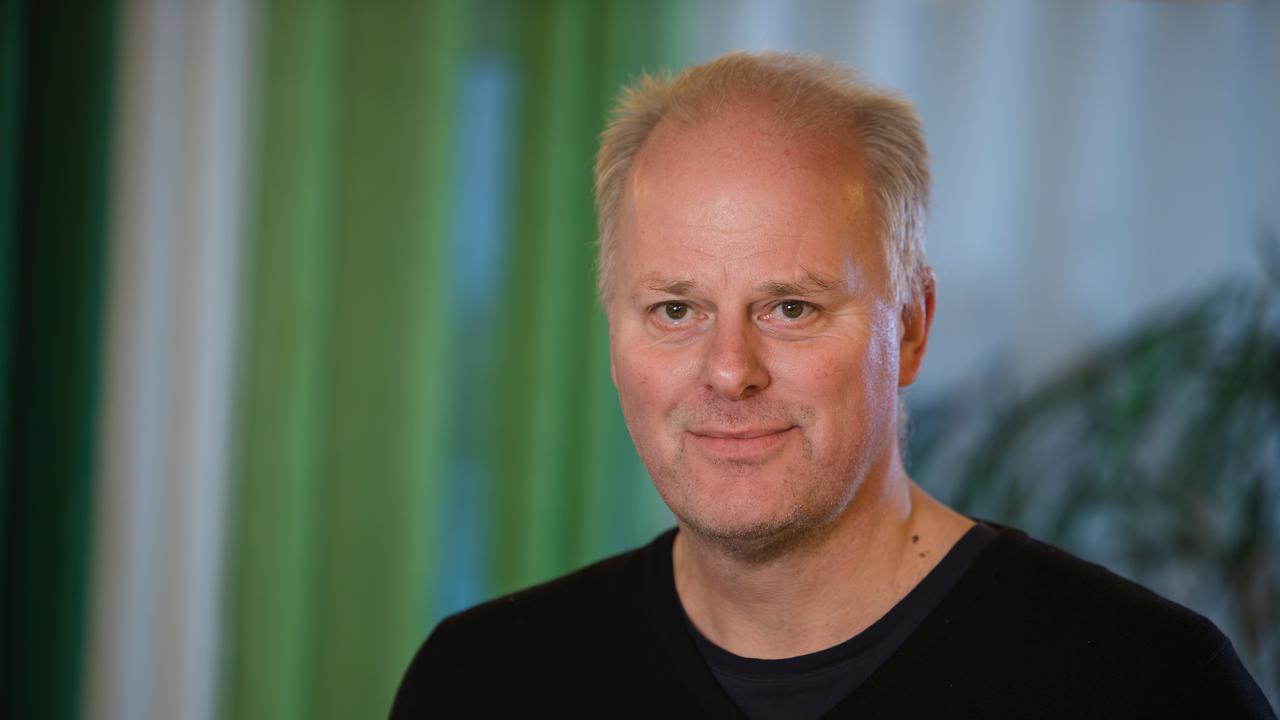
As the global population ages, the quest to understand why some minds remain sharp into their nineties while others succumb to the fog of dementia has become one of the most urgent priorities in modern medicine. At the forefront of this investigation is Lars Nyberg, a distinguished neuroscientist whose work is reshaping our understanding of the aging brain. Based at Umeå University in Sweden, Nyberg’s research focuses on the delicate intersection of memory, genetics, and brain structure, seeking the biomarkers that can predict cognitive decline before the first symptoms appear.
The significance of Nyberg’s contributions was recently highlighted by Umeå University, which identified him as one of the most influential researchers in his field, ranking him among the top ten neuroscientists in Sweden. This recognition is not merely a reflection of academic prestige but a testament to the practical impact of his longitudinal research. By tracking the brain’s evolution over decades, Nyberg and his team are moving the needle from reactive diagnosis—identifying dementia after it has occurred—to proactive prediction.
Central to this effort is the integration of advanced neuroimaging and large-scale data analysis. Through the Umeå Center for Functional Brain Imaging (UFBI), Nyberg utilizes high-resolution imaging to map the functional architecture of the human memory system. His work seeks to answer a fundamental question: what makes a brain resilient? By identifying the specific neural pathways and genetic markers associated with “successful aging,” his research provides a roadmap for potential interventions that could preserve cognitive function in millions of people worldwide.
The Betula Project: Mapping the Lifespan of Memory
One of the most ambitious pillars of Nyberg’s career is the Betula project, a longitudinal study designed to examine how memory functions change throughout adult life. Unlike cross-sectional studies, which compare different age groups at a single point in time, the Betula project follows the same individuals over many years. This approach is critical because it allows researchers to observe the trajectory of cognitive change within a person, rather than assuming a universal path of decline.

The Betula study focuses heavily on the identification of risk factors for dementia. By combining cognitive testing with structural and functional brain imaging, the project has demonstrated that there are significant genetic contributions to differences in memory capacity. These genetic variations often map directly onto structural changes in the brain, particularly in the hippocampus and prefrontal cortex—areas essential for the formation and retrieval of memories. According to Umeå University, these findings are pivotal in determining the early signs of dementia, potentially allowing for medical intervention years before significant cognitive impairment sets in.
For the average person, the “Betula approach” means that the future of dementia care may shift toward personalized risk profiles. Instead of a one-size-fits-all approach to brain health, clinicians may one day be able to tell a patient exactly which aspects of their brain architecture are vulnerable and suggest targeted lifestyle or pharmacological interventions to mitigate those specific risks.
UFBI and the Power of Functional Neuroimaging
The technical engine driving these discoveries is the Umeå Center for Functional Brain Imaging (UFBI), where Lars Nyberg serves as Director. Functional neuroimaging, particularly functional Magnetic Resonance Imaging (fMRI), allows researchers to see the brain in action. While a standard MRI provides a “snapshot” of the brain’s anatomy (the “hardware”), fMRI tracks blood flow and oxygenation to show which areas are active during specific tasks (the “software”).

Under Nyberg’s leadership, UFBI has focused on how the brain compensates for aging. One of the most fascinating phenomena in neuroscience is “scaffolding,” where the brain recruits additional neural circuits to perform a task that was once handled by a single area. In healthy aging, the brain often shows increased activity in the opposite hemisphere to compensate for a decline in the primary region. Nyberg’s work helps distinguish this healthy compensation from the pathological changes seen in Alzheimer’s disease and other forms of dementia.
The ability to visualize these processes in real-time is what allows the UFBI to bridge the gap between theoretical psychology and clinical neurology. By seeing exactly where the “breakdown” occurs in memory retrieval, Nyberg can correlate those failures with specific biological markers, such as the accumulation of amyloid plaques or the degradation of white matter integrity.
The Broader Impact: From the Lab to Public Health
The implications of Nyberg’s work extend far beyond the walls of the laboratory. As we face a global “silver tsunami”—a rapidly increasing proportion of elderly citizens—the economic and social burden of dementia is projected to grow exponentially. The ability to identify “cognitive-aging profiles” allows public health officials and clinicians to categorize aging not as a monolithic process, but as a diverse set of trajectories.

By understanding the heterogeneity of cognitive aging, Nyberg’s research suggests that some individuals possess a biological “reserve” that protects them from dementia despite having the physical markers of the disease in their brains. Understanding the nature of this resilience—whether it is driven by genetics, education, or lifestyle—is the key to developing preventative strategies for the general population.
Nyberg’s standing in the scientific community, including his membership in the Royal Swedish Academy of Sciences since 2008, ensures that these findings are integrated into the highest levels of scientific policy and academic discourse. His role as a bridge between Swedish research and the global neuroscience community helps accelerate the translation of these findings into clinical practice.
Key Research Focus Areas
| Research Pillar | Primary Objective | Clinical Significance |
|---|---|---|
| Betula Project | Longitudinal tracking of adult memory change. | Identification of early dementia risk factors. |
| Functional Imaging | Mapping brain activity during memory tasks. | Understanding neural compensation in aging. |
| Genetic Mapping | Linking genes to brain structure and memory. | Developing personalized cognitive risk profiles. |
| UFBI Leadership | Advancing neuroimaging technology. | Providing the tools for precise brain diagnostics. |
What This Means for the Future of Brain Health
For those of us in the medical community, the work of researchers like Lars Nyberg represents a shift toward “precision neurology.” For decades, the approach to memory loss was largely observational: a patient would present with symptoms, and a diagnosis would be made based on the severity of the impairment. Nyberg’s work pushes us toward a model where we can identify the biological vulnerability *before* the symptom manifests.
This shift is critical because the most effective treatments for neurodegenerative diseases are likely those administered in the earliest stages of the disease, often before the patient is even aware of a problem. By the time a person struggles to remember a loved one’s name or find their way home, significant neuronal loss has already occurred. The “predictive markers” Nyberg is hunting for in the Betula project are the keys to unlocking the window of opportunity for early treatment.
As we look forward, the integration of AI and machine learning into the data sets provided by UFBI will likely accelerate these discoveries. The ability to analyze thousands of brain scans and genetic sequences simultaneously will allow Nyberg and his colleagues to find patterns that are invisible to the human eye, further refining the accuracy of dementia prediction.
The next major milestone for this field will be the translation of these “profiles” into validated clinical screening tools that can be used in primary care settings. While we are not yet at the stage of a simple blood test or scan for dementia prediction, the foundational work being done at Umeå University is bringing us closer to that reality every day.
For updates on the latest findings from the Betula project and developments in functional brain imaging, patients and caregivers are encouraged to follow official announcements from Umeå University’s Department of Neuroscience.
Do you believe that predictive screening for dementia should be part of routine health checks for adults over 50? We invite you to share your thoughts in the comments below and share this article with others interested in the future of brain health.
Worth a look