
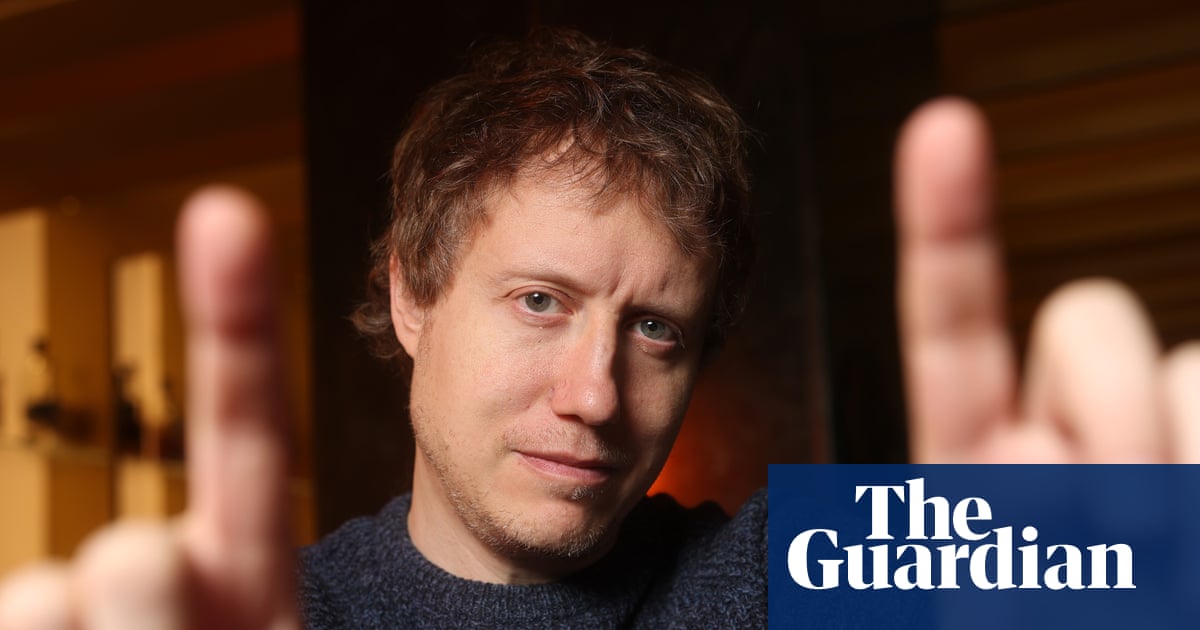
LOS ANGELES, CA — May 18, 2026 — In a blunt interview that has sent shockwaves through Hollywood, Hungarian director László Nemes—the Oscar-winning filmmaker behind Son of Saul—has warned of a “resurgent tide of antisemitism” sweeping Western societies, including the film industry itself. Speaking from a London hotel suite just days before the Cannes Film Festival, where his new drama Orphan and a Jean Moulin biopic will premiere, Nemes criticized what he called Hollywood’s “hypocrisy” in addressing historical trauma while allowing prejudice to flourish in its own ranks.
Nemes’s remarks come as his career reaches new heights. Son of Saul, his 2015 debut about a Sonderkommando in Auschwitz, became the first Hungarian film to win the Academy Award for Best Foreign Language Film. Now, with Orphan—a deeply personal story about generational trauma rooted in his family’s Holocaust experiences—and a biopic about French Resistance leader Jean Moulin, Nemes is once again tackling Europe’s 20th-century wounds. But this time, he says, the industry’s response to rising antisemitism feels dangerously out of step with the moral weight of his work.
The interview began with an unexpected detail: a Hindu swastika symbol hanging above Nemes’s head during the conversation. When asked about it, the director laughed, noting he’d immediately spotted it himself. “Before leaving this room, I will take pictures,” he said. “It’s funny—though I’ve had worse.” The reference to “worse” alluded to a 2015 incident at the San Sebastián Film Festival, where organizers placed him in the same room previously occupied by Mel Gibson, the actor whose antisemitic remarks had sparked global controversy.
From Auschwitz to Antisemitism: Nemes’s Unflinching Vision
Son of Saul remains one of the most harrowing depictions of the Holocaust ever committed to film. Nemes’s new project, Orphan, shifts focus to the generations that followed, using the story of a 12-year-old boy grappling with his family’s hidden past as a metaphor for Hungary’s unresolved trauma after the 1956 revolution. The film is deeply personal: Nemes’s own father grew up believing his Holocaust victim was his true father, only to learn his biological father was a butcher who had both sheltered and exploited his mother during the war. “My father carries in his very flesh the victim and the perpetrator,” Nemes explained. “Here’s the story of Europe—how we are all still carrying these wounds.”

Nemes’s frustration with Hollywood’s perceived hypocrisy stems from what he sees as a disconnect between the industry’s progressive posturing and its treatment of creators who tackle difficult historical subjects. While studios champion films about oppression, he argues, they often fail to hold their own employees—or even their own spaces—accountable when antisemitic incidents occur. “They ask if I’ve signed this or that petition,” he said, referring to industry calls for social justice. “But when it comes to actual responsibility, there’s a different standard.”
Cannes 2026: A Festival Under Scrutiny
This year’s Cannes Film Festival, where Nemes will premiere both Orphan and his Jean Moulin biopic, arrives at a moment of heightened sensitivity around historical representation. The festival has faced criticism in recent years for its handling of controversial films and figures, including past controversies over antisemitic remarks by attendees and the platforming of films with problematic narratives. Nemes, who has long been a vocal critic of what he calls the industry’s “overclass,” says the time for performative allyship is over.

“The festival should be a place where we confront these issues head-on,” Nemes stated. “But too often, it’s a place where people pretend not to see the swastikas hanging above their heads—whether literal or metaphorical.” His comments come as Cannes prepares to screen Orphan, a film that directly engages with the legacy of silence and complicity in post-war Europe.
Why This Matters: The Broader Crisis of Antisemitism
Nemes’s warnings align with a broader alarm among Jewish leaders, historians, and cultural figures about rising antisemitic incidents across Europe and North America. According to the Anti-Defamation League, antisemitic incidents in the U.S. Rose by 38% in 2023 alone, with similar trends reported in the UK and France. In Germany, where Holocaust memorials have been vandalized with swastikas, Chancellor Olaf Scholz recently described antisemitism as a “threat to our democracy.”
For Nemes, the issue is not just statistical but existential. “The Holocaust didn’t end in 1945,” he said. “Its echoes are in every generation that follows. And if we don’t name the prejudice that still lingers, we are failing those who came before us—and those who will come after.” His films, he argues, are not just artistic statements but moral reckonings with a past that refuses to stay buried.
Industry Reactions: Silence and Pushback
While Nemes’s interview has resonated with many in the Jewish community and among Holocaust scholars, it has also drawn pushback from some in Hollywood. An unnamed studio executive, speaking on condition of anonymity, told Variety that Nemes’s comments risked “oversimplifying a complex issue.” However, other figures in the industry have expressed support. British director Sam Mendes, who served as a jury member at Cannes, called Nemes’s work “essential” and urged the festival to take his concerns seriously.
Nemes himself remains undeterred. “I’m not here to lecture anyone,” he said. “I’m here to make films that force us to look in the mirror. If that makes me unpopular with the overclass, so be it.” His next project, the Jean Moulin biopic, will further explore themes of resistance and moral courage—a deliberate counterpoint to what he sees as Hollywood’s growing complacency.
What Happens Next: Cannes and Beyond
The Cannes Film Festival opens on May 16, 2026, with Orphan and Nemes’s Jean Moulin biopic set to screen in the competition section. Industry observers will watch closely to see how the festival responds to Nemes’s criticisms, particularly given past controversies over antisemitic incidents at the event. Meanwhile, Nemes has indicated he plans to continue his public dialogue on antisemitism, including a scheduled appearance at the British Film Institute’s London Film Festival in October.

For readers interested in following this story, key developments to watch include:
- The Cannes Film Festival’s official response to Nemes’s remarks and any statements from organizers.
- Reactions from Jewish organizations and Holocaust survivors to Orphan‘s themes.
- Potential industry-wide discussions on accountability in historical storytelling.
What do you think? Should film festivals like Cannes hold creators accountable for the moral weight of their work? Share your thoughts in the comments below—or join the conversation on X/Twitter using #NemesOnAntisemitism.
For more on László Nemes’s filmography and Cannes 2026, visit our Film Section.