
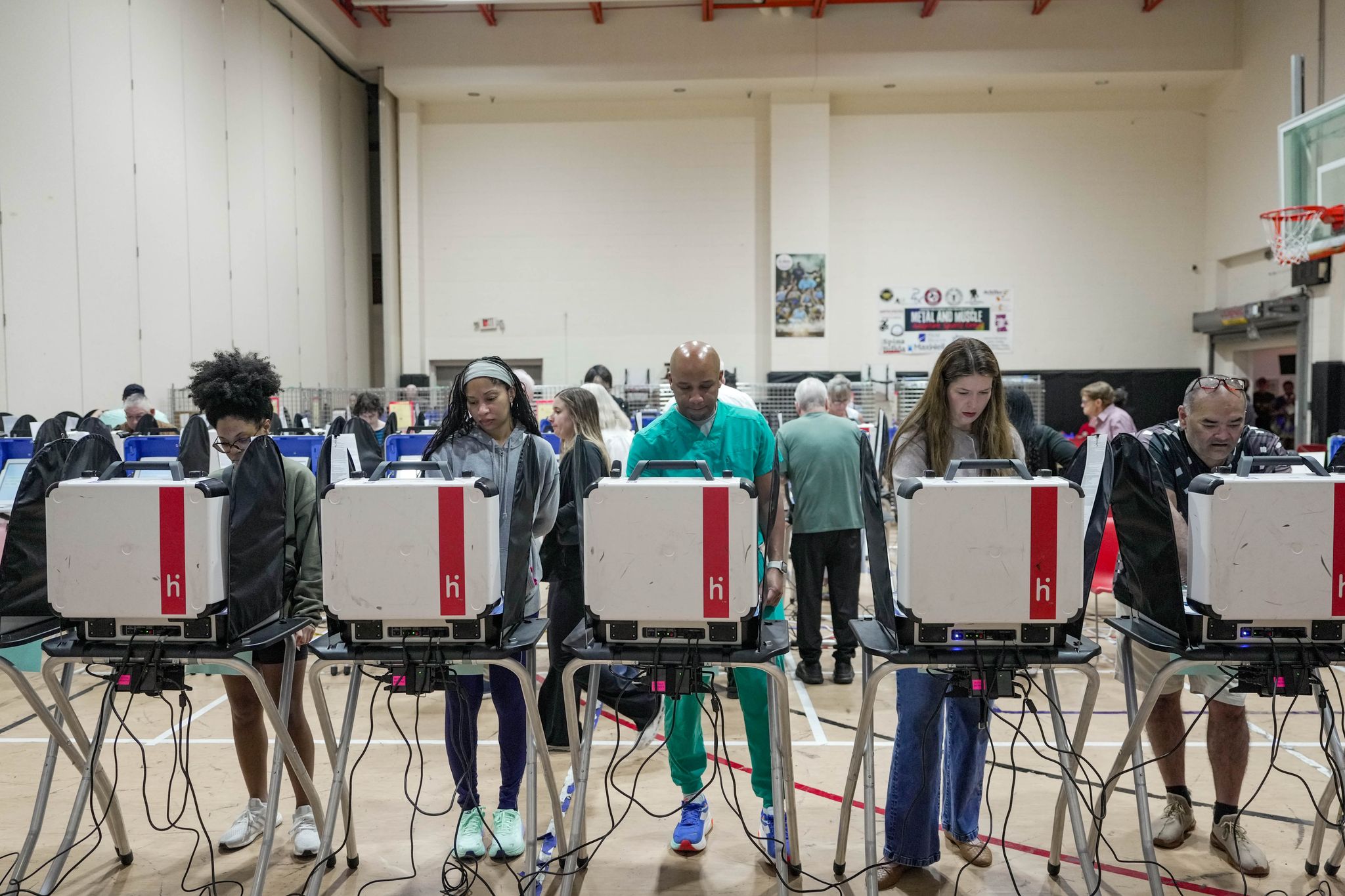
A judicial decision in Houston has intensified the debate over religious accommodation in American elections, following a judge’s refusal to grant Orthodox Jewish voters’ request for extended voting hours. The ruling, which concerns a runoff election in Houston’s District C, highlights a growing tension between the rigid administration of the Texas Election Code and the constitutional protections afforded to religious observance.
The legal challenge was brought by members of the Orthodox Jewish community, who argued that the scheduling of the runoff election effectively disenfranchised them. Because the election was slated to take place on a Saturday, the observant community faced a significant barrier: the observance of Shabbat, which prohibits many religious activities, including traveling to and participating in secular civic duties, from Friday evening until Saturday evening.
By denying the request to extend voting hours or provide alternative access, the court has underscored the primacy of state-mandated election schedules over individual religious accommodations in the state of Texas. The decision has sparked concerns among civil rights advocates regarding the intersection of religious freedom and the right to vote.
The Legal Core: Shabbat and the Barrier to the Polls
For the Orthodox Jewish community, the observance of Shabbat is not merely a preference but a central religious mandate. The period of rest begins at sundown on Friday and concludes after nightfall on Saturday. During this time, many adherents refrain from driving, using electronic devices, or engaging in public commerce and civic administration.

In the context of a municipal runoff election, which is frequently scheduled on Saturdays to maximize turnout, these observances create a practical impossibility for many voters. The plaintiffs in the lawsuit argued that the current election framework fails to provide “reasonable accommodation” for religious minorities, potentially violating both the First Amendment of the U.S. Constitution and the Voting Rights Act.
The lawsuit specifically focused on the District C runoff, asserting that the lack of Sunday voting options or extended hours on Friday and Monday left the Orthodox community with no viable way to cast their ballots without violating their most sacred tenets. They sought a court order to mandate a shift in polling hours to ensure that religious observance did not equate to political silence.
The Court’s Ruling and the Constraints of State Law
The judge’s decision to deny the request was rooted in a strict interpretation of the Texas Election Code. The court noted that election officials and local judges are bound by the specific mandates set forth by the state legislature regarding the timing and duration of polling hours.
According to the legal reasoning presented, the judiciary lacks the unilateral authority to alter the established election calendar or extend polling hours beyond what is prescribed by state law. The court expressed concern that granting such an exception would not only exceed judicial power but could also lead to administrative chaos, creating inconsistencies in how elections are managed across different jurisdictions.
The ruling emphasized that while the protection of religious liberty is a fundamental principle, the administration of elections must remain uniform and predictable to ensure the integrity of the democratic process. The judge concluded that the remedy for religious disenfranchisement must come from the legislative branch rather than through judicial intervention in local election mechanics.
Key Arguments in the Legal Dispute
- The Plaintiffs’ Position: Argued that the refusal to accommodate Shabbat observances constitutes a “burden” on the free exercise of religion and a violation of voting rights for a protected religious group.
- The State/County Position: Maintained that election schedules are strictly governed by statute and that changing them would violate the uniformity required by the Texas Election Code.
- Administrative Concerns: Cited the potential for logistical complications, including staffing, security, and the synchronization of multi-precinct polling locations.
The Intersection of the First Amendment and Voting Rights
The case brings into sharp focus a complex legal doctrine: how much “burden” can a government place on a religious practice before it becomes unconstitutional? Under the Free Exercise Clause of the First Amendment, laws that are “neutral and of general applicability” are typically allowed even if they incidentally affect religious practices. However, if a law is seen as specifically targeting a religion or failing to provide minimal accommodation, it may face stricter scrutiny.
.svg/960px-Texas_Congressional_Districts%2C_120th_Congress_(PLANC2333).svg.png "District Texas Election Code")
Advocates for the Orthodox community argue that the Saturday runoff schedule is not “neutral” in its impact, as it disproportionately affects a specific demographic. They contend that in a modern, pluralistic society, election administration should incorporate “reasonable accommodations”—similar to those provided in employment law—to ensure that all citizens can participate in the democratic process.
Conversely, legal scholars often point out that the “neutral application” of election laws is a cornerstone of preventing fraud and ensuring order. If every religious group were granted custom voting hours, the complexity of managing a statewide or even a city-wide election would increase exponentially, potentially compromising the security and predictability of the vote.
Impact on the Orthodox Jewish Community and Local Governance
The denial of the request has profound implications for the political representation of the Orthodox Jewish community in Houston. When a specific segment of the population is unable to vote in runoff elections—which often decide the final outcome of local contests—their interests may be underrepresented in City Hall and other local governing bodies.
In District C, where local issues ranging from public safety to infrastructure are decided, the inability of a significant religious minority to participate in the runoff process can skew the political landscape. This creates a cycle where the concerns of the Orthodox community may be overlooked by elected officials, further alienating a group that is integral to the city’s social and economic fabric.
Beyond the immediate political impact, the ruling also serves as a signal to other religious and minority groups. It reinforces the idea that in the state of Texas, the administrative requirements of the election cycle take precedence over individual religious accommodations, setting a precedent for future legal challenges regarding voting access.
Looking Ahead: The Future of Religious Accommodation in Texas
The resolution of this case likely marks the end of this specific legal battle, but it leaves the broader question of religious voting access unresolved. With the Texas legislature maintaining strict control over election procedures, the path toward accommodation almost certainly lies in policy reform rather than courtroom victories.

As Houston continues to grow and diversify, the pressure on election officials to modernize and accommodate a wider range of cultural and religious observances is expected to increase. Potential solutions being discussed by advocacy groups include:
- Expanded Early Voting: Increasing the number of days and hours available for early voting to provide more flexibility for those who cannot vote on Saturdays.
- Sunday Voting Options: Legislative changes to allow for Sunday polling, which would accommodate both the Jewish Shabbat and Christian Sunday worship.
- Legislative Mandates for Accommodation: Creating a formal process within the Texas Election Code for requesting and granting religious accommodations.
For now, the status quo remains: election schedules in Houston will continue to follow the rigid frameworks established by the state, leaving religious minorities to navigate the tension between their faith and their civic duties.
Next Official Update: There are currently no scheduled hearings or further legal filings related to this specific ruling. Future developments will depend on whether the plaintiffs choose to appeal the decision to a higher court or if legislative action is taken in the Texas State Capitol.
What do you think about the balance between religious freedom and election administration? Should election laws be changed to accommodate religious observances? Share your thoughts in the comments below and share this article to join the conversation.