
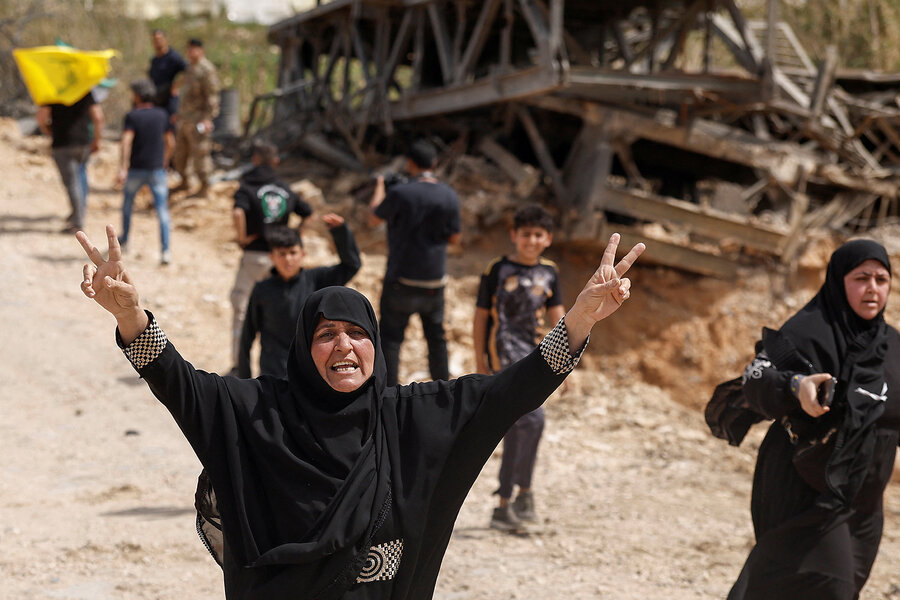
On April 17, 2026, Israel and Lebanon agreed to a ten-day ceasefire, with Israeli Prime Minister Benjamin Netanyahu confirming the arrangement amid rising domestic criticism over the government’s handling of the security situation along the northern border. The announcement came after separate phone calls between U.S. President Donald Trump and both Netanyahu and Lebanese President Joseph Aoun, with Trump inviting the two leaders to the White House for historic talks following the ceasefire agreement.
The deal, which took effect on April 18, 2026, maintains Israeli Defense Forces (IDF) positions in southern Lebanon during the truce period, according to an Israeli official speaking to The Jerusalem Post. While the ceasefire was framed as a diplomatic breakthrough, many residents in northern Israeli communities expressed feelings of betrayal, arguing that the agreement did not adequately address ongoing threats from Hezbollah and left them feeling exposed despite the temporary halt in hostilities.
Opposition leaders in Israel swiftly criticized the Netanyahu government, accusing it of lacking a clear strategic vision and allowing external actors to dictate Israel’s security decisions. They argued that the ceasefire negotiations, conducted primarily between Israel and the Lebanese government rather than directly with Hezbollah, undermined national sovereignty and failed to produce a sustainable solution to the recurring cycles of violence along the border.
The ceasefire agreement includes provisions for Lebanon’s government, with international support, to take “meaningful steps” to prevent Hezbollah and other armed groups from launching attacks against Israeli targets. However, Hezbollah had previously insisted that any truce must not permit Israeli freedom of movement in Lebanese territory, maintaining that the presence of Israeli troops grants Lebanese citizens the “right to resist” under international law—a position that complicates long-term enforcement of the deal.
As part of the diplomatic outreach, President Trump confirmed he had spoken separately with both Netanyahu and Aoun, describing the conversations as “productive” and expressing hope that the White House meeting could lay the groundwork for a more durable regional stability framework. The invitation marks a rare instance of direct U.S. Mediation between the two leaders since the escalation of tensions in late 2025.
Northern Israeli Communities Voice Frustration Over Perceived Abandonment
In towns such as Kiryat Shmona, Metula, and other communities near the Israel-Lebanon border, residents reported feeling abandoned by their government in the wake of the ceasefire announcement. Many told local media that while the cessation of rocket fire and cross-border raids was welcome, they remained deeply concerned about Hezbollah’s continued presence and military capabilities just kilometers from their homes.
One resident of Kiryat Shmona, speaking on condition of anonymity, said, “We’re told to go back to our normal lives, but how can we when the threat hasn’t been removed? Hezbollah is still armed, still tunneling, still preparing. This isn’t peace—it’s just a pause.” These sentiments were echoed in public forums and social media posts, where hashtags like #BetrayedByBibi and #NorthIsNotSafe gained traction among Israelis dissatisfied with the government’s security posture.
Local council leaders in the Galilee Panhandle urged the government to implement immediate civil defense upgrades, including reinforced public shelters and early-warning systems, arguing that reliance on ceasefires alone left civilians vulnerable to sudden escalations. They also called for a transparent national security strategy that clearly defines Israel’s red lines and response protocols regarding Hezbollah activity.
Opposition Parties Blame Netanyahu for Reactive, Not Proactive, Security Policy
Opposition figures from Yesh Atid, the National Unity Party, and Yisrael Beiteinu accused Prime Minister Netanyahu of managing Israel’s northern border through crisis reaction rather than long-term deterrence. MK Yair Lapid, leader of the opposition, stated during a Knesset session on April 16, 2026, that “the government keeps choosing temporary quiet over lasting security, and in doing so, it sacrifices the safety of Israeli citizens for the illusion of stability.”
Critics pointed to the absence of a comprehensive plan to disarm Hezbollah or strengthen Lebanese state authority in the south as evidence of strategic drift. They argued that by engaging only with the Lebanese government—whose control over Hezbollah remains limited—Israel risks legitimizing a process that excludes the very actor responsible for most cross-border threats.
Former Defense Minister Benny Gantz echoed these concerns, noting that previous ceasefires in 2006 and 2023 had similarly failed to produce enduring change as they did not address the root causes of Hezbollah’s militarization. “Without a political track that includes disarmament, demobilization, and reintegration efforts backed by international enforcement, we are simply delaying the next round of fighting,” Gantz said in a televised interview.
Hezbollah’s Position Complicates Ceasefire Durability
Hezbollah’s public stance on the ceasefire has introduced significant uncertainty about its longevity. The group’s leadership reiterated that any agreement allowing Israeli military presence in Lebanese territory violates Lebanese sovereignty and therefore justifies continued resistance—a framing that could enable future rocket launches or border incursions to be portrayed as legitimate acts of defense rather than aggression.
This position was highlighted in statements released by Hezbollah’s media arm in the days leading up to the ceasefire, where officials warned that Lebanon would not accept any deal perceived as a capitulation to Israeli demands. Analysts warn that unless the Lebanese government can demonstrably curb Hezbollah’s operational independence—particularly its ability to launch attacks without state approval—the truce remains fragile and susceptible to collapse at the first provocation.
International observers, including the United Nations Interim Force in Lebanon (UNIFIL), have urged both sides to respect the ceasefire while calling for renewed negotiations under UN auspices to address the underlying political and military imbalances. UNIFIL’s spokesperson emphasized that the force remains deployed along the Blue Line to monitor compliance and prevent accidental escalations, but noted its limited mandate prevents it from disarming non-state actors.
White House Meeting Signals Potential Shift in U.S. Engagement
The planned White House meeting between Trump, Netanyahu, and Aoun represents a notable escalation in American diplomatic involvement in the Israel-Lebanon file. While the U.S. Has historically played a mediating role in regional conflicts, direct trilateral engagement at the presidential level is uncommon and suggests the administration views the current ceasefire as a potential opening for broader diplomatic progress.
Officials familiar with the planning told The New York Times that the agenda would include discussions on reconstruction aid for southern Lebanon, confidence-building measures between Israeli and Lebanese militaries, and frameworks for preventing Hezbollah from reconstituting its attack capabilities during the truce period. However, no formal agenda has been released, and the White House has not confirmed whether any substantive agreements are expected to emerge from the talks.
President Trump characterized the invitation as an opportunity to “bring peace to a troubled region” and praised both leaders for their willingness to engage. He added that success in Lebanon could serve as a model for resolving other longstanding conflicts in the Middle East, though he offered no specifics on how such a framework would be structured or enforced.
What Comes Next: Monitoring Compliance and Preparing for Renewed Dialogue
As the ten-day ceasefire entered its second day on April 19, 2026, Israeli military officials confirmed that IDF units remain in their current positions along the border, maintaining readiness to respond to any violation while avoiding offensive operations unless provoked. The military emphasized that its rules of engagement remain unchanged and that any Hezbollah attack would be met with a proportional and immediate response.
Diplomatic channels between Israel and Lebanon, facilitated by French and U.S. Envoys, are expected to continue throughout the truce period to assess compliance and explore possibilities for extension or transformation into a longer-term arrangement. However, unless Hezbollah’s concerns about Israeli territorial presence are addressed through political or security guarantees, analysts caution that the ceasefire may not survive beyond its initial term.
The next key milestone is the scheduled White House meeting, which has not yet been assigned a specific date but is understood to be planned for late April 2026. No official readout has been released from the preparatory calls between Trump and the two leaders, and neither the Israeli Prime Minister’s Office nor the Lebanese Presidency has confirmed details about the meeting’s timing or objectives.
For real-time updates on the ceasefire status, border developments, and diplomatic reactions, readers are encouraged to follow official statements from the Israel Defense Forces Spokesperson’s Unit, the Lebanese Ministry of National Defense, and the United Nations Interim Force in Lebanon (UNIFIL).
If you have insights or experiences related to the Israel-Lebanon ceasefire and its impact on border communities, we invite you to share your thoughts in the comments below. Please help spread awareness of this developing story by sharing this article with others who may be interested in understanding the complexities of regional peace efforts.