
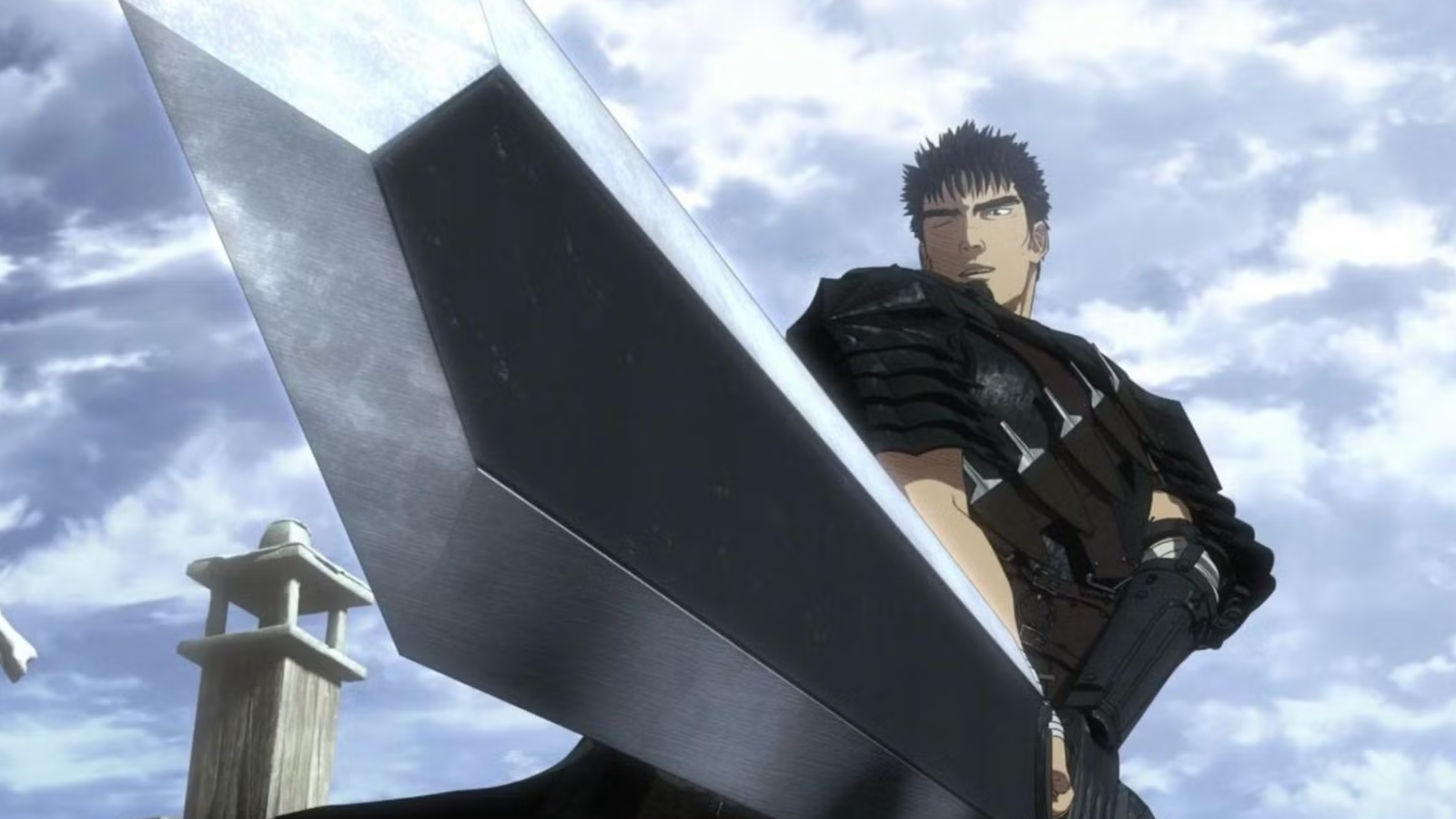
Anime has long been celebrated for its imaginative weaponry, where swords often dominate the conversation. Yet beyond the katana and the greatsword lies a rich arsenal of inventive tools that define characters, drive plots, and reflect deeper themes. From psychological enforcement devices to reality-bending artifacts, these weapons transcend mere combat utility to become symbols of ideology, trauma, or hope. This feature highlights five standout anime weapons that are not swords, each chosen for their narrative significance, design originality, and cultural impact within their respective series.
The Dominator from Psycho-Pass exemplifies how a weapon can embody a dystopian philosophy. Issued to Inspectors and Enforcers of the Public Safety Bureau, the Dominator is a futuristic firearm that evaluates a target’s Psycho-Pass—a real-time psychological and criminal propensity assessment—before authorizing force. If the subject’s Crime Coefficient exceeds a threshold, the weapon activates in one of several modes: Paralyzer, Lethal Eliminator, or Destroy Decomposer, the latter vaporizing the target entirely. Designed around the Sibyl System’s authoritarian vision of justice, the Dominator removes human judgment from lethal force, raising profound ethical questions about free will and pre-crime prevention. Its sleek, pistol-like form belies its terrifying autonomy, making it one of anime’s most chillingly logical weapons.
Another non-sword weapon that redefines power dynamics is the Scissor Blade from Kill la Kill. Wielded by protagonist Ryuko Matoi, this half of a giant pair of scissors is both a melee weapon and a key to unlocking the secrets of Kamui, sentient garments that grant superhuman abilities. The blade’s unique design allows it to sever Life Fibers—the alien threads that empower Goku Uniforms—making it the only weapon capable of harming those enhanced by the series’ central antagonistic force. Beyond its combat function, the Scissor Blade represents Ryuko’s quest for identity and vengeance following her father’s murder. Its transformation alongside her character arc—from a tool of rage to a symbol of self-acceptance—elevates it beyond mere weaponry into a narrative cornerstone.
In the realm of reality-warping armaments, few compare to the Death Note. This supernatural notebook, central to the eponymous series, allows its user to kill anyone whose name is written in it, provided they visualize the target’s face. The rules governing its use are intricate and strictly enforced by the Shinigami (death gods) who originate the notebooks: causes of death can be specified, but only if physically possible; attempts to extend life or resurrect the dead fail. What makes the Death Note compelling is not its lethality but its psychological depth. As Light Yagami descends from idealistic student to god-complex killer, the notebook becomes a mirror for absolute power’s corrupting influence. Its simplicity—a plain black journal—contrasts starkly with the elaborate moral and intellectual duels it ignites, cementing its status as one of anime’s most iconic non-physical weapons.
The Gear Second technique, while not a physical object, functions as a weaponized form of self-modification in One Piece. Used by Monkey D. Luffy, Gear Second accelerates his blood flow by using his legs as pumps, dramatically increasing oxygen and nutrient delivery to his muscles. This results in enhanced speed, strength, and the signature “Jet” attacks that emit steam from his body. Though it strains his physiology and shortens his lifespan with overuse, Gear Second exemplifies the series’ theme of pushing biological limits through willpower and ingenuity. Unlike traditional weapons, it originates entirely from the user’s body, reflecting Luffy’s rubber-based Devil Fruit abilities and his refusal to rely on external tools. Its introduction during the Enies Lobby arc marked a turning point in the series’ power scaling, influencing countless shonen depictions of “powered-up” states.
Finally, the Zanpakutō—though sword-shaped—warrants inclusion here due to its sentient, evolving nature in Bleach. Far more than a blade, each Zanpakutō is a manifestation of its wielder’s soul, possessing a unique name, personality, and dual-release state: Shikai (initial release) and Bankai (final release). Achieving Bankai requires the Shinigami to materialize and conquer their Zanpakutō’s spirit in an internal world, a process that can take years or decades. This internalization transforms weapon mastery into a journey of self-confrontation and growth. Notably, some Zanpakutō take non-sword forms in Shikai—such as Izuru Kira’s Wabisuke, which doubles the weight of anything it strikes, or Rangiku Matsumoto’s Haineko, which turns into ash—further blurring the line between sword and supernatural ability. As extensions of the wielder’s identity, Zanpakutō redefine what it means to wield a weapon in anime.
These five examples illustrate how anime weaponry often serves as narrative extension rather than mere spectacle. Whether enforcing a dystopian ideology, enabling personal transformation, or embodying existential struggles, these tools reflect the series’ core concerns. As anime continues to evolve globally, its inventive approach to arms and abilities remains a defining strength—one that invites viewers to consider not just how characters fight, but why they fight, and what they’re willing to become to win.
For fans interested in exploring these weapons further, official sources such as the Psycho-Pass anime’s production materials by Production I.G., the Kill la Kill anime’s official website, and the Death Note manga’s publication history through Shueisha offer authoritative background. Similarly, One Piece’s Eiichiro Oda has detailed Gear Second’s mechanics in SBS columns and collected volumes, while Bleach’s Tite Kubo has explained Zanpakutō philosophy in interviews and databooks. These resources provide verified insight into the design, symbolism, and evolution of each weapon within its narrative universe.
As the anime landscape continues to expand with new seasons, films, and manga adaptations, audiences can expect even more imaginative takes on weaponry—each offering a chance to engage with stories where the tools of conflict are as meaningful as the conflicts themselves.