
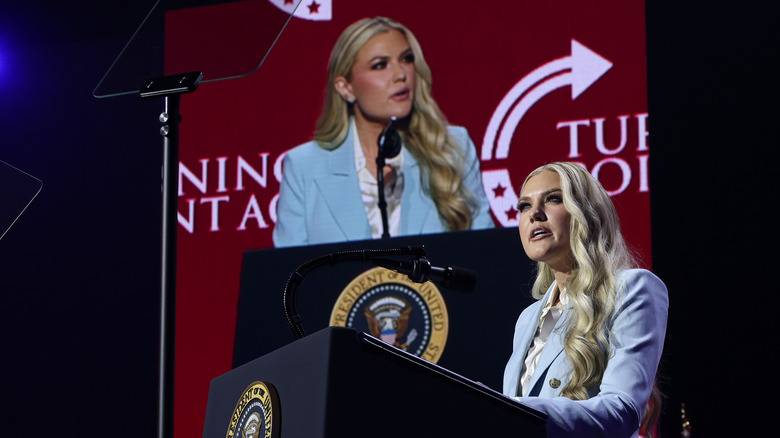
Erika Kirk’s recent public appearance has reignited discussions about relatability and authenticity in the public eye. As the wife of conservative commentator Charlie Kirk, Erika has increasingly stepped into the spotlight through events hosted by Turning Point USA (TPUSA), where she often shares personal anecdotes aimed at connecting with audiences on a familial and emotional level. Her latest appearance at a TPUSA Faith event followed this pattern, featuring remarks about motherhood, late-night routines, and the simplicity of eating cereal for dinner after putting her children to bed.
While such details are typically intended to humanize public figures and foster connection, the response to Erika Kirk’s presentation revealed a growing skepticism among some observers. Online reactions highlighted a perceived inconsistency between her message of everyday relatability and her polished appearance, which included styled hair, makeup, and accessories commonly associated with pageantry or high-profile media engagements. This disconnect became a focal point of critique, with some questioning whether the narrative she presented aligned with her actual lifestyle.
The conversation around Erika Kirk’s relatability is not isolated to this single event. In recent weeks, similar discussions have emerged across social media platforms, particularly regarding her frequent solo appearances at public events despite emphasizing family-centered themes in her speeches. Some viewers have noted that while attending events alone is common, the repetition of this pattern—combined with emotionally charged personal stories shared online—has led to questions about the authenticity of her public persona. Others have defended her, arguing that public figures are often subjected to disproportionate scrutiny regardless of intent.
Adding to the discourse was Erika Kirk’s absence from a scheduled joint appearance with JD Vance at another TPUSA event, where Vance spoke as planned. Erika later explained that her security team advised against her attendance, though no further details were provided. The timing of her absence, occurring amid ongoing conversations about her relatability, contributed to the broader narrative forming around her public image, even though no evidence suggests any conflict or controversy behind the decision.
At the heart of the discussion lies a broader challenge faced by many public figures: balancing personal presentation with perceived authenticity. When individuals attempt to portray themselves as accessible or “just like everyone else,” audiences often scrutinize subtle details—such as clothing, tone, and setting—for signs of consistency. In Erika Kirk’s case, the contrast between her described routines and her visual presentation appeared to undermine the relatability she sought to convey, illustrating how image and message can sometimes work at cross-purposes in shaping public perception.
As of now, Erika Kirk has not issued a detailed public response to the criticism, and no official statements have been released by TPUSA or affiliated organizations addressing the specific concerns raised. The conversation continues to unfold primarily through commentary and analysis on social media and select news platforms, reflecting wider societal debates about authenticity in the age of curated public personas.