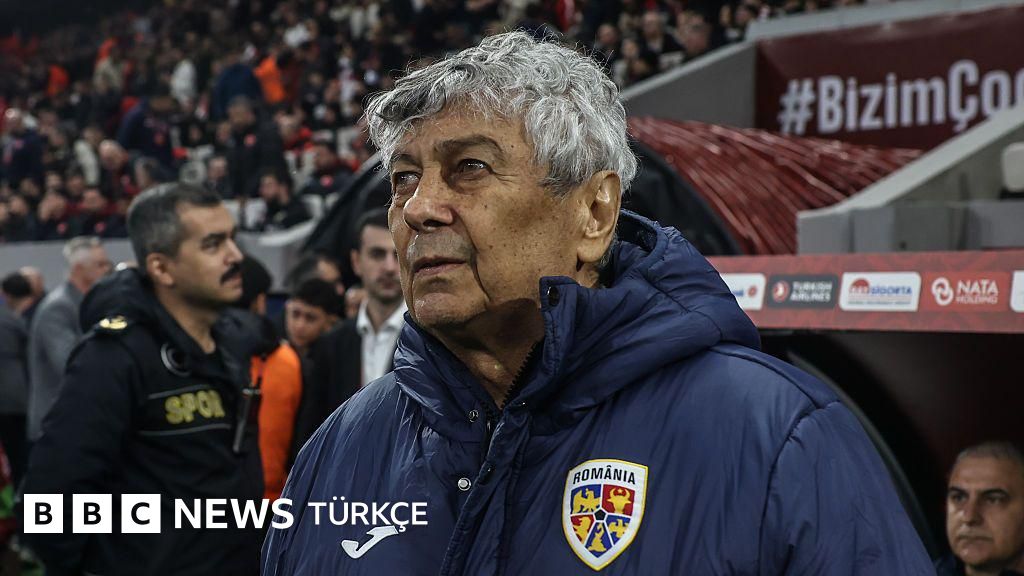
The football world is mourning the loss of one of its most enduring and strategic minds. Mircea Lucescu, the legendary Romanian manager and former player whose influence stretched across Europe’s most competitive leagues, passed away on Tuesday, April 7, 2026, at the age of 80 according to reports from CBS Sports.
The Bucharest University Emergency Hospital confirmed the news in an official statement, noting that the Romanian football icon passed away following a heart attack suffered on the morning of Friday, April 3, 2026 as reported by CBS Sports. Lucescu’s death marks the end of an era for a man who served as a national symbol in Romania and a respected tactician globally.
Throughout a career that spanned over four decades, Lucescu established himself as a serial winner. From captaining Romania at the 1970 FIFA World Cup to dominating the Ukrainian league with Shakhtar Donetsk, his journey was defined by a relentless pursuit of excellence and an ability to adapt to diverse footballing cultures in Romania, Italy, Turkey, Ukraine, and Russia via Wikipedia.
His final chapter in football was as poetic as it was challenging. Lucescu led the Romanian national team from 2024 until March 26, 2026, when the team suffered a loss in the World Cup playoff semifinal against Turkiye—the very same national team he had previously guided between 2017 and 2019 via CBS Sports.
A Legacy of Dominance: The Shakhtar Donetsk Era
While Lucescu found success in many cities, his twelve-year tenure at Shakhtar Donetsk remains one of the most iconic managerial spells in the history of the sport. Between 2004 and 2016, Lucescu transformed the club into a powerhouse of Eastern European football, ushering in the most successful period in the club’s history via Wikipedia.
The statistics from his time in Donetsk are staggering. Lucescu won a total of 22 trophies during his tenure, including eight Ukrainian Premier League titles, six Ukrainian Cups, and seven Ukrainian Super Cups according to CBS Sports. The crowning achievement of this era came in 2009, when he led the club to victory in the UEFA Cup, cementing Shakhtar’s place on the global stage via Wikipedia.
National Heroism and International Influence
Lucescu’s relationship with the Romanian national team was a lifelong journey of leadership. As a manager, he achieved a historic milestone in 1984, becoming the first coach to qualify the Romanian national team for a European Championship via CBS Sports. This achievement laid the groundwork for Romania’s future successes in international tournaments.
His influence extended deeply into Turkish football. Lucescu managed Galatasaray from 2000 to 2002 and Beşiktaş from 2002 to 2004 via Wikipedia. His impact at Galatasaray was particularly noted for bringing a European trophy to the club via the UEFA Super Cup via CBS Sports. Following his club success, he took the helm of the Turkish national team from 2017 to 2019 via Wikipedia.
Kazandırdığı UEFA Süper Kupa ile ülkemize bir Avrupa kupası daha getiren ve 15. şampiyonluğumuzda da takımımızda teknik direktör olarak görev yapan Mircea Lucescu’nun vefat ettiğini derin bir üzüntüyle öğrenmiş bulunuyoruz. Mircea Lucescu’nun ailesine, sevenlerine ve futbol… Galatasaray SK
From the Pitch to the Bench: A Playing Career of Distinction
Before he became a master tactician, Mircea Lucescu was a formidable presence on the field. A skilled winger, he is remembered as one of the most successful players in the history of the Romanian league championship. He spent the bulk of his playing career with Dinamo București, where he won seven league titles via Wikipedia.
On the international stage, Lucescu earned 64 caps for Romania, scoring 9 goals via Wikipedia. His leadership qualities were evident early on, as he served as the captain of the Romanian national team during the 1970 FIFA World Cup via Wikipedia.
A Global Journey Across Europe
Lucescu’s managerial curiosity led him to Italy in the 1990s, where he coached four different Serie A teams: Pisa, Brescia, Reggiana, and Inter Milan via CBS Sports. His stint at Inter Milan (1998–1999) further highlighted his ability to manage high-pressure environments in one of the world’s most tactical leagues via Wikipedia.
In his later years, he continued to challenge himself, managing Zenit Saint Petersburg (2016–2017) and returning to Ukraine to lead Dynamo Kyiv from 2020 to 2023 via Wikipedia. Even in his 80s, his passion for the game remained undiminished, as evidenced by his final appointment with the Romanian national team.
Career Summary and Key Achievements
To understand the scale of Lucescu’s contribution to football, one must look at the breadth of his success across different roles and nations.

| Role/Team | Key Achievement/Period | Notable Stat |
|---|---|---|
| Player (Dinamo București) | League Dominance | 7 League Titles via Wikipedia |
| Manager (Shakhtar Donetsk) | Club Transformation (2004–2016) | 22 Total Trophies via CBS Sports |
| Manager (Romania) | Euro Qualification (1984) | First time Romania qualified for Euros via CBS Sports |
| Manager (Galatasaray) | European Success | UEFA Super Cup Winner via CBS Sports |
| Player (Romania) | World Cup Leadership | Captain at 1970 FIFA World Cup via Wikipedia |
A Lasting Impact on the Game
The death of Mircea Lucescu is not just a loss for Romania, but for the global football community. He was a bridge between the traditional styles of the 20th century and the modern, analytical approach of the 21st. His ability to cultivate talent and build sustainable winning cultures—most notably at Shakhtar—will be studied by coaches for years to come.
The Bucharest University Emergency Hospital’s statement captured the sentiment of a nation, describing him as a “national symbol” and noting that “entire generations of Romanians grew up with his image in their hearts” via CBS Sports.
As the sports world reflects on his passing, the focus remains on his unparalleled resilience. From the pitches of Bucharest to the stadiums of Istanbul and Donetsk, Lucescu lived and breathed football until his final days.
Details regarding public memorials and funeral services are expected to be released by the family and Romanian football authorities in the coming days.
World Today Journal encourages readers to share their memories of Mircea Lucescu’s legendary career in the comments below.