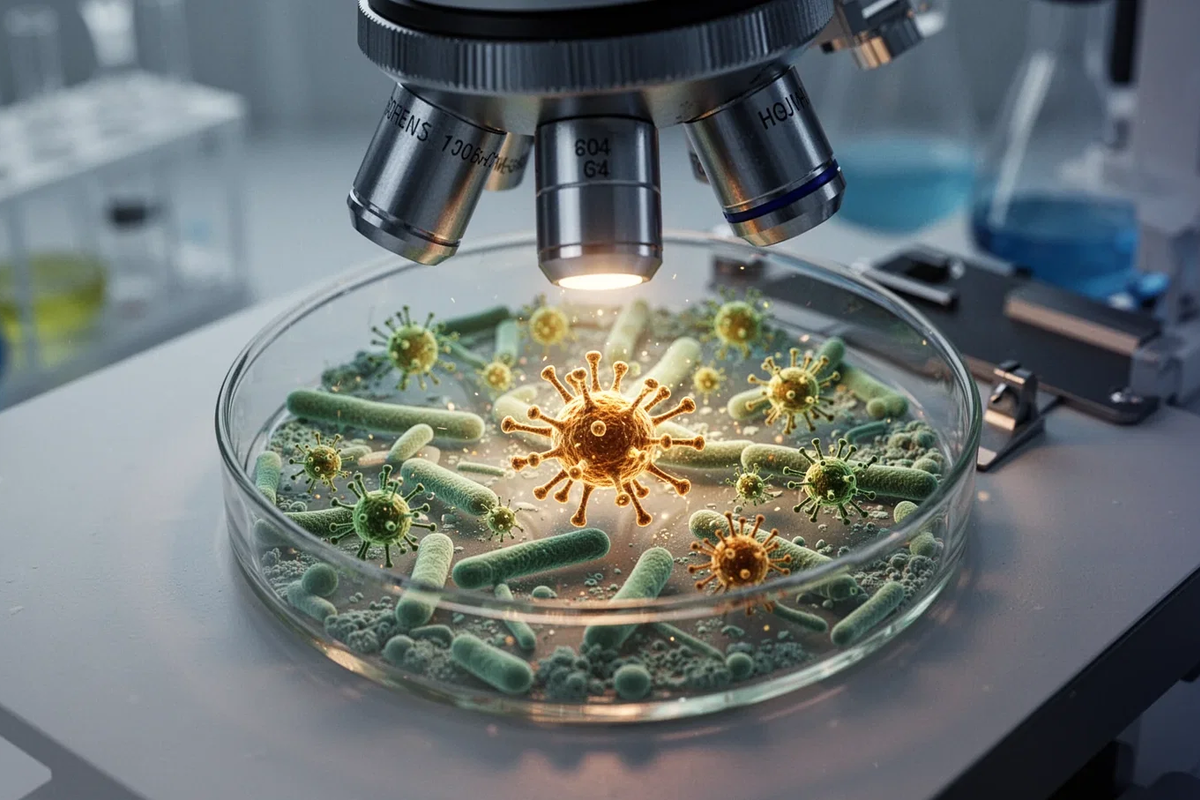
For years, the medical community has raced to discover a way to detect colorectal cancer before it becomes symptomatic. Because tumors in the colon often grow slowly and silently, they frequently evade detection until they have reached an advanced stage, significantly complicating treatment and lowering survival rates. However, recent breakthroughs in colorectal cancer research are shifting the focus from the tumors themselves to the complex ecosystem living within our intestines.
A research team from Denmark has identified a previously unknown virus in the gut that may serve as a critical marker for early detection. Unlike the viruses that cause human illnesses—such as influenza or HIV—this specific virus targets bacteria. This discovery, recently detailed in the journal Communications Medicine, suggests that the presence of these bacteria-infecting viruses is significantly more common in patients already suffering from colorectal cancer according to reports on the Danish study.
As a physician and journalist, I have seen how the paradigm of oncology is shifting toward the microbiome. We are no longer looking just at genetic mutations or lifestyle factors. we are looking at the “invisible” residents of our gut. The identification of this virus provides a potential roadmap for diagnostic tests that could signal the onset of cancer long before traditional screening methods—which typically appear for existing polyps or tumors—can trigger an alarm.
The Role of Bacteriophages in Cancer Detection
To understand this discovery, one must first understand the nature of the virus identified by the Danish researchers. This is not a virus that infects human cells, but rather a bacteriophage—a virus that specifically attacks and infects bacteria. While the human gut is home to trillions of microbes, the balance of this microbiome is delicate and certain disruptions are closely linked to disease.
The research highlights a specific relationship between these viruses and the bacterium Bacteroides fragilis. Scientists have observed a connection between B. Fragilis and colorectal cancer for several years. It is known that these bacteria produce proteins capable of promoting chronic inflammation, which can lead to the development of cancer over the long term. In fact, a 2018 study indicated that B. Fragilis is twice as common in individuals with a genetically high risk for colorectal cancer compared to healthy individuals as reported by Focus Gesundheit.
The discovery of a virus that targets these bacteria adds a modern layer to our understanding. If these viruses appear more frequently in cancer patients, they could potentially be used as “biological markers.” By detecting these viruses in a patient’s sample, clinicians might be able to identify high-risk environments in the gut before a physical tumor even forms.
The Urgency of Early Diagnosis in Germany and Beyond
The clinical need for such markers is immense. In Germany alone, colorectal cancer is one of the most prevalent forms of the disease, with nearly 55,000 new cases diagnosed every year according to data from Uniklinik Köln. It currently stands as the second most common cause of cancer-related deaths in the country.
The primary challenge remains the “silent” nature of the disease. Because early-stage tumors do not typically cause obvious symptoms, many patients are diagnosed too late. Current screening tools are effective but often only detect the disease once polyps (precancerous growths) or tumors have already established themselves. The goal of current colorectal cancer research is to move the diagnostic window further back, identifying molecular changes in the microbiome that precede the growth of a polyp.
Key Takeaways: The Microbiome and Colorectal Cancer
- New Viral Marker: Danish researchers found a virus that infects gut bacteria and appears more frequently in colorectal cancer patients.
- Bacterial Link: The bacterium Bacteroides fragilis is known to promote chronic inflammation through specific proteins, increasing cancer risk.
- Early Detection Gap: Current tests often find cancer only after polyps have formed; microbiome markers could offer an earlier warning.
- Epidemiological Impact: With approximately 55,000 new cases annually in Germany, improving early detection is a public health priority.
Broadening the Scope: Youth and the Microbiome
While colorectal cancer is often associated with aging, recent research suggests that the microbiome’s role may be particularly telling in younger patients. In Jena, Germany, a consortium of researchers including Gianni Panagiotou from the University of Jena and the Leibniz Institute for Natural Product Research and Infectious Biology (Leibniz-HKI) are investigating how the intestinal flora influences risk.
Their findings indicate that young people diagnosed with colorectal cancer exhibit a specific, distinct pattern of bacteria, viruses, and fungi in their digestive tracts according to MDR Wissen. This suggests that the “signature” of the microbiome may differ based on the age of the patient, and that specialized nutrition might potentially play a role in prevention.
This research complements other large-scale efforts, such as the LEONORA study. Led by scientists at the German Cancer Research Center (DKFZ) in Heidelberg and Uniklinik Köln, the LEONORA study is examining how gut bacteria can be utilized in the future treatment of colorectal cancer as detailed by Uniklinik Köln.
What This Means for the Future of Healthcare
The transition from observing “what is there” (the tumor) to “what is causing the environment” (the microbiome) represents a significant leap in medical innovation. If the Danish team’s findings are validated and translated into clinical practice, we could see the development of non-invasive screening tests—perhaps simple stool or blood tests—that look for specific bacteriophage signatures.
For the patient, this means a shift from reactive medicine to proactive prevention. Instead of waiting for a colonoscopy to find a polyp, a doctor might identify a high-risk microbiome profile and implement targeted interventions—whether through diet, probiotics, or more frequent monitoring—to prevent the cancer from ever developing.
However, it is important to maintain a balanced perspective. While the identification of this virus is a promising step, it is currently a marker of association. Further research is required to determine if these viruses are a cause of the cancer, a result of the cancer, or simply a bystander that happens to thrive in a cancerous environment.
The next phase of this research will likely involve larger clinical trials to confirm the sensitivity and specificity of these viral markers across diverse global populations. As we continue to map the “dark matter” of the human microbiome, the potential for personalized, precision oncology grows.
We will continue to monitor updates from the Danish research team and the LEONORA study as they move toward clinical application. If you or a loved one are concerned about colorectal health, please consult your primary care physician about the current screening guidelines appropriate for your age and risk profile.
Do you believe microbiome testing will replace traditional screenings in the next decade? Share your thoughts in the comments below or share this article with your network to spread awareness about early detection.