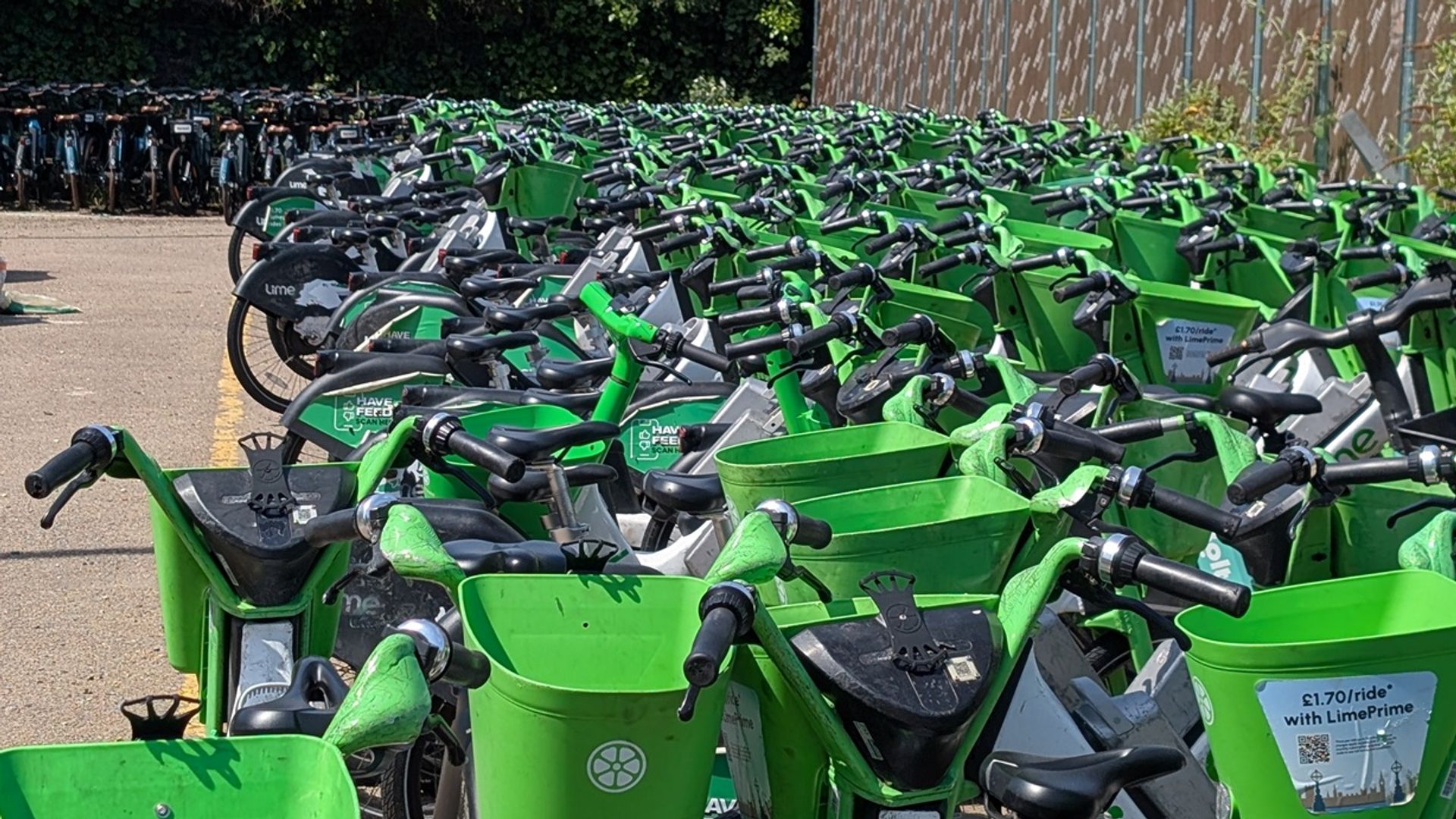
The streets of London have become the frontline of a growing urban planning conflict as local authorities take decisive action against the proliferation of micro-mobility devices. In a significant enforcement operation, the London Borough of Wandsworth has confiscated more than 2,500 rental e-bikes that were found to be abandoned or parked in ways that obstruct public thoroughfares. This aggressive move highlights a deepening tension between the rapid expansion of app-based transport services and the necessity of maintaining accessible, safe pedestrian infrastructure in high-density metropolitan areas.
For city planners and residents alike, the issue of rental e-bikes confiscated due to poor parking is emblematic of the “last-mile” transport dilemma. While e-bikes offer a sustainable alternative to private car ownership, the lack of designated docking infrastructure has often resulted in sidewalks being cluttered with discarded frames, posing significant safety risks to pedestrians, particularly those with visual impairments or limited mobility. According to official statements from Wandsworth Council, the sheer volume of improperly stored bikes necessitated a shift from passive monitoring to direct intervention.
The Regulatory Landscape of Urban Micro-mobility
The recent crackdown in Wandsworth serves as a bellwether for how local governments are beginning to assert control over the private operators that manage these fleets. Unlike traditional public transport, which operates under strict city-led mandates, many e-bike companies have historically operated on a “dockless” model. This approach relies on GPS and mobile app connectivity, which, while convenient for the user, frequently leaves the burden of spatial management on the local council.
Under current UK legislation, local authorities are increasingly utilizing existing powers under the Highways Act 1980 to treat improperly parked e-bikes as obstructions of the highway. By impounding these units, the council forces companies to pay administrative and storage fees to retrieve their assets, thereby shifting the financial liability back onto the private sector. This fiscal pressure is designed to incentivize companies to improve their geofencing technology and enforce stricter parking compliance among their user base.
Balancing Sustainability and Public Order
The debate surrounding these devices is not merely about aesthetics or convenience. it touches on the broader goals of environmental sustainability. As London works toward its ambitious carbon-neutral targets, the role of micro-mobility is theoretically critical. However, the lack of a standardized regulatory framework across different boroughs has created a fragmented experience for both riders and residents.

Many industry analysts point out that the confiscation model is a reactive measure rather than a long-term solution. A more sustainable path forward likely involves the creation of mandatory “corral” parking zones, similar to those implemented in other major European cities. By restricting parking to specific, clearly marked zones, authorities can ensure that e-bikes remain a functional part of the transit ecosystem without compromising the safety and accessibility of public footpaths. As reported by Transport for London (TfL), ongoing collaboration between operators and local councils remains essential to standardizing these parking requirements across the capital.
What This Means for Users and Operators
For the average commuter, the primary impact of these crackdowns is a reduction in the immediate availability of bikes in certain areas. When a council removes a large fleet, it creates a temporary service vacuum. For operators, the challenge is twofold: they must invest in more sophisticated AI-driven parking detection systems while simultaneously negotiating with local councils to secure more physical space for docking stations.

The financial impact of such large-scale seizures is significant. With over 2,500 units removed in a single borough, the operational costs for the companies involved—including recovery fees and lost rental revenue—are substantial. This creates an economic impetus for these companies to finally resolve the “bad parking” issue that has plagued the industry since its inception. As the sector matures, we are likely to see a shift toward closer integration between private operators and municipal transport departments, effectively turning these companies into quasi-public service providers.
Key Takeaways for the Future of Rental E-bikes
- Increased Enforcement: Local councils are showing a higher willingness to seize assets that violate local highway obstruction laws.
- Technological Evolution: Future operations will likely rely more heavily on precise geofencing and mandatory parking verification via in-app photos.
- Regulatory Standardization: There is a growing demand for a unified London-wide policy to prevent the current “patchwork” of rules across different boroughs.
- Infrastructure Investment: The focus is shifting from simply deploying bikes to building the physical infrastructure (corral zones) necessary to support them.
Looking Ahead: The Next Steps for Policy
As of mid-2024, the situation remains fluid. While Wandsworth has taken a firm stance, other boroughs are watching the outcomes of these seizures closely to determine if a similar approach is necessary for their jurisdictions. The next significant checkpoint will be the publication of updated municipal transport guidelines, which are expected to outline more stringent requirements for dockless operators regarding fleet management and parking compliance.
For residents and stakeholders, staying informed is critical. Local councils frequently update their websites with new guidance on how to report nuisance parking and where to find approved parking zones. As the city continues to navigate the complexities of modern urban transport, the balance between innovation and public order will remain a defining challenge for policymakers. We encourage our readers to participate in upcoming public consultations regarding local transport planning to ensure that the future of London’s streets reflects the needs of all road users.
What are your thoughts on the balance between e-bike convenience and sidewalk safety? Share your perspective in the comments below, and subscribe to our newsletter for the latest updates on global economic policy and urban development.
Keep reading