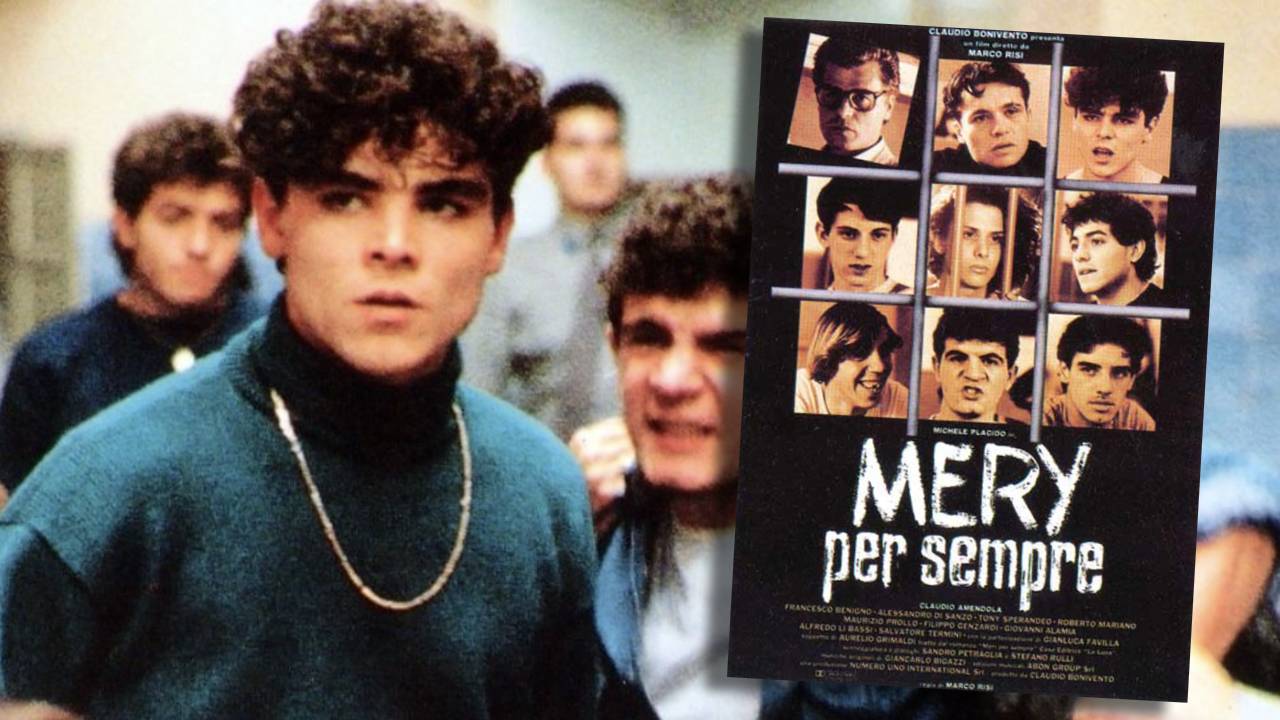
The phrase “Loro mi chiamano ‘Minchia dura'” has become a widely recognized line from Italian cinema, originating from the 1989 film Mery per sempre, directed by Marco Risi. Spoken by the character Natale, portrayed by actor Francesco Benigno, the line has endured in popular culture decades after the film’s release. Alongside Michele Placido, who played Marco Terzi in the film, Benigno’s performance helped cement the movie as a significant work in Italian cinema of the late 1980s.
The film Mery per sempre is based on the novel by Aurelio Grimaldi and presents a dramatic portrayal of life inside a juvenile detention center in Palermo, Sicily. It explores themes of institutional neglect, survival, and the complex social dynamics among incarcerated youth. The title, which translates to “Forever Mery,” refers to one of the central characters, Mario “Mery” Libassi, played by Alessandro Di Sanzo. The film’s raw depiction of systemic issues in southern Italy resonated with audiences and critics alike upon its release.
Francesco Benigno, born in Palermo, began his acting career with this role, which brought him national attention. His portrayal of Natale, a defiant and street-smart teenager, included the now-iconic line delivered in Sicilian dialect, reflecting the film’s authentic linguistic texture. Michele Placido, already an established actor at the time, played the role of educator Marco Terzi, offering a counterpoint to the youths’ struggles through his character’s attempts to connect with and guide them.
Over the years, the line “Loro mi chiamano ‘Minchia dura'” has been referenced in various media, including social platforms and retrospectives on Italian cinema. A recent Instagram post from April 26, 2026, by the account filmemotivazione highlighted the enduring legacy of the scene, pairing it with hashtags honoring both Benigno, and Placido. The post included a clip from the film, reigniting interest in the dialogue and its cultural significance.
The continued circulation of this quote underscores how certain lines from regional films can transcend their original context to become part of broader cultural memory. In the case of Mery per sempre, its unflinching look at youth incarceration and societal abandonment in Sicily has contributed to its lasting relevance in discussions about Italian neorealism and social cinema.
As of now, there are no announced plans for a sequel, remake, or official re-release of Mery per sempre. However, the film remains accessible through various streaming platforms and cultural archives that specialize in classic Italian cinema. Its preservation ensures that new audiences can engage with its narrative and performances, including the defining moment when Natale declares, “Loro mi chiamano ‘Minchia dura’.”
For those interested in exploring the film’s background, interviews with the cast and crew from the time of its release are available through Italian film institutes and documentary archives. These resources provide insight into the production’s intentions and the real-world inspirations behind its story.
The legacy of Mery per sempre endures not only through its memorable dialogue but also through its contribution to Italian cinema’s tradition of addressing social issues with honesty and emotional depth. Decades later, the line spoken by Francesco Benigno’s character continues to evoke the film’s spirit of resilience and defiance in the face of systemic neglect.
To stay updated on retrospectives, restorations, or discussions surrounding classic Italian films like Mery per sempre, follow reputable film culture publications and archives dedicated to preserving cinematic history.