
In a decisive move to combat one of the most lethal forms of malignancy, France has initiated a large-scale pilot program for lung cancer screening. This ambitious public health endeavor aims to recruit 20,000 volunteers across five specific regions, marking a significant shift toward proactive, early-detection strategies in the country’s respiratory health landscape.
For decades, lung cancer has been characterized by its high mortality rate, largely because symptoms often do not manifest until the disease has reached an advanced, less treatable stage. By implementing a structured screening protocol, health authorities hope to identify suspicious nodules while they are still localized, significantly improving the chances of successful intervention and long-term survival.
The pilot program is designed to test the logistical and clinical efficacy of a nationwide rollout. If successful, this model could serve as a blueprint for integrating systematic screening into the standard of care for high-risk populations across Europe, and beyond. The initiative focuses on regions with historically higher incidences of respiratory disease and smoking-related complications, ensuring that resources are directed where the clinical need is most acute.
A Critical Shift in Early Detection Strategy
The fundamental challenge in managing lung cancer is the “silent” nature of its progression. Unlike many other cancers that may present with palpable masses or localized pain in their early stages, lung cancer often remains asymptomatic during its most treatable phases. By the time a patient experiences persistent coughing, chest pain, or hemoptysis (coughing up blood), the malignancy may have already progressed to a systemic level.
This pilot program aims to break that cycle of late diagnosis. By targeting individuals based on specific risk profiles rather than waiting for clinical symptoms, the program utilizes a preventive rather than a reactive medical model. This shift is essential for reducing the burden on intensive care resources and improving the quality of life for patients who can be treated with less invasive surgical or radiological methods.
Understanding the Pilot: Regions and Participation
The program is being rolled out in five key French regions, selected to provide a diverse demographic and geographic sample for evaluation. These regions include Hauts-de-France (which includes the former Picardie area), Grand Est, Normandie, Occitanie, and Auvergne-Rhône-Alpes. These areas have been prioritized due to a combination of epidemiological data and the necessity of testing different healthcare delivery models, from urban centers to more dispersed rural settings.
The recruitment phase is currently seeking 20,000 volunteers to participate in the study. This large sample size is critical for providing statistically significant data on the program’s ability to detect early-stage cancers and its impact on false-positive rates—a common challenge in screening programs. The participation of these volunteers will allow researchers to evaluate not only the clinical outcomes but also the patient experience and the logistical hurdles of managing a high volume of imaging appointments.
Health authorities are working closely with regional health agencies (Agences Régionales de Santé) to ensure that the screening process is integrated with existing primary care networks. This ensures that if a screening identifies a potential issue, the transition from detection to diagnostic confirmation and subsequent treatment is as seamless as possible.
Who Qualifies? Eligibility and Screening Criteria
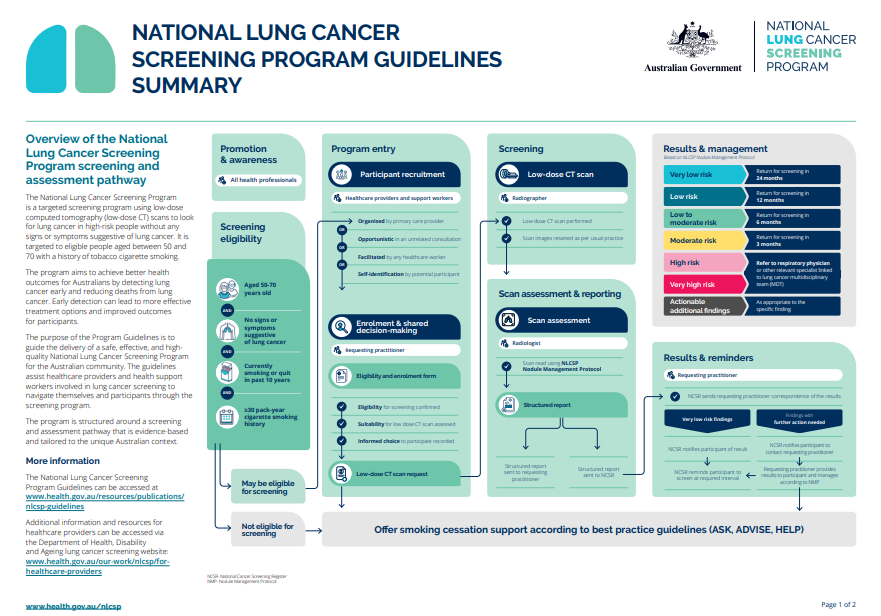
Because screening programs must balance the benefits of early detection against the risks of overdiagnosis and unnecessary radiation exposure, participation is not universal. The pilot program employs strict eligibility criteria based on established medical risk factors, primarily focusing on smoking history and age.
While specific local guidelines may vary slightly during the pilot phase, the general criteria for high-risk individuals typically include:
- Age: Individuals generally within the 50 to 75-year-old age bracket.
- Smoking History: A significant history of tobacco use, often measured in “pack-years.” A pack-year is calculated by multiplying the number of packs smoked per day by the number of years the person has smoked.
- Current Status: Both current smokers and former smokers who have quit within a recent timeframe (usually within the last 15 years) are often included in these high-risk assessments.
It is important for potential participants to understand that screening is a tool for prevention and early detection in healthy-feeling individuals. Those who are already experiencing significant respiratory symptoms should seek immediate medical consultation through traditional diagnostic pathways rather than waiting for a screening appointment.
The Science of Low-Dose CT: Why Early Detection is Vital
The technological backbone of this screening initiative is the Low-Dose Computed Tomography (LDCT) scan. Unlike a standard CT scan, which uses higher levels of radiation to provide highly detailed images of internal structures, an LDCT scan is specifically calibrated to provide sufficient detail to identify lung nodules while significantly minimizing the radiation dose to the patient.
The efficacy of LDCT in lung cancer screening is well-documented in international clinical trials. The process involves taking a series of X-ray images from different angles around the body, which a computer then processes to create cross-sectional “slices” of the lungs. This allows radiologists to detect tiny abnormalities—often just a few millimeters in size—that would be invisible on a standard chest X-ray.
The clinical importance of detecting these nodules early cannot be overstated. Lung cancer is staged based on its size and whether it has spread to lymph nodes or distant organs. Detection at Stage I, where the tumor is confined to the lung, offers significantly higher five-year survival rates compared to Stage IV, where the cancer has metastasized.
The Importance of Staging in Treatment Outcomes
The primary goal of the LDCT scan in this pilot is to catch malignancies in the early stages. When cancer is caught early, treatment options are often more localized and effective:
- Stage I: Often treatable via surgical resection (removing the tumor) or stereotactic body radiation therapy (SBRT).
- Stage II/III: May require a combination of surgery, chemotherapy, and radiation.
- Stage IV: Generally requires systemic therapies such as immunotherapy or targeted therapy to manage the disease, as the cancer is no longer localized.
Challenges in Implementation and Public Health Impact
While the potential benefits are immense, the implementation of a mass screening program is not without significant challenges. One of the primary concerns is overdiagnosis—the detection of minor, slow-growing tumors that might never have caused harm or death during the patient’s lifetime. This can lead to unnecessary anxiety and invasive follow-up procedures.
Another critical challenge is the management of false positives. A nodule detected on an LDCT scan is not always cancer; it could be a scar from a previous infection or a benign growth. Managing the “cascade of care” that follows a suspicious finding requires robust clinical pathways to ensure patients are not subjected to excessive, unnecessary testing while ensuring that true malignancies are not missed.
From a logistical standpoint, the program must also address health equity. Ensuring that the screening is accessible to all high-risk populations, regardless of their socioeconomic status or geographic location, is vital. This involves overcoming barriers such as transportation to imaging centers, the ability to take time off work, and addressing the social stigma often associated with smoking.
Frequently Asked Questions
Is the LDCT scan painful?
No, a low-dose CT scan is a non-invasive procedure. It is similar to a standard X-ray and typically takes only a few minutes to complete. You will lie on a table that slides into a doughnut-shaped scanner.
How often will I need to be screened?
If the pilot program confirms a finding or if you are enrolled in a long-term screening protocol, the frequency of scans will be determined by your specific risk profile and the results of your previous scans. Typically, annual or biennial screening is common for high-risk individuals.
What happens if a nodule is found?
If a nodule is detected, it does not necessarily mean you have cancer. The next step usually involves a review by a radiologist, which may lead to a follow-up scan after a few months to monitor for changes, or more advanced diagnostic tests such as a PET scan or a biopsy.
Key Takeaways
- Pilot Scope: A new French program is targeting 20,000 volunteers across five regions (Hauts-de-France, Grand Est, Normandie, Occitanie, and Auvergne-Rhône-Alpes).
- Technology: The program uses Low-Dose Computed Tomography (LDCT) to minimize radiation while maximizing detection capability.
- Primary Goal: To identify lung cancer at Stage I or II, when it is most treatable and survival rates are highest.
- Target Group: High-risk individuals, primarily defined by age (50–75) and significant smoking history.
- Strategic Objective: To test the feasibility of a nationwide, systematic lung cancer screening program in France.
The next major milestone for this initiative will be the publication of the first interim report on recruitment rates and initial clinical findings, which will inform the expansion of the program. Public health officials will continue to monitor the logistical integration of the screening units within the regional healthcare systems.
Have thoughts on the rollout of large-scale cancer screening programs? We invite you to share your perspective in the comments below and share this article with your network to spread awareness.
Related reading
- Se confirmaron en Nueva York más casos del virus Bourbon: Cuales son sus síntomas y cómo prevenirlo – Infobae
- Orbetello Environmental Policies: Insights from Assessor Ivan Poccia
- University of Iowa International Writing Program Secures Funding After Losing Federal Support (news-usa.today)
- Extremadura Health Service Expands Early Breast Cancer Screening Program (world-today-news.com)