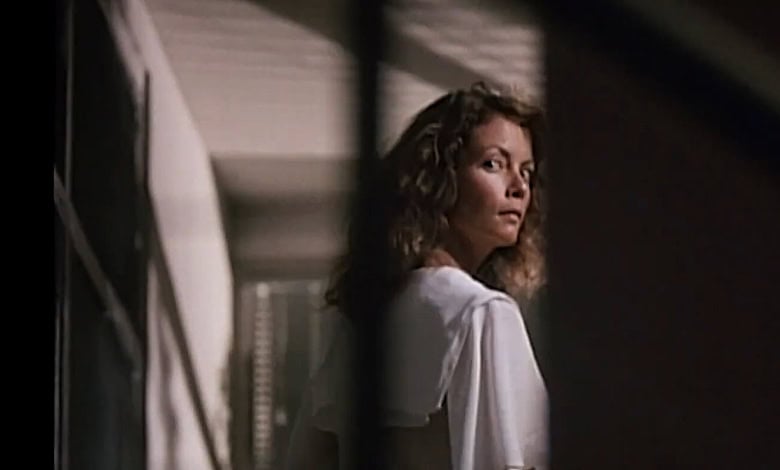
Beyond the Cradle: Reassessing William Friedkin’s Underrated “The Guardian”
William Friedkin,the director who indelibly scarred a generation with The Exorcist (1973),followed up that landmark horror film with a career marked by bold choices and,often,critical and commercial turbulence. Frequently enough overlooked in discussions of his filmography is The Guardian (1990), a deeply unsettling and surprisingly effective exploration of parental anxieties wrapped in a dark fairy tale. While it doesn’t reach the heights of The exorcist, dismissing it as a misstep overlooks its unique strengths and Friedkin’s continued willingness to push boundaries.
This film, released two years before the more mainstream psychological thriller The Hand that Rocks the Cradle, delves into far more primal fears.It’s a captivating, if flawed, work that deserves a second look.
A Career Defined by Risk and Reward
friedkin’s trajectory after the Exorcist is a study in artistic integrity versus audience expectation. He famously resisted simply replicating his success, opting instead for the challenging and ultimately divisive Sorcerer (1977). This decision, and the subsequent box office failure, cast a long shadow.
Even the critically acclaimed To Live and Die in L.A. (1985) couldn’t fully shake the label: “from the director of The Exorcist.” Friedkin was perpetually measured against a standard few films could meet, a situation echoed by filmmakers like John Boorman who faced similar challenges.
The Guardian arrived at a pivotal moment, and it’s a film that reveals much about Friedkin’s artistic impulses.
Decoding “The Guardian”: Fairy Tale or Supernatural Horror?
The core issue many have with the Guardian lies in its tonal shifts. The film introduces supernatural elements that sometiems feel arbitrary, lacking clear explanation. However, viewing it as a modern-day fairy tale unlocks its power.
It taps into the essential anxieties of parenthood - the fear of losing a child, the vulnerability of new life, and the protective instincts that can border on obsession. This thematic resonance elevates the film beyond simple genre tropes.
Here’s what works notably well:
* Nightmarish Imagery: The wolf attack and Camilla’s (Jenny Seagrove) ethereal chase sequence, culminating in her transformation into a being of the forest, are genuinely terrifying.
* Visceral Violence: A brutal encounter with a group of thugs, reminiscent of Last House on the Left (1972), is shockingly violent, almost to the point of parody.It’s a sequence that feels deliberately over-the-top, hinting at Friedkin’s awareness of genre expectations.
* Unconventional Ally: The unexpected intervention during the violent encounter adds a layer of dark humor and reinforces the film’s fairy tale logic.
the Killer Tree: Camp or Genius?
The film’s centerpiece – a sentient, murderous tree – is arguably its most divisive element. It oscillates between gruesome effectiveness and unintentional camp. Friedkin seems to be deliberately pushing boundaries, testing the limits of shock value.
Interestingly,Sam Raimi was initially attached to direct,and his vision likely would have leaned even further into the outlandish.The final confrontation, complete with a chainsaw, feels like a precursor to Raimi’s Army of Darkness (1993).
Why Comparisons to The Exorcist Fall Short
It’s a mistake to approach The Guardian expecting another Exorcist. The films operate on different levels. The Exorcist was a meticulously crafted descent into demonic possession. The Guardian is a more impressionistic,emotionally driven exploration of primal fears.
While some attempts at shock fall flat, the film’s overall atmosphere is undeniably unsettling.
A Thematic Companion, Not a Competitor
Ultimately, The Guardian isn’t trying to replace The Exorcist; it’s offering a thematic companion piece. Both films delve into the vulnerability of innocence and the power of unseen forces.
If you can embrace its eccentricities and accept it as a lucid nightmare, The Guardian is a rewarding experience. Like the work of M. Night Shyamalan,