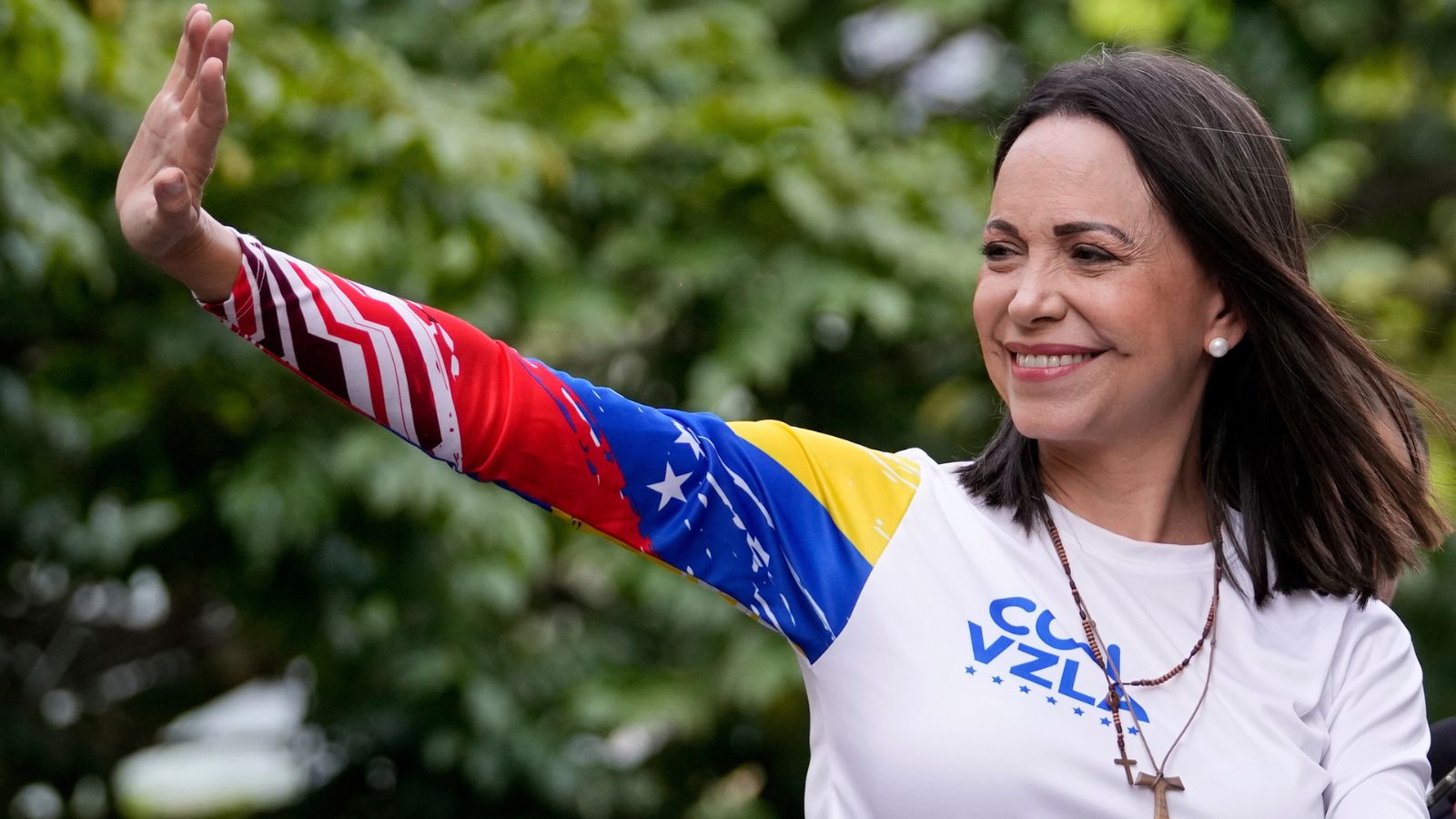
María Corina Machado, the Venezuelan opposition leader and Nobel Peace Prize laureate, arrived in Portugal on April 21, 2026, for a scheduled meeting with Portuguese Prime Minister Luís Montenegro. The visit comes amid ongoing international attention on Venezuela’s political transition following the January 2026 capture of former president Nicolás Maduro by U.S. Forces. Machado, who has been unable to return to Venezuela since departing in December 2025 to accept her Nobel Prize in Oslo, continues to advocate for democratic restoration from exile.
According to verified reports from The Guardian and Yahoo News, Machado held a large rally in Madrid’s Puerta del Sol on April 18, 2026, drawing several thousand supporters. At that event, she declared her commitment to Venezuela’s freedom and criticized the Trump administration’s decision to back Maduro’s vice-president, Delcy Rodríguez, instead of recognizing her movement’s claimed victory in the 2024 presidential election. The Madrid rally occurred just days before her arrival in Portugal, underscoring her active diplomatic outreach across Europe.
Machado’s meeting with Prime Minister Montenegro marks a significant step in her efforts to secure international backing for a peaceful transition in Venezuela. Although the specific agenda of the discussion has not been publicly disclosed, sources indicate it focused on humanitarian aid, electoral integrity, and coordination with European allies on sanctions policy. The Portuguese government has maintained a cautious stance on Venezuela, emphasizing dialogue and multilateral engagement through the International Contact Group on Venezuela.
During her time in Europe, Machado has consistently highlighted the plight of Venezuelan migrants and refugees, many of whom reside in Portugal and Spain. In her Madrid speech, she referred to the diaspora’s aspiration for a “return to home,” a phrase that resonated with attendees waving Venezuela’s yellow, blue, and red flags. Her Nobel Peace Prize, awarded in 2023 for her nonviolent struggle for free elections in Venezuela, has amplified her global platform, though it has also drawn criticism from Maduro’s allies who accuse her of foreign interference.
The Venezuelan opposition leader’s movements are closely monitored by both Caracas and Washington. Following Maduro’s capture, the Trump administration initially celebrated the development as a step toward democracy but later shifted support to Rodríguez, citing economic interests in Venezuela’s oil sector. Machado has repeatedly denounced this reversal, arguing it undermines the democratic will expressed in the 2024 vote, which independent observers and her coalition claim she won by a significant margin.
In Portugal, Machado is expected to engage with members of the Venezuelan expatriate community, particularly in Lisbon and Porto, where sizable populations have settled since the deepening of Venezuela’s crisis in the mid-2010s. Community organizations have reported increased inquiries about repatriation assistance and documentation services, though no formal repatriation program has been launched by either the Venezuelan or Portuguese governments as of April 2026.
Machado’s Europe tour has included stops in Norway, where she received her Nobel Prize, and Spain, before arriving in Portugal. Her schedule suggests potential further engagements in Brussels or Strasbourg, where she may address the European Parliament on human rights and democratic governance in Latin America. However, no official invitations from EU institutions have been confirmed for dates beyond her Portuguese visit.
The leader’s legal status remains complex. While she is barred from returning to Venezuela under current authorities aligned with Rodríguez, she faces no known travel restrictions in Schengen Area countries. Her Venezuelan passport remains valid, and she has not been subject to Interpol notices or arrest warrants issued by international bodies, according to publicly accessible records from the Organization of American States and the International Criminal Court.
As of April 21, 2026, no official statement has been released by the Portuguese Prime Minister’s office detailing the outcomes of the meeting with Machado. The Journal of Notícias, which first reported the visit, noted that the discussion took place behind closed doors, consistent with standard protocol for high-level diplomatic encounters. Updates on any joint declarations or policy positions are expected through official channels in the coming days.
Machado’s continued presence on the international stage reflects the unresolved nature of Venezuela’s political situation. Despite Maduro’s removal from power, the country remains under an interim administration led by Rodríguez, whose legitimacy is disputed by the opposition and several Latin American nations. The United States has not yet recognized Rodríguez as president, maintaining a position of cautious observation while pursuing negotiated transitions.
For readers seeking updates on Venezuela’s political evolution, reliable sources include the Office of the President of Venezuela (for official statements), the Venezuelan National Assembly (opposition-led), and multilateral bodies such as the Lima Group and the International Contact Group on Venezuela. Human rights conditions are regularly monitored by the United Nations High Commissioner for Refugees and the Inter-American Commission on Human Rights.
As María Corina Machado’s diplomatic efforts progress, her focus remains on achieving a free, fair, and verifiable electoral process in Venezuela that allows for the peaceful transfer of power. Whether her meeting with Prime Minister Montenegro yields concrete support for that goal remains to be seen, but it underscores the enduring global interest in Venezuela’s path toward democracy.
Stay informed, share this article, and join the conversation below.
Worth a look