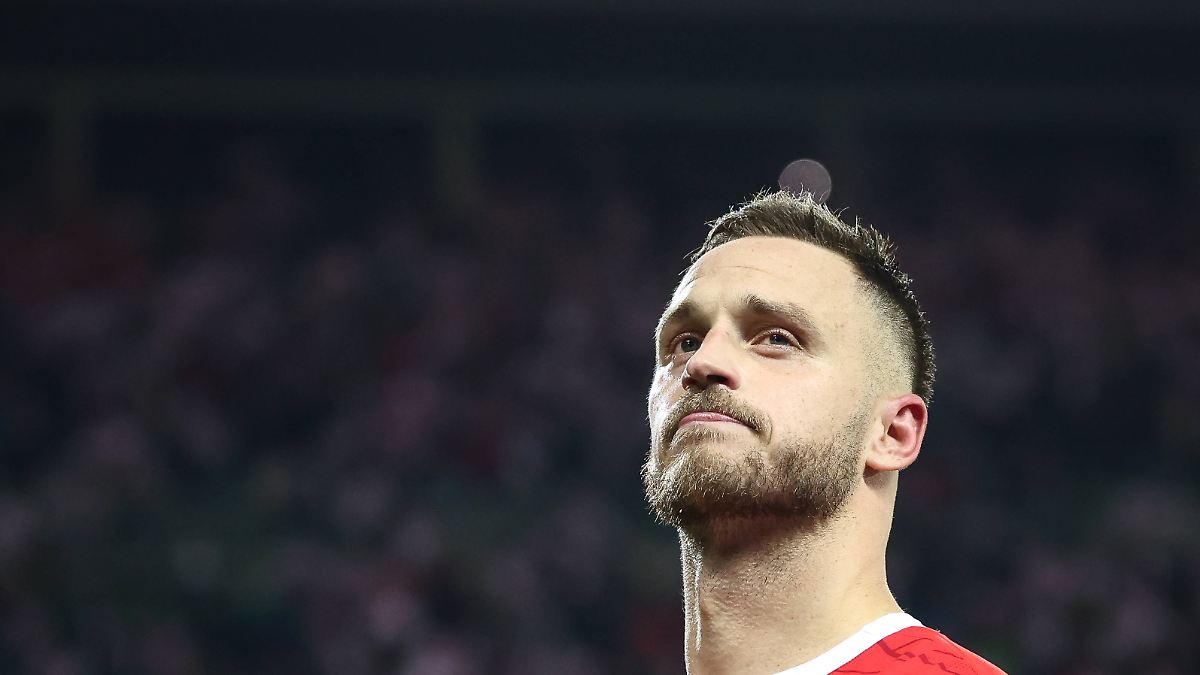
Marko Arnautović, the Austrian international forward known for his powerful physique and outspoken personality, has opened up about a deeply challenging period during his time playing in China, describing the experience as one that pushed him to the brink of mental exhaustion. In recent interviews, the 35-year-old striker revealed that despite the lucrative financial incentives offered by Chinese Super League clubs, the emotional and psychological toll of living and playing abroad led to what he described as a descent into depression.
The revelations come amid growing global awareness of mental health struggles among professional athletes, particularly those who relocate to unfamiliar cultural and linguistic environments. Arnautović’s candid account adds to a broader conversation about the hidden costs of chasing financial rewards in football, especially when such moves come at the expense of personal well-being. His story underscores the importance of psychological support systems for athletes navigating high-pressure transitions across continents.
Arnautović’s stint in China began in 2019 when he signed for Shanghai SIPG, one of the league’s most prominent clubs, reportedly earning a salary that placed him among the highest-paid foreign players in the league at the time. The move came after successful spells in Germany’s Bundesliga with Werder Bremen and Stoke City in the English Premier League, where he had established himself as a reliable goal-scorer and fan favorite.
However, the transition to life in Shanghai proved far more difficult than anticipated. In a 2023 interview with Austrian broadcaster ORF, later cited by multiple European outlets, Arnautović described feeling isolated despite the financial comforts. “I was earning more than ever before,” he said, “but I felt completely alone. The language barrier, the different lifestyle, being away from my family — it started to weigh on me heavily.” He went on to explain that the pressure to perform, combined with limited social integration, contributed to a prolonged period of low mood and disengagement.
These sentiments were echoed in subsequent interviews with German media outlets including T-Online and Kurier, where Arnautović used stark language to describe his mental state. “Es war Horror,” he told one interviewer, translating to “It was horror.” He clarified that while he never sought clinical treatment during his time in China, he recognized in hindsight that he was experiencing symptoms consistent with depression, including loss of motivation, sleep disturbances, and emotional withdrawal.
Medical professionals note that expatriate athletes are particularly vulnerable to mental health challenges due to factors such as cultural dislocation, performance pressure, and reduced access to familiar support networks. A 2022 study published in the Journal of Sports Sciences found that over 30% of professional footballers playing abroad reported symptoms of anxiety or depression linked to isolation and cultural adaptation difficulties.
Arnautović eventually returned to Europe in 2021, rejoining Italian Serie A club Bologna on loan before making the move permanent. His return to familiar surroundings coincided with a noticeable improvement in both his on-field performance and personal well-being. Speaking about the transition, he emphasized the value of being back in a culture where he felt understood. “In Italy, I perceive at home again,” he said in a 2022 press conference. “The language, the food, the way people interact — it makes a difference when you’re fighting for every point on the pitch.”
Since his return to Europe, Arnautović has remained a vocal advocate for mental health awareness in sports. He has participated in campaigns led by UEFA and national football associations aimed at reducing stigma around psychological struggles among players. In 2023, he joined a panel discussion hosted by the Austrian Football Association (ÖFB) where he encouraged younger players to speak openly about their emotions and seek help when needed.
The Austrian international has likewise highlighted the role of clubs in safeguarding player welfare. He has urged teams investing heavily in international talent to provide comprehensive orientation programs, language assistance, and access to multilingual mental health professionals. “Money is important,” Arnautović stated in a 2024 interview with Sky Sport Austria, “but it doesn’t protect you from loneliness or sadness. Clubs have a duty to look after the whole person, not just the player on the field.”
His experience reflects a broader trend in global football, where financial incentives from leagues in Asia and the Middle East have led to an increasing number of European and South American players pursuing contracts abroad. While such moves can offer career extension and financial security, they also carry risks that are not always adequately addressed in player contracts or transfer negotiations.
Organizations such as FIFPRO, the global representative body for professional footballers, have called for standardized mental health protocols across all leagues. In their 2023 report, At What Cost? Mental Health in Football, FIFPRO recommended that clubs conducting international transfers provide mandatory cultural orientation and psychological screening as part of player onboarding.
As of early 2024, Arnautović continues to play for Bologna in Serie A, where he has contributed valuable experience and leadership to a squad competing for European qualification. He remains a regular fixture in the Austrian national team setup, having earned over 100 caps since his debut in 2009.
Looking ahead, Notice no publicly announced plans for Arnautović to return to Asia or pursue another high-value overseas contract. His focus, he has said, remains on contributing to his club and country while maintaining a healthy balance between professional demands and personal life.
If you found this insight into the psychological challenges faced by elite athletes valuable, please consider sharing this article to help spread awareness. We welcome your thoughts and experiences in the comments below — especially if you or someone you know has navigated similar challenges in sports or expatriate life.
- F1 Transfer Rumours: Harry Benjamin & Nicola Hume Analyse the Biggest Paddock Gossip
- Cubs Acquire Reliever Ryan Zeferjahn From Angels
- Phil Collins Reveals Near-Fatal Organ Failure After Years of Alcohol Abuse (time.news)
- Virginia Tech Study Reveals New Patterns in Storm Surge Behavior (newsdirectory3.com)