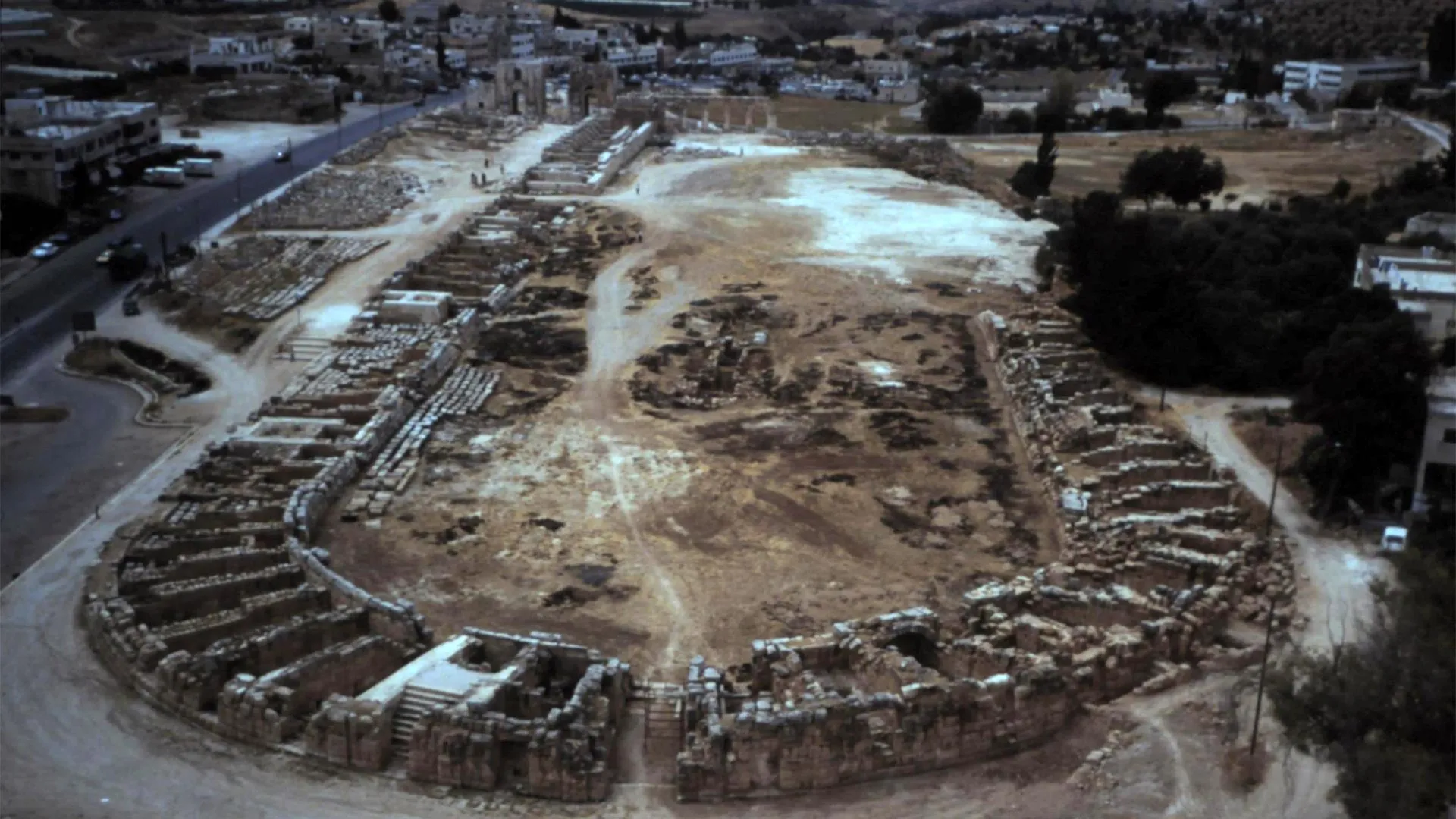
The Plague of Justinian, one of history’s earliest recorded pandemics, continues to yield new insights through archaeological discovery. A recent study published in the Journal of Archaeological Science details findings from a mass grave in Jerash, Jordan, offering a rare glimpse into how the outbreak affected communities across the Byzantine Empire’s eastern reaches. The research, led by Dr. Rays H. Y. Jiang of the University of South Florida’s College of Public Health, examines bioarchaeological evidence from the site to understand burial patterns and societal impacts during the epidemic’s peak.
According to the study, hundreds of individuals were interred within a short timeframe at the ancient hippodrome in Jerash, a location typically used for public gatherings and athletic events. This sudden concentration of burials suggests a rapid mortality event consistent with historical accounts of plague outbreaks. The findings align with broader evidence that the Plague of Justinian, caused by the bacterium Yersinia pestis, spread from Egypt across the Mediterranean beginning in 541 AD and persisted in various regions until at least 549 AD.
The research team analyzed skeletal remains and burial contexts to reconstruct how mobile, dispersed populations were brought together in death during the crisis. Their work expands on prior investigations into the pandemic’s first wave, which historians estimate may have killed up to half the population in some urban centers like Constantinople. While exact mortality figures remain debated among scholars, the Jerash grave provides tangible evidence of the plague’s disruptive force on daily life and social organization.
Published in April 2026, the study contributes to an ongoing series examining the long-term effects of the First Plague Pandemic (541–767 AD). By integrating archaeological data with historical records, the researchers aim to clarify how epidemics reshaped urban and rural landscapes in antiquity. The Jerash site, now part of modern Jordan, was located within the Byzantine province of Palaestina Secunda during the sixth century, placing it on the eastern frontier of the empire’s core territories.
Understanding the Plague of Justinian
The Plague of Justinian marks the first major outbreak of what would later develop into known as the First Plague Pandemic. Named after Emperor Justinian I, who ruled the Eastern Roman Empire from 527 to 565 AD, the disease is believed to have originated in Central or East Africa before spreading via trade routes into Egypt and then across the Mediterranean world. Contemporary accounts, particularly those of the historian Procopius, describe widespread illness, death, and societal disruption in Constantinople and beyond.

Modern genetic studies have confirmed Yersinia pestis as the causative agent, linking the Justinianic outbreaks to the same bacterium responsible for the Black Death centuries later. Although, the Justinianic plague differed in its geographic spread and temporal pattern, affecting regions from the British Isles to Persia over several decades. The disease likely spread through fleas carried by black rats, which thrived in urban environments and grain stores.
Scholars continue to debate the pandemic’s broader impacts. Some argue it significantly weakened the Byzantine Empire’s military and economic capacity, contributing to territorial losses in the following centuries. Others caution against overstating its role, noting that political instability, climate shifts, and other epidemics also shaped the era’s transformations. The Jerash findings add nuance by showing how even relatively peripheral communities experienced sudden, intense mortality during outbreaks.
Bioarchaeological Evidence from Jerash
The mass grave at Jerash’s hippodrome represents a atypical burial practice for the period. Normally, individuals in this region were interred in family tombs or small cemeteries according to local customs. The sudden shift to communal burial indicates an overwhelmed local response to death, consistent with crisis scenarios documented in other plague-affected cities. The hippodrome, a large open-air venue, would have offered space for rapid interment when traditional burial grounds proved insufficient.

Researchers noted that the skeletal remains showed no signs of violent trauma, supporting the interpretation that disease was the primary cause of death. While specific pathological markers of plague (such as those visible in lymph nodes) cannot be preserved in ancient bone, the context and timing of the burials strongly correlate with known plague activity in the region. The study emphasizes that such graves serve as vital archives for understanding how past societies confronted existential threats.
The University of South Florida team collaborated with international experts in archaeology, anthropology, and historical epidemiology to analyze the site. Their approach included stratigraphic analysis, artifact dating, and comparative studies with other contemporaneous burial grounds in the Near East. This multidisciplinary method allows for a more complete picture of how communities adapted—or failed to adapt—to catastrophic mortality events.
What the Findings Reveal About Pandemic Response
One of the key insights from the Jerash excavation is how pandemics can temporarily override traditional social structures. In normal circumstances, populations in this area lived in dispersed villages and towns, engaged in agriculture and trade. The mass grave suggests that, during the height of the outbreak, fear, urgency, or necessity led to the centralization of burial efforts—a phenomenon observed in other historical pandemics from the Black Death to more recent outbreaks.
This centralization does not imply a coordinated state response but rather reflects adaptive behaviors under extreme stress. Similar patterns have been noted in other mass graves linked to plague, where communities prioritized swift disposal of the dead to prevent further contagion, even at the cost of customary rites. The Jerash case illustrates how such adaptations leave detectable traces in the archaeological record, offering modern researchers a window into past crisis management.
The study also highlights the importance of regional variation in pandemic impact. While cities like Constantinople experienced devastating losses, the effects in provincial towns like Jerash may have differed in scale and duration. By examining multiple sites across the empire, researchers can better model how geography, population density, and local infrastructure influenced outbreak trajectories.
Ongoing Research and Historical Significance
The Jerash investigation is part of a larger effort to map the bioarchaeological signature of the Plague of Justinian across its known range. Earlier studies have examined sites in Italy, France, and Germany, but data from the eastern Mediterranean has been comparatively limited. The Jordanian findings help fill this gap, providing evidence that the plague’s reach extended deeply into the Near East, affecting populations far from the imperial center.
Future work may include genetic analysis of remains to confirm Yersinia pestis presence and strain variation, though preservation conditions in warm climates can complicate such efforts. Researchers also plan to compare the Jerash data with textual sources, such as ecclesiastical records and chronicles, to correlate archaeological findings with contemporary accounts of illness and mortality.
As of April 2026, the University of South Florida team has not announced plans for additional excavation seasons at Jerash but continues to publish results from ongoing laboratory analysis. The study’s lead author, Dr. Rays H. Y. Jiang, has emphasized the value of interdisciplinary collaboration in understanding ancient pandemics, particularly as modern societies face new infectious disease challenges.
The Plague of Justinian remains a critical case study in the history of epidemiology. Its study offers lessons about disease transmission, societal vulnerability, and the long-term consequences of widespread mortality—insights that retain relevance in an era of emerging pathogens and global health interconnectedness.
For readers interested in following developments in this research, the Journal of Archaeological Science provides open access to recent publications from the University of South Florida’s project. Official updates from the university’s College of Public Health also detail ongoing work in historical epidemiology and public health archaeology.
If you found this article informative, consider sharing it with others interested in history, archaeology, or public health. Comments and discussions help foster deeper understanding of how past pandemics shape our present perspectives on health and society.
Related reading
- KFF Analysis: $60B in Medicaid Hospital Payments Face Cuts Under New Federal Limits
- How Pet Lemon Frost Geckos Could Help Researchers Understand Human Cancer
- Tampa Woman Charged With First-Degree Murder in Fentanyl Overdose Death (archynewsy.com)
- Princess Iman of Jordan Welcomes Second Child (world-today-news.com)