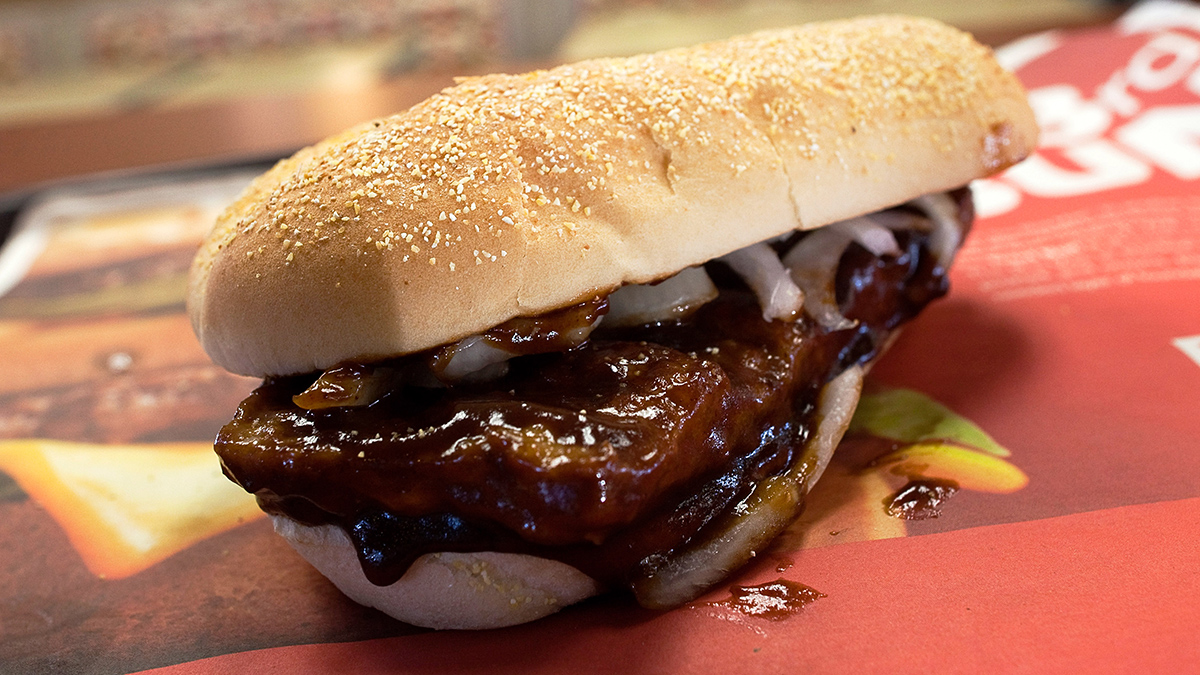
McRib Lawsuit: Dose McDonald’s Iconic Sandwich Actually Contain Rib Meat? A Deep Dive
The McRib. For decades, this uniquely shaped sandwich has sparked both fervent fandom and quiet skepticism. recently, a federal class-action lawsuit filed in illinois has reignited the debate: does the McRib actually contain rib meat, or is it a cleverly marketed illusion? This article delves into the allegations, McDonald’s response, the history of the mcrib, and what this means for consumers. We’ll break down the legal claims,examine the ingredients,and provide a comprehensive look at this ongoing controversy.
The Core of the Lawsuit: Misleading Marketing?
On December 23rd,a lawsuit was filed in the northern District of Illinois accusing mcdonald’s of misleading consumers regarding the composition of its McRib sandwich. Four plaintiffs allege that the name ”McRib” implies the presence of actual pork rib meat, a claim they assert is false. they argue that reasonable consumers would expect a sandwich bearing that name to contain some quantity of genuine rib meat.
Rather, the lawsuit claims the McRib is constructed from ground-up, lower-grade pork products – specifically citing pork shoulder, heart, and scalded stomach. this isn’t a question of safety,the plaintiffs contend,but of accurate representation. They believe McDonald’s is capitalizing on a perceived value (rib meat) that doesn’t exist in the product.
The lawsuit details 16 separate claims against McDonald’s, encompassing allegations of fraudulent omission, misrepresentation (both negligent and fraudulent), outright fraud, breach of contract, and violations of consumer protection laws in California, Illinois, New York, and Washington D.C.The plaintiffs are seeking class-action status, aiming to represent anyone who purchased a McRib within the four years preceding the lawsuit’s filing. They are requesting damages, restitution, and a court order preventing McDonald’s from continuing what they deem deceptive advertising practices.
McDonald’s Response: Openness and Quality Ingredients
McDonald’s vehemently denies the allegations.In a statement provided to NBC Chicago, the company asserted that the lawsuit “distorts the facts and many of the claims are inaccurate.” They maintain a commitment to “real, quality ingredients” and state that the McRib is made with 100% pork sourced from U.S. farmers and suppliers.
furthermore, McDonald’s emphasizes its transparency regarding ingredients, allowing consumers to make informed choices. Thier official website describes the McRib as “seasoned boneless pork dipped in a tangy BBQ sauce, topped with slivered onions and tangy pickles, all served on a toasted homestyle bun.” However, the lawsuit hinges on the interpretation of “pork” – does it equate to rib meat, or a broader category of pork byproducts?
A History of Limited Availability & Consumer Perception
The McRib’s story began in 1981, but its journey hasn’t been continuous. Unlike many menu staples, the McRib has been released and discontinued multiple times over the decades, often appearing as a limited-time offering. This sporadic availability is a key point raised in the lawsuit.
Plaintiffs argue that this “cycle of sporadic availability creates a sense of urgency that discourages deep consumer scrutiny.” The limited-time nature of the McRib, they claim, prevents sustained discussion and inquiry into its actual ingredients, allowing misconceptions about its rib meat content to persist. The very scarcity of the sandwich arguably contributes to the mystique and, according to the lawsuit, the deception.
Decoding the Ingredients: What Is in a mcrib?
While McDonald’s insists on using 100% pork,the specific cuts and processing methods remain a point of contention. The lawsuit’s claim of utilizing pork shoulder, heart, and scalded stomach isn’t necessarily indicative of poor quality, but rather a cost-effective approach to utilizing the entire animal. These cuts are commonly used in processed meat products.
The key question isn’t whether the ingredients are safe to consume – they are – but whether the marketing accurately reflects their origin. The use of restructured meat products, where various cuts are ground and reformed, is a common practice in the food industry. However, the lawsuit argues that this process should be clearly disclosed to consumers, especially when the product is named after a specific cut of meat.
What Does This Mean for Consumers?
This lawsuit highlights the importance of scrutinizing food labeling and marketing claims. While McDonald’s provides ingredient information on its website, many consumers may not actively seek it out. The case raises broader questions about transparency in the fast-food industry and the responsibility of companies to accurately represent their products.
The outcome of this
Related reading