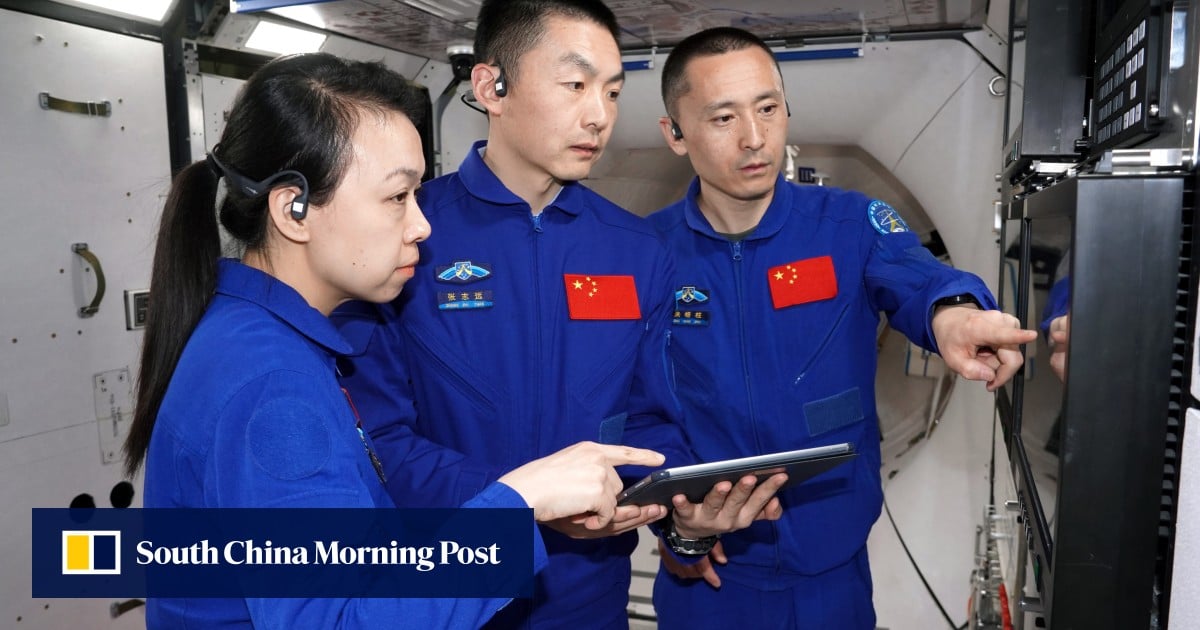
The pursuit of space exploration has long been defined by the image of the elite, physically flawless pilot. Yet, the selection of Hong Kong-born scientist Lai Ka-ying as a payload specialist for China’s space program challenges that traditional mold, offering a narrative of perseverance that resonates far beyond the confines of the Tiangong space station. Her journey to becoming a participant in the Shenzhou mission series is a study in overcoming personal limitations through rigorous, systematic preparation.
Lai, a 43-year-old mother of three, has been open about the hurdles she faced during her transition into the aerospace sector. Her path was not marked by a lifelong trajectory toward astronaut training, but rather by a pragmatic willingness to confront her own physical vulnerabilities. In professional contexts, she has credited her success to a simple yet resilient mindset: “I held a ‘let’s give it a try’ attitude.” This approach allowed her to navigate nearly two years of intensive training, a process designed to push candidates to their absolute physical and psychological limits.
Redefining the Payload Specialist
The role of a payload specialist in modern spaceflight is distinct from that of a flight engineer or pilot. These professionals are tasked with managing complex scientific experiments and equipment in microgravity environments. For China, the inclusion of specialists from the Hong Kong Special Administrative Region represents a strategic expansion of its national space program, aiming to integrate regional scientific talent into its broader orbital goals. According to the China National Space Administration (CNSA), the selection process for these roles is exceptionally rigorous, focusing on technical expertise and the ability to maintain cognitive performance under extreme stress.

Lai’s background in scientific research provided the foundational expertise necessary for her selection. However, the transition to the life of an astronaut required more than just academic prowess. The physical rigors of centrifuge training, which simulates high G-force environments, are notoriously difficult for individuals susceptible to motion sickness. By engaging in these training cycles, Lai demonstrated that technical aptitude, combined with sustained commitment, can override physiological predispositions that might otherwise disqualify a candidate in more traditional recruitment models.
Training for the Tiangong Space Station
The Tiangong space station, operated by China’s manned space program, serves as a laboratory for advanced scientific research. Payload specialists like Lai are essential to the station’s mission of conducting experiments in fields ranging from life sciences to material physics. Her training involved not only physical endurance but also the mastery of complex, interconnected systems that keep the station operational and safe for the crew.
The selection of a Hong Kong-based specialist is part of a wider effort to encourage interest in STEM fields among the youth in Hong Kong and Macau. By highlighting the stories of individuals who may not fit the conventional profile of an astronaut, the program seeks to emphasize that the space sector requires a diverse array of skills, including those found in the academic and research communities of the region. This initiative is part of a broader Hong Kong government strategy to bolster its position as an innovation and technology hub, effectively linking local research capabilities with national aerospace objectives.
Why It Matters for Future Generations
The inclusion of non-traditional candidates in space missions serves as a powerful indicator of how the requirements for human spaceflight are evolving. As missions become longer and more focused on scientific output rather than just orbital transit, the demand for specialized researchers—rather than just career military pilots—will likely increase. For the global scientific community, this shift suggests that the barrier to entry for space exploration is becoming increasingly dependent on specific, high-level technical knowledge.

For those watching the development of China’s space program, the focus remains on the upcoming mission objectives. The integration of payload specialists into the Shenzhou flights is a critical step in maximizing the research potential of the Tiangong facility. As these missions progress, the data gathered will be essential for future lunar and deep-space exploration efforts, marking a period of intense activity for the China Manned Space Agency.
Looking Toward the Next Launch
The next phase of China’s manned space program will be defined by the successful deployment and operation of its latest mission rotation. The international community, through various scientific bodies, continues to monitor these developments for their contributions to global space science. The focus remains on the station’s capacity to host long-term experiments that require the precise, human-led management that payload specialists like Lai are trained to provide.
As the mission proceeds, further updates regarding the research outcomes and the status of the crew will be provided through official channels by the mission operators. Readers interested in the technical specifics of the Shenzhou mission series can find documentation and ongoing updates via the official portals of the national space authority. We invite our readers to share their thoughts on the evolving profile of the modern astronaut in the comments section below.
Keep reading