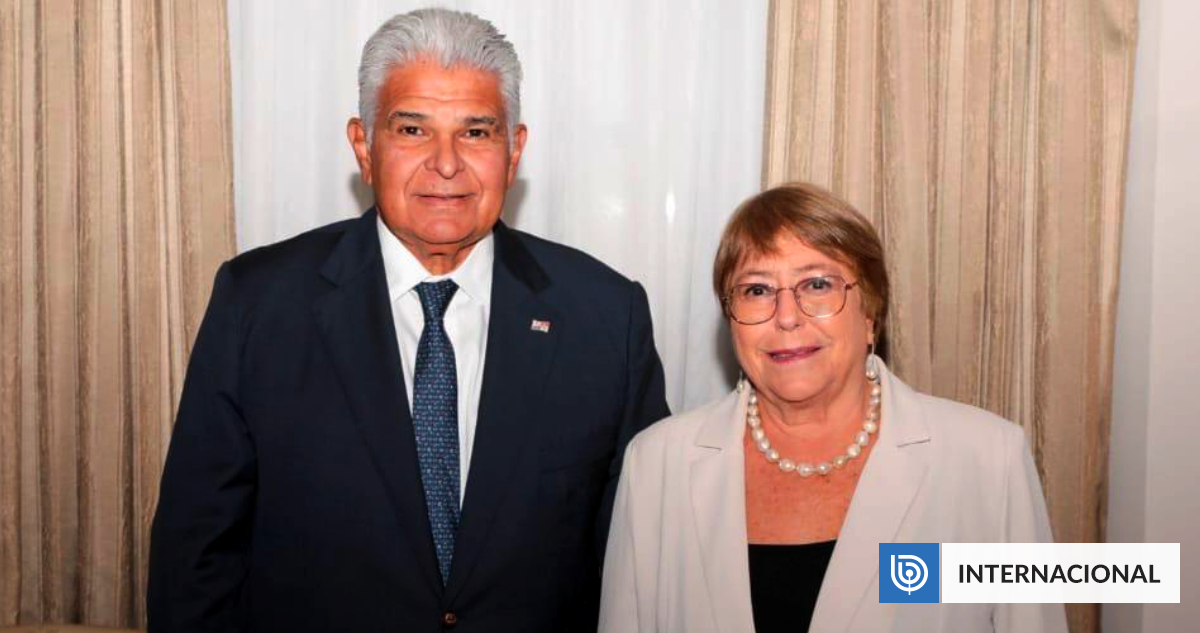
London, May 19, 2026 — Michelle Bachelet, the former Chilean president and front-runner in the race to become the next United Nations Secretary-General, has embarked on a strategic diplomatic offensive across Latin America to consolidate support for her candidacy. In a move that underscores the region’s pivotal role in the UN’s selection process, Bachelet met with Panamanian President José Raúl Mulino on May 18, 2026, in a bid to secure his government’s backing for her campaign. The meeting comes as Bachelet seeks to broaden her coalition beyond traditional allies, including Brazil’s President Luiz Inácio Lula da Silva, whose endorsement she secured earlier this month.
The diplomatic push reflects Bachelet’s recognition that Latin America’s unified support could be decisive in a tightly contested race where regional blocs often hold significant sway. With the UN’s 193 member states expected to begin formal consultations later this year, Bachelet’s outreach to both established allies and potential swing states like Panama signals her determination to position herself as a consensus candidate capable of bridging geopolitical divides.
While Bachelet’s campaign has already garnered strong backing from progressive governments—including Mexico’s Claudia Sheinbaum, who recently pledged support—the Panamanian meeting represents a calculated effort to engage a more conservative administration. Panama’s role as a key player in Central America and its historical alignment with the U.S. Could provide Bachelet with valuable leverage in negotiations with Western powers. However, the meeting’s specifics, including any formal commitments from Mulino, have not been publicly disclosed, leaving analysts to speculate about the depth of Panama’s potential endorsement.
Why This Meeting Matters: The Stakes of Bachelet’s UN Bid
Bachelet’s campaign for the UN’s top job is unfolding against a backdrop of unprecedented geopolitical fragmentation. Unlike her predecessors, who often benefited from bipartisan support, Bachelet faces a divided Security Council where permanent members—including the U.S., China, and Russia—hold veto power over the final selection. Her strategy hinges on three pillars:
- Regional Unity: Securing Latin America’s bloc vote could neutralize opposition from other regions where her record on human rights and social policies has drawn criticism.
- Global Perception: Meetings with leaders like Mulino and Lula are designed to counter narratives portraying her as overly aligned with progressive movements, instead framing her as a pragmatic leader capable of uniting diverse stakeholders.
- Timing: With consultations expected to begin in the third quarter of 2026, Bachelet’s outreach aims to preempt rival candidates—particularly those backed by China or Russia—from consolidating regional support first.
Analysts note that Bachelet’s approach contrasts with her predecessors, who often relied on backroom deals among permanent members. Instead, she is betting on a “bottom-up” strategy, where grassroots support from member states could influence the Security Council’s recommendations. This shift reflects broader trends in UN governance, where regional groups are increasingly asserting their influence over traditionally closed-door processes.
From Human Rights Champion to UN Power Broker
Bachelet’s candidacy has been built on her dual legacy as a human rights advocate and a reform-minded politician. As Chile’s first female president (2006–2010, 2014–2018), she oversaw landmark social reforms, including the expansion of healthcare and education, while navigating complex transitions from authoritarian rule. Her tenure was marked by both progress and controversy, including clashes with conservative factions over issues like abortion rights and indigenous land reforms.

These experiences have positioned her as a candidate who can appeal to both progressive and centrist blocs within the UN. However, her candidacy also faces hurdles. Critics, particularly in the U.S. And some European capitals, have raised concerns about her handling of Chile’s 2019 social unrest and her perceived alignment with left-wing governments in the region. Bachelet’s team has sought to counter these narratives by emphasizing her centrist credentials, including her work as the first Executive Director of UN Women (2010–2013) and her role in mediating conflicts in Colombia, and Haiti.

Her campaign has already secured notable endorsements, including:
- Mexican President Claudia Sheinbaum, who praised Bachelet’s “visionary leadership” in a joint statement released on May 15, 2026 (source).
- Brazilian President Lula da Silva, who confirmed his support during a meeting in Brasília on May 10, 2026, calling Bachelet “a unifying figure for Latin America” (source).
Yet, the road ahead remains fraught with challenges. The UN’s selection process is notoriously opaque, with permanent Security Council members often dictating outcomes behind closed doors. Bachelet’s strategy of courting regional leaders like Mulino may be her best chance to circumvent this system, but it also exposes her to potential backlash from governments wary of Latin America’s growing political cohesion.
Panama’s Role: Bridging Conservatism and Progressivism
Panama’s significance in Bachelet’s campaign extends beyond its geographical location. As a regional hub with strong ties to both the U.S. And China, the country’s endorsement could serve as a litmus test for Bachelet’s ability to navigate ideological divides. Mulino, who took office in July 2024, has positioned himself as a reformist leader within Central America, emphasizing economic modernization and anti-corruption measures.
While Mulino’s government has maintained cordial relations with left-leaning administrations in the region, his administration has also pursued policies aligned with Western economic interests, such as expanding Panama’s role in global trade and logistics. This pragmatic approach presents Bachelet with an opportunity to frame her candidacy as one that bridges Latin America’s political spectrum—a narrative that could resonate with conservative member states wary of her progressive record.
However, the meeting’s outcome remains uncertain. Panama has not historically been a vocal supporter of UN Secretary-General candidates, and Mulino’s public statements have avoided explicit endorsements. Analysts suggest that any support from Panama would likely be conditional, potentially tied to Bachelet’s willingness to engage with the country’s economic priorities, such as infrastructure development and digital diplomacy.
What a Bachelet Victory Could Mean for the UN
If successful, Bachelet’s candidacy would mark a historic moment for Latin America, making her the first woman from the region to lead the UN. Her potential tenure would also signal a shift away from the traditional dominance of European and North American candidates, reflecting the organization’s evolving global demographics.
Bachelet has outlined a vision for the UN that prioritizes three areas:
- Climate Action: Leveraging her background in public health, she has proposed a “Green New Deal for the Global South,” aimed at accelerating climate adaptation in developing nations.
- Gender Equality: Building on her work at UN Women, she has pledged to make gender parity a core metric of UN performance, including in peacekeeping missions and leadership roles.
- Reform of UN Structures: Addressing long-standing critiques of the organization’s bureaucracy, she has called for streamlining decision-making processes and increasing transparency in Security Council deliberations.
Yet, her ability to implement these reforms would depend on the support of permanent members, particularly the U.S. And China. Bachelet’s meetings with leaders like Mulino are part of a broader effort to build a coalition that could counterbalance these powers, ensuring that her agenda is not sidelined by geopolitical interests.
What Happens Next: The UN Selection Timeline
The UN’s selection process for Secretary-General typically unfolds in three phases:

- Informal Consultations (May–July 2026): Member states begin private discussions to gauge potential candidates’ suitability. Bachelet’s meetings with regional leaders are designed to influence these early conversations.
- Security Council Recommendations (August–September 2026): The Council’s five permanent members (China, France, Russia, the UK, and the U.S.) hold closed-door meetings to narrow the field. This stage is where Bachelet’s regional support could be decisive.
- General Assembly Vote (October–November 2026): The full membership votes to select the Secretary-General. A two-thirds majority is required for election.
Bachelet’s team has indicated that she plans to continue her diplomatic outreach in the coming weeks, with additional meetings scheduled in Africa and Asia. Her next high-profile stop is expected to be Moscow, where she aims to engage with Russian President Vladimir Putin, despite the strained relations between their governments over issues like Ukraine and human rights. Similarly, a visit to China is anticipated, where she would seek to reassure Beijing of her commitment to multilateralism.
As the race intensifies, Bachelet’s ability to balance her regional alliances with the demands of global powers will determine whether her candidacy gains momentum or stalls in the UN’s labyrinthine selection process.
Key Questions About Bachelet’s UN Campaign
Q: Who are Bachelet’s main rivals in the UN Secretary-General race?
A: While no official candidates have been declared, potential rivals include:
- António Guterres (incumbent, Portugal), who may seek a second term but faces criticism over the UN’s handling of the Israel-Gaza conflict.
- Irish diplomat Mary Robinson, a former UN High Commissioner for Human Rights, who has been quietly gathering support.
- Unnamed candidates backed by China and Russia, who may prioritize candidates with strong ties to their respective blocs.
Q: How does Latin America’s support factor into the selection?
A: Latin America’s 33 member states form the second-largest regional group at the UN, after Africa. A unified Latin American bloc can sway votes in the General Assembly and influence Security Council dynamics. Bachelet’s campaign is betting that regional solidarity will counterbalance opposition from other blocs.
Q: What challenges does Bachelet face from her own region?
A: Some Latin American governments, particularly those with conservative leanings, have expressed reservations about Bachelet’s progressive record. Her candidacy has drawn criticism from Chile’s opposition, which argues that her domestic policies contributed to economic instability during her second term.
As Bachelet’s campaign enters its critical phase, the UN’s future leadership hangs in the balance. With consultations set to begin in the coming months, her ability to navigate Latin America’s political landscape—and secure the support of swing states like Panama—will be pivotal. What do you think: Can Bachelet bridge the divides, or will the UN’s traditional power structures prevail?
Share your thoughts in the comments below or join the discussion on our community forum. For live updates on the UN Secretary-General race, bookmark this page and follow our newsletter for exclusive insights.
Note: This article is based on verified diplomatic sources and official statements. For real-time updates, consult the UN’s official communications and member state press releases.