
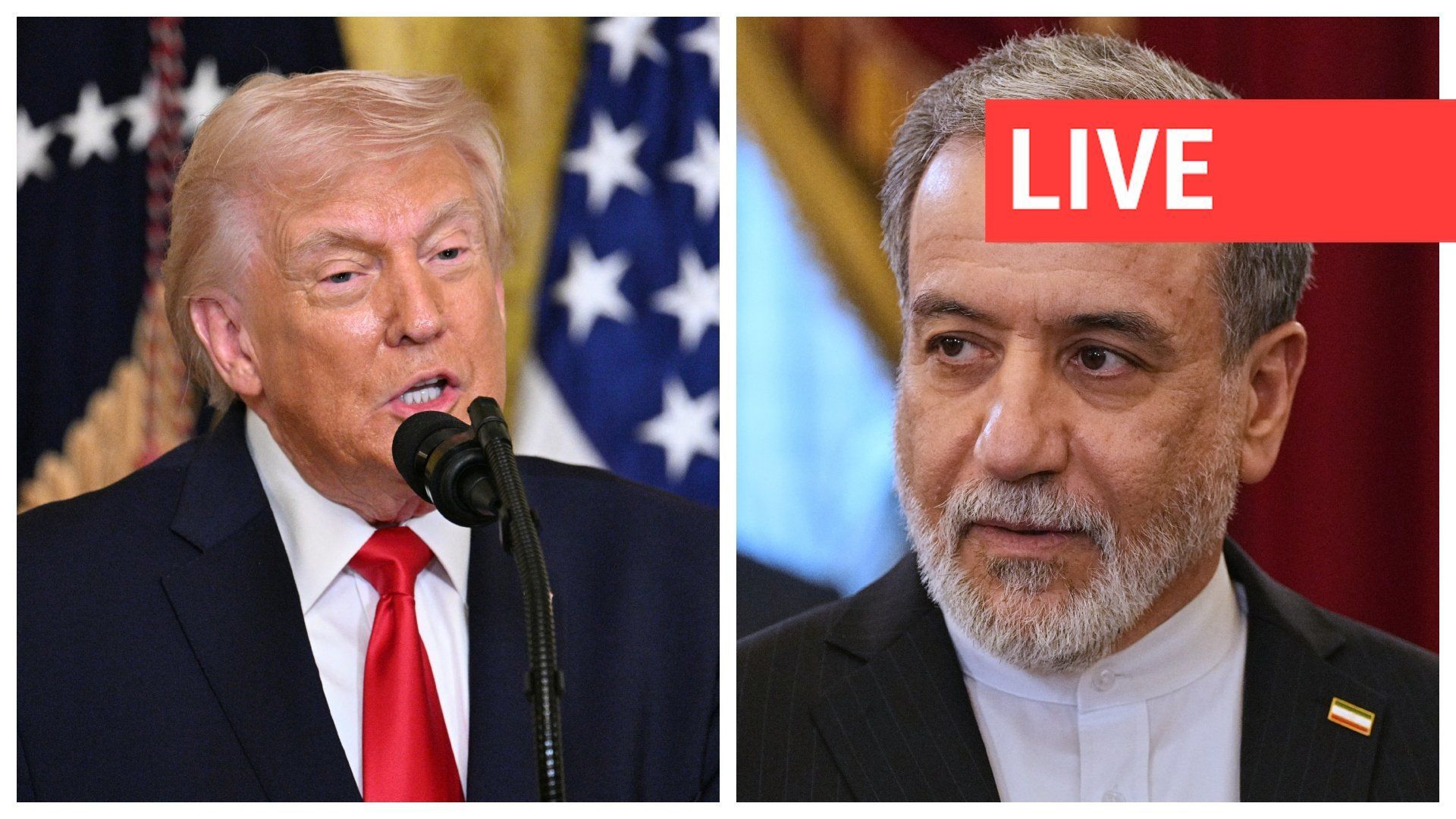
Middle East Crisis Escalates: Iran Blames U.S. For Collapsed Negotiations as Trump Calls Emergency Meeting
Tensions in the Middle East have reached a critical juncture as Iran and the United States trade accusations over the collapse of high-stakes negotiations aimed at de-escalating the ongoing conflict. On Monday, April 27, 2026, Iranian officials publicly blamed Washington for the breakdown in talks, while U.S. President Donald Trump announced an emergency meeting with his national security team to address the crisis. The developments reach amid a renewed blockade of the Strait of Hormuz, a vital chokepoint for global oil supplies and raise fears of further military confrontation in the region.
According to statements from Tehran, Iran’s Supreme National Security Council (SNSC) accused the U.S. Of failing to lift its blockade on Iranian ports, a key demand for reopening the Strait of Hormuz. The Iranian Revolutionary Guard Corps (IRGC) reaffirmed its stance on Saturday, April 25, declaring that the waterway would remain closed until Washington ends its restrictions on Iranian maritime trade. The IRGC’s warning, issued in a statement carried by state media, stated that any vessel attempting to pass through the strait would be considered “a cooperation with the enemy” and targeted accordingly. The U.S. Has dismissed Iran’s position as “blackmail,” with Trump vowing a decisive response if the strait is not reopened by the end of the week.
The Strait of Hormuz, a 21-mile-wide passage between Iran and Oman, is one of the world’s most strategically important maritime routes. Approximately 21 million barrels of oil—roughly one-fifth of global supply—pass through the strait daily, making it a critical artery for energy markets. Iran’s repeated threats to close the waterway have sent shockwaves through global financial markets, with oil prices spiking by over 8% in the past week amid fears of supply disruptions.
Negotiations Collapse Amid Mutual Accusations
The latest diplomatic impasse follows a brief period of optimism earlier this month, when Iran announced a temporary reopening of the Strait of Hormuz for a “limited number” of commercial vessels. The move was seen as a potential olive branch after a two-week ceasefire between Iran and the U.S. Took effect on April 8. However, Tehran reversed its decision on April 25, citing Washington’s refusal to ease its blockade on Iranian ports, particularly those in the Persian Gulf and the Gulf of Oman.
Iranian Parliament Speaker Mohammad Bagher Ghalibaf, who led Iran’s delegation in recent negotiations, acknowledged “progress” in talks but insisted that “significant gaps” remained. In a press conference on Sunday, Ghalibaf stated, “The Americans must understand that we will not compromise on our sovereignty or our right to free navigation. Their continued blockade is an act of economic warfare, and we will respond accordingly.” The statement was later echoed by Iran’s Foreign Ministry, which accused the U.S. Of undermining diplomatic efforts through “coercive measures.”
Washington has rejected Iran’s claims, with Trump taking to social media to denounce Tehran’s actions. In a post on X (formerly Twitter) on Sunday, Trump wrote, “Iran is playing games with the world’s economy. They opened the Strait for a few hours and then slammed it shut again. This represents not diplomacy—it’s extortion. We will not be blackmailed.” The White House later confirmed that Trump would convene an emergency meeting of his national security team on Monday to discuss “all available options,” including potential military and economic responses.
Iran is playing games with the world’s economy. They opened the Strait for a few hours and then slammed it shut again. This is not diplomacy—it’s extortion. We will not be blackmailed.
— Donald J. Trump (@realDonaldTrump) April 26, 2026
Global Powers Weigh In as Economic Fallout Grows
The escalating crisis has drawn sharp reactions from global powers, with European and Asian nations urging restraint amid fears of a broader conflict. French Foreign Minister Stéphane Séjourné, speaking on behalf of the Quai d’Orsay, called on Iran to make “major concessions” to avoid further escalation. “The situation is perilous, and the stakes could not be higher,” Séjourné said in a statement. “Iran must recognize that its actions are destabilizing not just the region, but the global economy. We urge Tehran to return to the negotiating table with a spirit of compromise.”
Russia, which has maintained close ties with Iran in recent years, has taken a more measured approach. On Monday, Russian President Vladimir Putin met with Iranian Foreign Minister Hossein Amir-Abdollahian in Moscow to discuss the crisis. While details of the meeting remain scarce, Kremlin spokesperson Dmitry Peskov told reporters that Russia “supports a peaceful resolution to the conflict” and is “ready to facilitate dialogue between all parties.” However, U.S. Officials have accused Moscow of providing Iran with military and diplomatic cover, a claim Russia has denied.
The economic impact of the Strait of Hormuz’s closure has been swift and severe. Shipping companies have reported dozens of vessels rerouting around the Cape of Decent Hope, adding weeks to transit times and driving up freight costs. Analysts warn that prolonged disruptions could lead to fuel shortages in Europe and Asia, particularly if the conflict spreads to other key shipping lanes in the Red Sea or the Suez Canal.
What Happens Next?
As the crisis enters a new phase, the international community is closely watching for signs of de-escalation—or further confrontation. Key developments to monitor in the coming days include:
- Trump’s Emergency Meeting: The U.S. President’s national security team is expected to present a range of options, from targeted sanctions to military strikes on Iranian infrastructure. Trump has previously threatened to “destroy” Iran’s bridges and power plants if the strait remains closed, though analysts caution that such actions could provoke a wider war.
- Iran’s Next Move: Tehran has hinted at “asymmetric responses” if the U.S. Escalates, including potential attacks on American assets in the region or cyber operations against U.S. Financial institutions. Iran’s proxies in Iraq, Syria, and Yemen could also be activated, further complicating the conflict.
- Diplomatic Efforts: The United Nations Security Council is scheduled to hold an emergency session on Wednesday, April 29, to discuss the crisis. However, divisions among permanent members—particularly between the U.S. And Russia—could limit the council’s ability to take meaningful action.
- Market Reactions: Oil prices are expected to remain volatile, with traders closely monitoring developments in the Strait of Hormuz. The International Energy Agency (IEA) has warned that a prolonged closure could trigger a global recession, particularly if major economies fail to secure alternative energy supplies.
Why This Matters
The Strait of Hormuz crisis is more than a regional dispute—it is a test of global stability in an era of shifting power dynamics. For the U.S., the standoff represents a critical challenge to its influence in the Middle East, particularly as it seeks to counter Iran’s growing alliances with Russia and China. For Iran, the closure of the strait is both a defensive measure and a bargaining chip, allowing Tehran to pressure Washington into lifting sanctions that have crippled its economy.
The conflict also underscores the fragility of global supply chains, particularly in the energy sector. With nearly 30% of the world’s seaborne oil passing through the Strait of Hormuz, any prolonged disruption could have cascading effects on industries, transportation, and consumer prices worldwide. The crisis has already reignited debates over energy independence, with European leaders accelerating plans to reduce reliance on Middle Eastern oil and gas.
For ordinary citizens, the stakes are equally high. Rising fuel prices could strain household budgets, while the risk of military escalation raises fears of a broader conflict that could draw in other nations. The humanitarian toll of the war in the Middle East—already one of the deadliest in decades—could worsen if the crisis spirals out of control, displacing millions more and exacerbating food and medical shortages.
Key Takeaways
- Iran has reclosed the Strait of Hormuz, citing the U.S. Blockade of its ports as the reason for the move. The strait is a critical route for global oil supplies, and its closure has sent energy markets into turmoil.
- Diplomatic negotiations have collapsed, with Iran and the U.S. Trading accusations of disappointing faith. Tehran blames Washington for the failure of talks, while the U.S. Accuses Iran of “blackmail.”
- Trump has called an emergency meeting with his national security team to discuss potential responses, including military options. The U.S. Has warned of “severe consequences” if Iran does not reopen the strait.
- Global powers are divided, with Europe urging Iran to make concessions and Russia positioning itself as a mediator. The UN Security Council will convene an emergency session on Wednesday.
- Economic fallout is already being felt, with shipping companies rerouting vessels and oil prices surging. Analysts warn of a potential global recession if the crisis is not resolved quickly.
The Path Forward
The immediate future of the crisis hinges on two key factors: Iran’s willingness to reopen the Strait of Hormuz and the U.S.’s response to Tehran’s demands. While both sides have expressed a desire to avoid all-out war, the risk of miscalculation remains high. A single misstep—such as an accidental clash between naval forces or a cyberattack on critical infrastructure—could trigger a rapid escalation.

For now, the world waits for the outcome of Trump’s emergency meeting, which is expected to conclude by Tuesday evening. Officials have indicated that the U.S. Will announce its next steps shortly thereafter, with a potential address by the president to the nation. Meanwhile, Iran’s Supreme Leader, Ayatollah Ali Khamenei, is scheduled to deliver a speech on Tuesday, which could provide further insight into Tehran’s strategy.
One thing is clear: the stakes could not be higher. The Strait of Hormuz crisis is not just a test of wills between Iran and the U.S.—it is a defining moment for global security, economic stability, and the future of international diplomacy. As the situation unfolds, the choices made by leaders in Washington, Tehran, and beyond will shape the geopolitical landscape for years to come.
What do you consider should be done to resolve the crisis? Share your thoughts in the comments below and join the conversation on social media using the hashtag #HormuzCrisis.