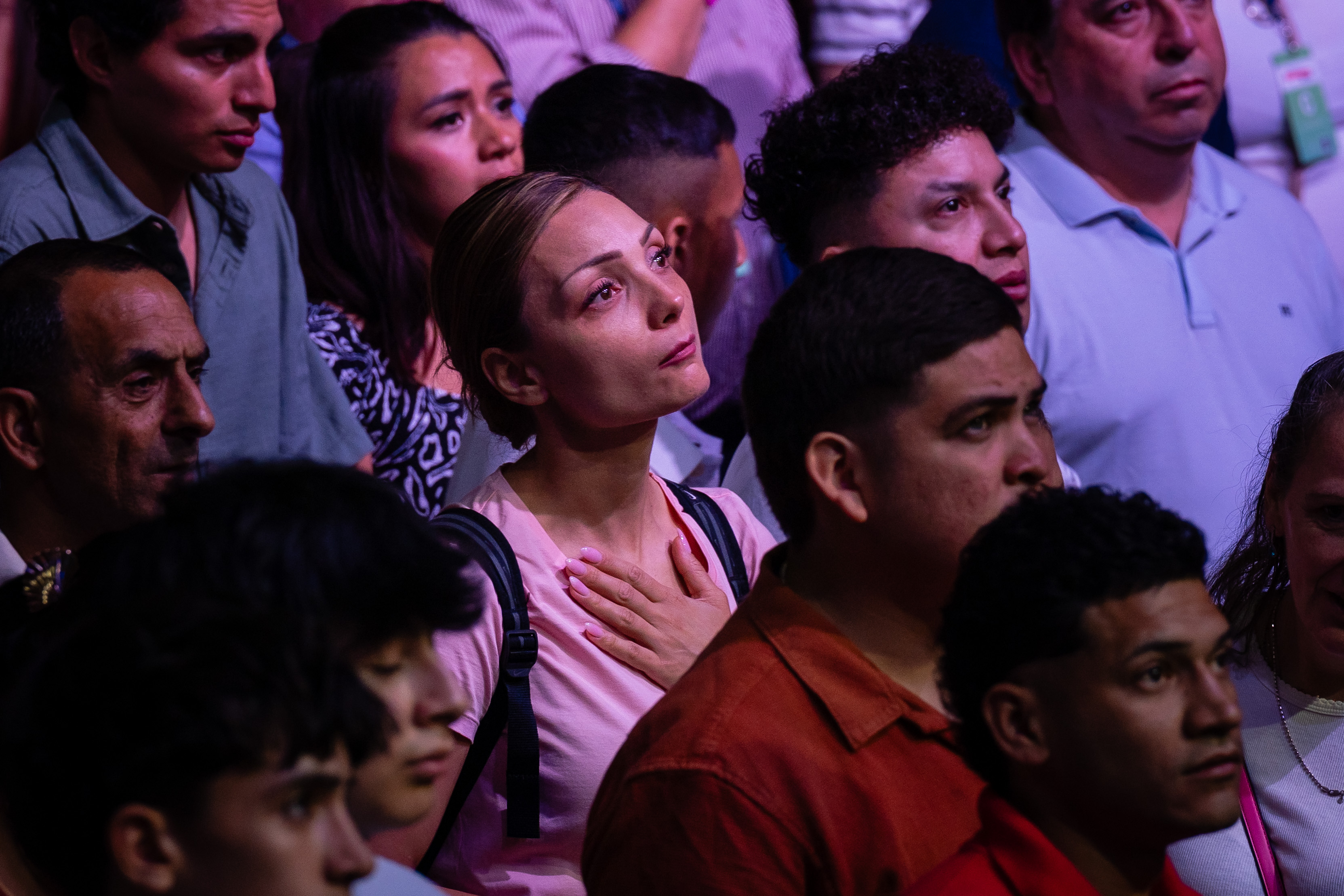
MADRID, Spain — In a city where bullfighting rings once echoed with the roar of crowds and the clash of steel, something unexpected filled the air this weekend: the sound of prayer. On Saturday, evangelical leader Franklin Graham, son of the late Reverend Billy Graham, addressed an estimated 20,000 people in Madrid’s Plaza de Toros de Las Ventas, one of Spain’s most iconic bullfighting arenas. The event, part of Graham’s Call to Freedom crusade, marked a rare public display of evangelical Christianity in a country long considered a “graveyard for missionaries” due to its secularization and historical resistance to large-scale religious outreach.
Organizers and attendees described the gathering as a “spiritual awakening,” with reports of conversions—including from individuals who once identified as atheists—amid a broader conversation about the resurgence of evangelicalism in Europe. While Spain’s Catholic heritage remains strong, the rise of secularism and declining church attendance has left a vacuum that some faith leaders say evangelical groups are now attempting to fill. The Madrid event, which followed similar crusades in cities like Barcelona and Valencia, underscores a growing trend: the strategic use of high-profile venues to reach audiences in a region where traditional religious institutions are losing influence.
Graham’s appearance in Spain is part of a broader global campaign targeting countries where Christianity is a minority or where secularization has weakened religious institutions. According to Christianity Today, the Call to Freedom initiative has drawn record crowds in Europe, including in Germany, France and the Netherlands, where evangelical outreach has historically faced legal and cultural hurdles. In Spain, where only about 12% of the population identifies as evangelical Protestant—compared to roughly 60% Catholic—the event’s scale was notable.
“Hundreds of people came forward to accept Christ in Madrid today. It’s a sign of hope in a world that often feels hopeless.” — Franklin Graham, after the Plaza de Toros crusade. @FranklinGraham
— Franklin Graham (@FranklinGraham) October 15, 2023
A ‘Graveyard for Missionaries’: Why Spain?
Spain’s reputation as a “graveyard for missionaries” stems from its complex religious history. While the Catholic Church has deep roots—dating back to the Reconquista and the Spanish Inquisition—modern Spain has seen a dramatic decline in religious affiliation. According to the Spanish National Institute of Statistics (INE), only about 27% of Spaniards now identify as practicing Catholics, down from over 90% in the 1970s. Meanwhile, the Pew Research Center reports that atheism and secularism have risen sharply, particularly among younger generations.

This shift has created an opening for evangelical groups, which have increasingly targeted Spain with large-scale events. Graham’s crusade follows similar efforts by organizations like Cru (formerly Campus Crusade for Christ) and Open Doors, which have expanded operations in Spain despite legal challenges. Critics argue that such outreach often clashes with Spain’s constitutional separation of church and state, while supporters see it as a fulfillment of religious freedom.
For Graham, the choice of a bullfighting ring was symbolic. “We wanted to reach people where they are—not just in churches, but in places that carry history and emotion,” he told reporters. The Plaza de Toros, a venue steeped in cultural tradition, became a stage for what organizers described as a “cultural reset.” Attendees included not only Spaniards but also international visitors, reflecting Spain’s role as a hub for European evangelical networks.
Key Takeaways from the Madrid Crusade
- Record Attendance: Estimates place the crowd at 20,000, with organizers citing “hundreds of decisions for Christ,” including former atheists and agnostics. Official reports note that follow-up discipleship programs were launched for converts.
- Venue Significance: The Plaza de Toros de Las Ventas, a UNESCO-listed site, was chosen for its cultural weight. Bullfighting, once a symbol of Spanish identity, now shares the arena with evangelical outreach.
- Legal and Cultural Tensions: While Spain’s constitution protects religious freedom, large public evangelical events occasionally spark debates over secularism. No major protests occurred during the Madrid crusade, but past events in Barcelona faced criticism from left-wing groups.
- Broader European Trend: Graham’s tour aligns with a rise in evangelical megachurches and crusades across Europe, where declining church attendance has left space for alternative religious expressions.
‘I Was an Atheist—Now I Believe’: Stories from the Crowd
Among the most compelling moments of the Madrid crusade were the personal testimonies shared by attendees. One man, identified only as Javier (34), told World Today Journal that he had rejected religion for years but was drawn to the event after seeing flyers in Madrid’s metro. “I came out of curiosity, but I left with a peace I’ve never felt,” he said. “The message was simple: God loves you, no matter what.”
Another attendee, Lucía (28), a former Catholic who had drifted from the Church, described the experience as “life-changing.” “I grew up in a religious family, but I stopped believing in God,” she said. “Hearing Franklin Graham speak about grace made me realize I didn’t have to have all the answers to start believing again.” Organizers reported that over 300 individuals came forward during the event’s altar call, a moment where attendees are invited to pray or accept Christ.
Not all reactions were positive. On social media, some Spaniards questioned the event’s timing, particularly amid economic challenges and political unrest. One Twitter user wrote, “While people are struggling with inflation, we’re putting on a spectacle about God?” However, others praised the outreach, arguing that faith communities should be allowed to engage publicly.
From Madrid to the World: The Future of Evangelical Outreach in Europe
Graham’s Call to Freedom crusade is not an isolated event but part of a larger strategy to expand evangelical influence in Europe. According to Barna Group research, Europe’s religious landscape is undergoing a “quiet revolution,” with younger generations increasingly open to spiritual exploration—even if they reject traditional institutions. This openness has created opportunities for groups like Graham’s organization, Samaritan’s Purse, which combines evangelism with humanitarian aid.

In Spain, the next phase of outreach is already underway. Local evangelical networks report plans for follow-up services, Bible studies, and community events in cities like Seville and Málaga. Meanwhile, Graham’s team has announced additional stops in Portugal and Italy later this year, targeting countries where secularization has similarly weakened religious affiliation.
Critics, however, warn that rapid evangelical growth could strain Spain’s social fabric. “Spain is not the U.S.,” said Dr. Ana Martínez, a sociologist at Complutense University of Madrid. “Our secular traditions run deep, and while people may be open to spiritual messages, they’re also wary of perceived Americanization of faith.” She noted that past evangelical campaigns in Spain have sometimes faced backlash for what critics describe as “cultural imperialism.”
Frequently Asked Questions About Evangelical Outreach in Spain
1. Is evangelicalism growing in Spain?
Yes. While Spain remains predominantly Catholic, evangelical Protestantism has grown from about 0.1% of the population in the 1980s to roughly 12% today, according to the INE. This growth is driven by immigration, youth disillusionment with traditional churches, and targeted outreach programs.
2. Are there legal restrictions on evangelical events in Spain?
Spain’s constitution guarantees religious freedom, but local regulations can vary. Large public events must comply with public safety laws, and some cities have faced protests over evangelical gatherings. However, no major legal challenges have emerged from the Madrid crusade.
3. How do Spaniards typically react to evangelical outreach?
Reactions are mixed. Younger Spaniards, in particular, are more open to spiritual discussions, while older generations may view evangelicalism with skepticism. Social media debates often reflect this divide, with some praising the message and others criticizing it as intrusive.
As Franklin Graham’s crusade concludes in Madrid, the question remains: Is this a turning point for evangelicalism in Europe, or a temporary surge in a largely secularized continent? One thing is clear—the Plaza de Toros, once a symbol of Spanish tradition, has become a stage for a debate about faith, culture, and the future of religion in the 21st century.
For updates on Graham’s upcoming events in Europe, visit the official Billy Graham Evangelistic Association schedule. Readers are invited to share their thoughts: Has evangelical outreach changed your perspective on religion in Europe? Leave your comments below.