
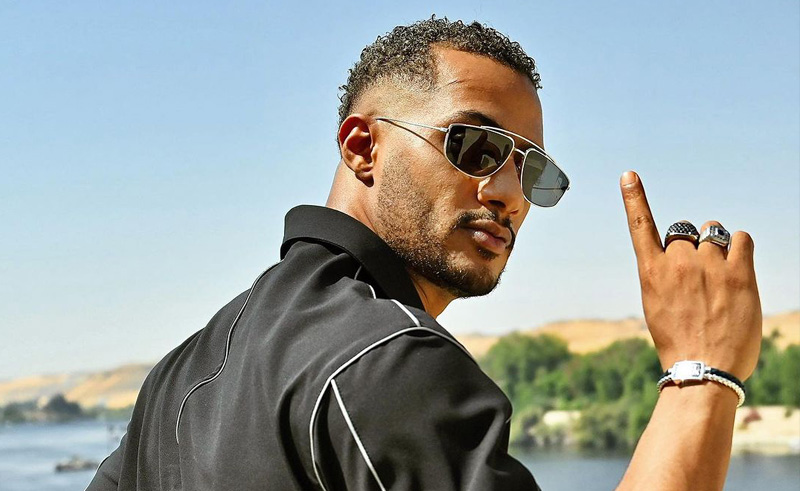
In the high-stakes arena of Middle Eastern entertainment, few figures command as much attention—or ignite as much debate—as Mohamed Ramadan. Known to millions as the “Number One,” the Egyptian actor and singer has built a career on the foundations of ambition, unapologetic confidence, and a relentless drive for dominance. To some, he is the definitive voice of a new generation of Arab youth; to others, he is a polarizing figure whose onscreen persona blurs the line between entertainment and social provocation.
In a series of recent reflections and high-profile interviews, including a candid conversation with the BBC, Ramadan has peeled back the curtain on the psychology behind his stardom. Far from the invincible image projected in his music videos and television dramas, the artist has discussed the internal pressures of maintaining a global brand, his anxieties regarding the future of creativity in the age of artificial intelligence, and the specific role that competition plays in his professional evolution.
For an observer of high performance—whether in sports or the arts—Ramadan’s trajectory is a study in competitive psychology. He does not view his peers as obstacles to be removed, but as catalysts for his own growth. By framing competition as a mutual benefit, Ramadan has managed to navigate the treacherous waters of the Egyptian entertainment industry, transforming rivalry into a mechanism for artistic and commercial expansion.
The Psychology of Competition: Turning Rivals into Assets
Central to Mohamed Ramadan’s philosophy is the belief that competition is the primary driver of excellence. While many celebrities shy away from acknowledging their rivals to maintain a facade of effortless success, Ramadan embraces the friction. He has noted that the presence of other talented artists in the industry forces him to elevate his game, refine his craft, and constantly innovate his approach to storytelling and performance.
This mindset mirrors the elite athletic mentality: the understanding that a great opponent is the best coach one can have. By pushing against the standards set by his colleagues, Ramadan argues that he has been able to add layers to his own talent. This competitive spirit is not merely about winning, but about the refusal to stagnate. In the context of Egyptian cinema and television, where trends shift rapidly, this adaptability has allowed him to remain at the forefront of the industry for over a decade.
However, this “Number One” branding is not without its costs. The pressure to consistently outperform previous successes creates a cycle of escalating expectations. Ramadan has acknowledged that the drive to stay atop the hierarchy requires a level of discipline and mental fortitude that often isolates the individual from their peers, turning professional admiration into a complex blend of respect and tension.
Addressing the Controversy: Art vs. Social Influence
One of the most persistent criticisms leveled against Mohamed Ramadan is the claim that his work promotes a “thug” culture or provides a negative influence on the youth. His roles frequently feature characters who wield power through intimidation, wealth, and a disregard for traditional authority—tropes that have resonated deeply with marginalized audiences but drawn the ire of social conservatives and critics.
When confronted with these accusations, Ramadan maintains a distinction between the character and the creator. He argues that his roles often reflect the harsh realities of the streets and the systemic struggles of the underprivileged, providing a mirror to society rather than a blueprint for behavior. From his perspective, the “negative impact” cited by critics is often a reaction to the raw, unfiltered portrayal of power dynamics in urban Egypt.
The debate over his influence highlights a broader tension in Arab media: the struggle between traditional moral guardianship and the rise of “populist” art that speaks to the aspirations and frustrations of the working class. By leaning into these controversial archetypes, Ramadan has captured a demographic that felt ignored by the more polished, elite-centric productions of the past, effectively democratizing the image of the “hero” in Egyptian drama.
Africa as a Global Launchpad
While his dominance in Egypt is well-established, Ramadan has strategically looked beyond national borders. He has frequently described his success across the African continent as a “birth certificate” for his global identity. For Ramadan, breaking into the African market is not just about increasing viewership numbers; This proves about validating his appeal on a scale that the world cannot ignore.

This expansion is a calculated move to transition from a regional star to a global icon. By tailoring his music and public image to resonate with a broader African audience, he is attempting to build a bridge between the Arab world and the rest of the continent. This strategy recognizes that in the modern attention economy, local stardom is a ceiling; true influence requires a cross-cultural footprint.
The “birth certificate” metaphor suggests that his African success provides him with a new, recognized identity in the international arena. It is a declaration that his brand of entertainment—characterized by high energy, luxury, and a “rags-to-riches” narrative—is a universal language that transcends linguistic and national boundaries.
Existential Threats: AI and the Future of Art
Despite his confidence, Ramadan has expressed genuine concern regarding the rise of Artificial Intelligence (AI). In an industry built on the uniqueness of human charisma and the nuance of emotional delivery, the ability of AI to mimic voices, generate images, and even write scripts presents a systemic threat.
The fear is not merely about job replacement, but about the devaluation of authenticity. If an AI can synthesize a “Mohamed Ramadan performance,” the scarcity that drives the value of a superstar vanishes. This anxiety reflects a wider panic currently sweeping through the global creative community, where the boundary between human creativity and algorithmic generation is becoming increasingly porous.
For an artist who has spent his entire life building a unique, irreplaceable brand, the prospect of digital replication is a profound challenge. It forces a reconsideration of what “stardom” actually means: is it the final product (the song, the scene), or is it the human journey and the lived experience of the artist that the audience truly connects with?
The Human Cost: Nightmares and Vulnerability
Perhaps the most surprising revelation in his recent discourse is the admission of his personal struggles and “nightmares.” The persona of the invincible “Number One” is a carefully constructed shield, but behind it lies a man cognizant of the fragility of fame. Ramadan has spoken about the fear of loss and the psychological toll of living under constant public scrutiny.
Discussing these vulnerabilities in a public forum serves two purposes. First, it humanizes a figure who is often seen as an arrogant caricature of success. Second, it provides a narrative arc of resilience that his fans can relate to. By admitting to his fears, he transforms his success from a result of innate luck or talent into a victory won through mental struggle.
This duality—the public conqueror and the private doubter—is what sustains his connection with his audience. The “nightmares” he describes are the shadow side of his ambition; the higher the climb, the more terrifying the potential fall. This admission suggests that the drive for dominance is not fueled by a lack of fear, but by the ability to function despite it.
Key Takeaways: The Mohamed Ramadan Blueprint
- Competitive Growth: Views rivals as essential tools for personal and professional improvement rather than enemies.
- Social Mirroring: Defends controversial roles as reflections of societal reality rather than catalysts for negative behavior.
- Pan-African Strategy: Regards success in Africa as the essential credential for achieving global recognition.
- AI Anxiety: Recognizes the threat of generative AI to the authenticity and value of human artistic performance.
- The Vulnerability Gap: Balances a high-power public persona with private struggles and anxieties about the sustainability of fame.
What Happens Next for the ‘Number One’?
As Mohamed Ramadan continues to navigate the intersection of art, business, and social influence, his next moves will likely focus on further international integration. With the African market as a foundation, the logical progression is toward a more integrated global presence, potentially involving collaborations with international artists and producers to break into Western markets.

his response to the AI revolution will be a bellwether for other Arab artists. Whether he embraces AI as a tool for production or fights it as a threat to authenticity will define the second act of his career. For now, he remains the central figure in a cultural conversation about power, class, and the price of ambition in the modern Arab world.
We invite our readers to share their thoughts: Does the “Number One” persona reflect a necessary evolution in Arab entertainment, or does it lean too heavily on provocation? Let us know in the comments below and share this analysis with your network.