
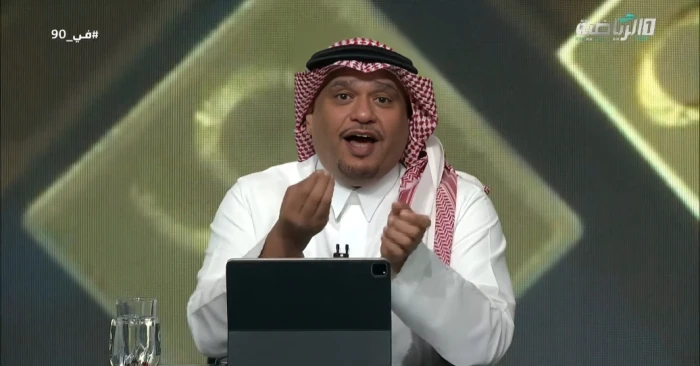
The intersection of high-stakes athletics and television production often creates a delicate balance between capturing the atmosphere of a stadium and documenting the tactical nuances of the game. However, a recent clash between Al-Nassr and Al-Ahli has shifted the spotlight from the players on the pitch to the professionals behind the cameras, sparking a heated debate over broadcasting standards in the Saudi Pro League.
Mohammed Al-Khamis, a prominent sports media personality and the host of the program “Fi 90,” has launched a scathing critique of the match’s television director. Al-Khamis argued that the broadcast failed to provide a satisfactory viewing experience, claiming that the production priorities were misplaced during one of the region’s most anticipated sporting events.
The controversy centers on the perceived imbalance in camera work, with Al-Khamis asserting that the broadcast focused excessively on the spectators rather than the primary action. This critique touches upon a broader conversation regarding the evolution of sports broadcasting in Saudi Arabia as the league continues to attract global attention and elite international talent.
The “Fans vs. Players” Controversy
At the heart of the dispute is a fundamental disagreement over what constitutes professional sports direction. According to reports on the incident, Al-Khamis expressed deep dissatisfaction with the technical crew’s performance, specifically questioning the criteria used to determine camera angles during the live transmission.

The media personality contended that the director focused on the stands to a degree that obscured the actual events of the match for those watching at home. He suggested that the production felt more like the coverage of a social gathering or an arts festival than a professional football match, where the ball and the players’ movements should remain the primary focus.
Al-Khamis highlighted several specific failures in the production, including the omission of key tactical movements by the players and the unnecessary repetition of shots featuring the crowd. By prioritizing the “spectacle” of the fans over the “science” of the game, he argued, the broadcast diminished the enjoyment and analytical value for the viewing audience.
Broadcasting Standards in a Globalized League
The critique comes at a time when the Saudi Pro League is undergoing a massive transformation, aiming to establish itself as one of the top football leagues globally. As the league invests heavily in world-class players and infrastructure, the expectations for the accompanying media production have risen proportionally.
For a global audience, the quality of the broadcast is the primary window into the league’s competitiveness. Tactical errors in directing—such as missing a crucial off-the-ball run or failing to capture a pivotal defensive shift—can lead to a fragmented understanding of the match. When a broadcaster focuses too heavily on the crowd, they risk alienating the “hardcore” football fan who seeks a deep technical understanding of the contest.
This tension reflects a common struggle in modern sports media: the desire to showcase the passion and culture of the fanbase (the “experience”) versus the requirement to document the athletic competition (the “event”). While fan reactions provide emotional resonance, they cannot replace the fundamental requirement of following the ball.
Why Technical Direction Matters
In professional football broadcasting, the director manages a complex array of cameras, including wide-angle “tactical” cams, tight close-ups for emotion, and roaming cameras for dynamic action. A failure in coordination can lead to several issues:
- Loss of Continuity: When the broadcast cuts to a fan reaction during a build-up play, the viewer loses the thread of the attack.
- Tactical Blind Spots: Key player movements that dictate the outcome of a match are often missed if the director is preoccupied with the atmosphere in the stands.
- Rhythm Disruption: Constant switching between the pitch and the crowd can disrupt the natural flow of the game’s narrative.
The Influence of “Fi 90” and Sports Media
Mohammed Al-Khamis’s platform, “Fi 90,” serves as a critical space for analyzing the Saudi sporting landscape. By using his visibility to challenge the production quality of a major match, Al-Khamis is positioning himself as a guardian of professional standards in sports journalism and broadcasting.

The reaction to his criticism suggests a shared sentiment among a segment of the viewership who feel that the “glamour” of the league’s growth should not come at the expense of technical precision. The debate underscores the role of sports commentators not just as analysts of the game, but as critics of the medium through which the game is delivered.
Looking Ahead: The Future of Saudi Sports Production
As the Saudi Pro League continues to expand its international reach, the pressure on broadcasting partners to deliver a “world-class” product will only increase. This incident serves as a reminder that the quality of the on-field product must be matched by the quality of the off-field presentation.
Industry experts suggest that implementing more rigorous broadcasting guidelines—and perhaps incorporating more diverse camera angles that prioritize tactical awareness—could mitigate these issues. The goal is to create a product that satisfies both the casual viewer looking for excitement and the seasoned analyst looking for detail.
The next major checkpoint for the league’s broadcasting evolution will be the upcoming high-profile fixtures of the season, where all eyes will be on whether the production teams adjust their approach to ensure the players, and not just the fans, remain the stars of the show.
World Today Journal encourages readers to share their thoughts on the balance between fan coverage and match action in the comments below. Do you prefer a broadcast that captures the atmosphere, or one that focuses strictly on the tactics?