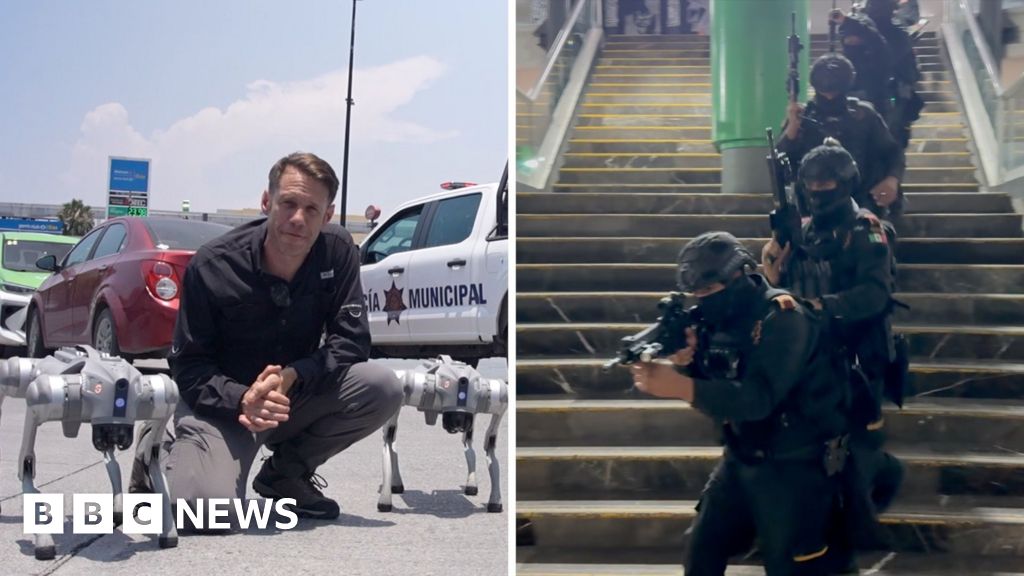
As the international community turns its gaze toward the upcoming 2026 FIFA World Cup, the industrial hub of Monterrey, Mexico, is undergoing a profound transformation. Tasked with hosting four matches, the city’s leadership is balancing the excitement of global sports tourism with the logistical reality of managing high-profile security in a region that has faced significant challenges regarding public safety. For officials in Nuevo León, the strategy is a blend of traditional law enforcement and a bold leap into modern surveillance technology, including the deployment of advanced robotics.
The integration of sophisticated security measures is central to Monterrey’s preparation for the 2026 FIFA World Cup. Local authorities, operating under the broader umbrella of Mexico’s national security framework, are utilizing a multi-layered approach to ensure that the tournament remains secure for thousands of international visitors. This effort is not merely about policing; it is an effort to demonstrate a modernized, tech-forward urban environment capable of hosting one of the world’s largest sporting events.
The Technological Frontier: Robotics in Urban Policing
Among the most striking developments in Monterrey’s security apparatus is the introduction of quadrupedal robots—colloquially known as “robodogs”—into the urban security landscape. These machines, equipped with high-definition sensors and thermal imaging, are designed to navigate complex environments where human officers might face unnecessary risk. By patrolling sensitive areas and conducting reconnaissance, these robots represent a significant shift in how the local Secretariat of Public Security approaches crowd management and threat detection.
The state of Nuevo León, led by Governor Samuel García, has emphasized a commitment to “smart” policing. The deployment of these units is part of a wider technological modernization initiative aimed at reducing response times and increasing situational awareness for the police force. While the sight of a robotic unit on the streets of Monterrey is unconventional, officials argue that these tools provide a necessary edge in a city where urban sprawl and high-density events require constant, vigilant monitoring.
Aerial Dominance and Tactical Integration
Beyond the ground-level robotics, Monterrey is bolstering its aerial surveillance capabilities. The presence of Black Hawk helicopters—symbols of high-intensity tactical support—serves as a clear signal of the state’s intent to maintain control over the security perimeter. These assets are critical for rapid deployment, enabling the police to monitor major thoroughfares and stadium approaches from the air, ensuring that ground units are informed by real-time data.

The coordination between these aerial assets and the ground-based command centers is overseen by the state’s C5 (Command, Control, Communication, Computing and Contact) centers. These hubs serve as the nerve center for the city’s security operations, aggregating data from thousands of cameras, sensors, and the aforementioned robotics. According to federal security reports, the integration of these systems is designed to create a “digital fence” around key infrastructure, ensuring that the 2026 tournament proceeds without the interference of organized criminal elements that have historically challenged state authority in the region.
Key Takeaways for International Visitors
- Enhanced Surveillance: Visitors should expect a heightened security presence, including visible drone and robotic patrols in high-traffic tourist zones.
- Strategic Hubs: The Estadio BBVA, located in the municipality of Guadalupe, will serve as the primary focus for security operations during the four scheduled matches.
- Digital Infrastructure: The state government has invested heavily in the C5 intelligence network to streamline police response times during the event.
- Official Communication: Tourists are encouraged to monitor updates from the Government of Nuevo León for real-time safety advisories and transportation guidance.
Addressing the Human Rights and Security Balance
The implementation of such intensive surveillance tools naturally raises questions regarding public privacy and the balance between security and civil liberties. In my experience covering regional geopolitics, the challenge for any host city in a complex security environment is to maintain order without infringing upon the rights of the citizenry. The government of Nuevo León faces the dual task of reassuring FIFA officials of the safety of the tournament while maintaining the public trust of its residents.
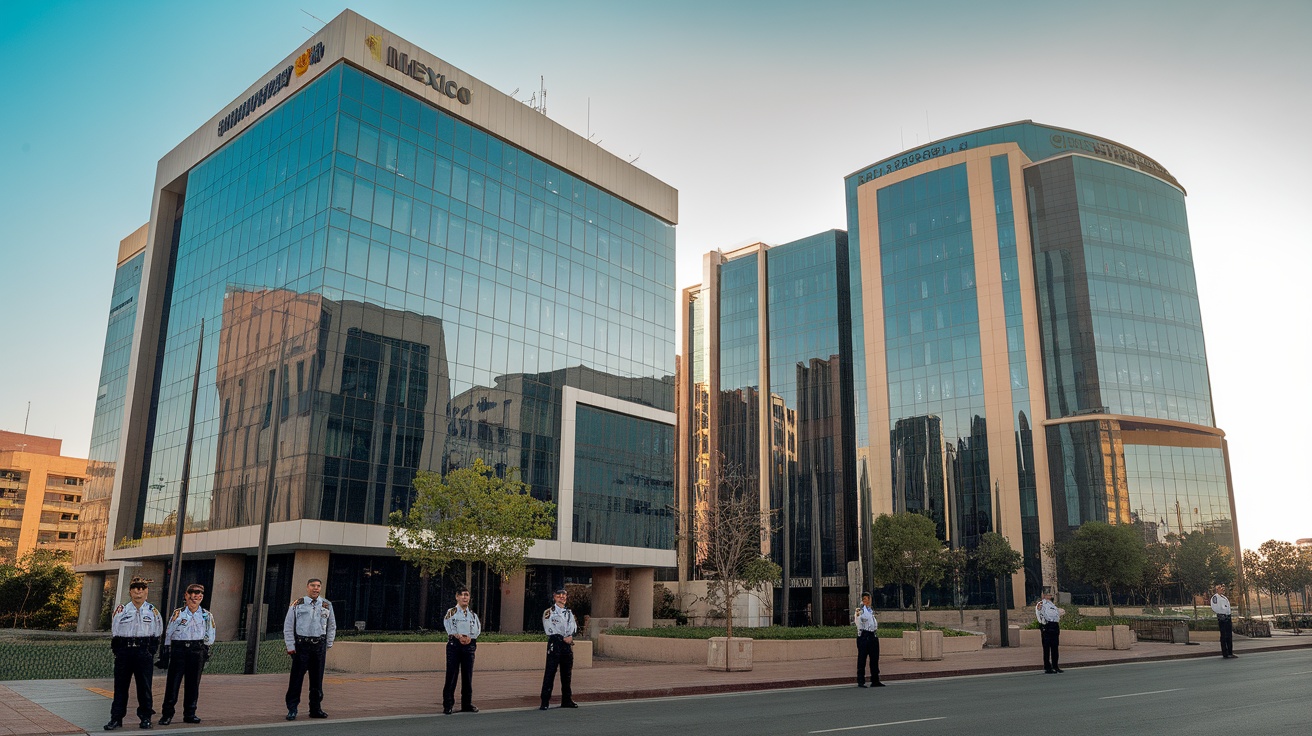

Transparency remains the most effective tool for mitigating concerns. As the tournament approaches, it is vital that the authorities continue to define the scope of these technologies—specifically regarding data collection and storage. The international community, including human rights observers, will likely be watching to see how these “robodogs” and increased aerial patrols interact with the daily lives of Monterrey’s residents. A successful World Cup in Monterrey will be measured not just by the absence of security incidents, but by the ability of the state to integrate these technologies in a manner that is both effective and respectful of the local population.
What Happens Next: The Road to 2026
The next major checkpoint for Monterrey’s security preparations involves a series of stress tests for the C5 integration systems, scheduled to take place throughout late 2025. These exercises will simulate large-scale crowd movements and emergency scenarios to ensure that the transition from standard policing to tournament-mode security is seamless. FIFA, in coordination with the Mexican Football Federation, is expected to conduct final venue inspections in early 2026 to verify compliance with international security standards.
As the city prepares to welcome fans from across the globe, the world will be watching to see if Monterrey’s blend of robotic precision and tactical air power can provide the safe environment that the tournament demands. Whether this strategy sets a new global standard for urban event security remains to be seen, but for now, Monterrey is positioning itself as a pioneer in the use of emerging technology for public safety.
What are your thoughts on the use of robotics in urban security? Does the trade-off between privacy and public safety feel balanced? Share your perspectives in the comments below, and subscribe to our newsletter for continued updates on the 2026 World Cup preparations.
Keep reading