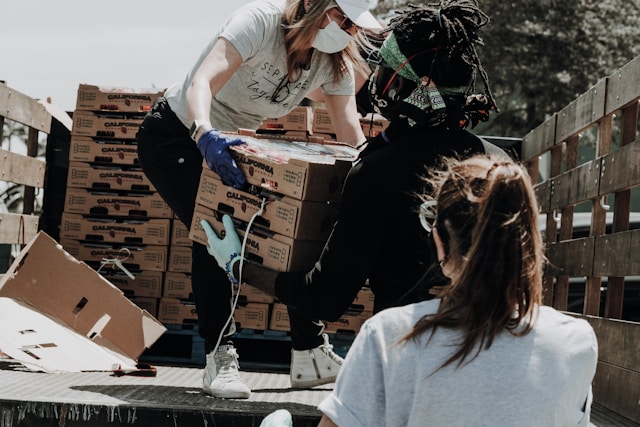
In the corridors of modern medicine, we often speak of “public health” in terms of government mandates, vaccination quotas, and large-scale epidemiological data. However, as a physician and journalist, I have observed that the most resilient health interventions often happen far from the sterile environment of a clinic or the bureaucratic halls of a ministry. They happen on porches, in community centers, and through encrypted messaging groups where neighbors organize to ensure no one in their circle goes without medication, food, or a ride to a specialist.
This phenomenon is known as mutual aid. While It’s frequently conflated with charity, mutual aid is fundamentally different. Charity is a top-down transaction—a gift from the privileged to the marginalized. Mutual aid is a horizontal act of solidarity. It is the recognition that our individual survival is inextricably linked to the survival of our neighbors. In an era where federal safety nets are fraying and healthcare costs are skyrocketing, mutual aid and public health have become intertwined, creating a grassroots infrastructure of care that fills the gaps left by systemic failure.
The urgency of this model is underscored by a growing global trend of “care gaps.” When administrative barriers make it nearly impossible for vulnerable populations to access programs like the Supplemental Nutrition Assistance Program (SNAP) or Medicaid, the result is not simply a loss of benefits; it is a direct decline in community health. From the rise of “medical deserts” in rural areas to the systemic exclusion of undocumented immigrants from primary care, the failure of the state creates a vacuum. Mutual aid is the community’s response to that vacuum—a radical assertion that health is a human right, not a privilege reserved for those with the right paperwork or insurance premiums.
As we navigate a post-pandemic world, the lessons of collective care have shifted from emergency measures to sustainable strategies. By examining the history and practice of mutual aid, we can see a blueprint for a more equitable public health future—one where the “web of care” is woven by the people themselves.
Defining Mutual Aid: Solidarity Over Charity
To understand the impact of mutual aid on public health, we must first define it precisely. Lawyer and activist Dean Spade describes mutual aid as “the radical act of caring for each other while working to change the world.” Unlike traditional non-profit models, which often operate on a hierarchy of “provider” and “recipient,” mutual aid is based on reciprocity. It assumes that everyone has something to give and everyone has a need.
In a public health context, this manifests as the voluntary, collaborative exchange of resources, services, and knowledge. This might look like a community “tool library” for medical equipment, a neighborhood pod that coordinates grocery deliveries for the homebound, or a grassroots network that distributes free, high-quality respirator masks and air purifiers during a respiratory illness surge. These actions directly address the social determinants of health—the conditions in which people are born, grow, live, and work—by removing structural barriers to basic necessities.
This approach mirrors the sentiment expressed by philosopher Cornel West, who noted that “justice is what love looks like in public.” When a community organizes a free clinic or a food distribution network, they are not merely performing a kindness; they are practicing a form of justice. They are asserting that the health of the most marginalized member of the community is the primary metric of the community’s overall well-being.
The Historical Blueprint of Collective Care
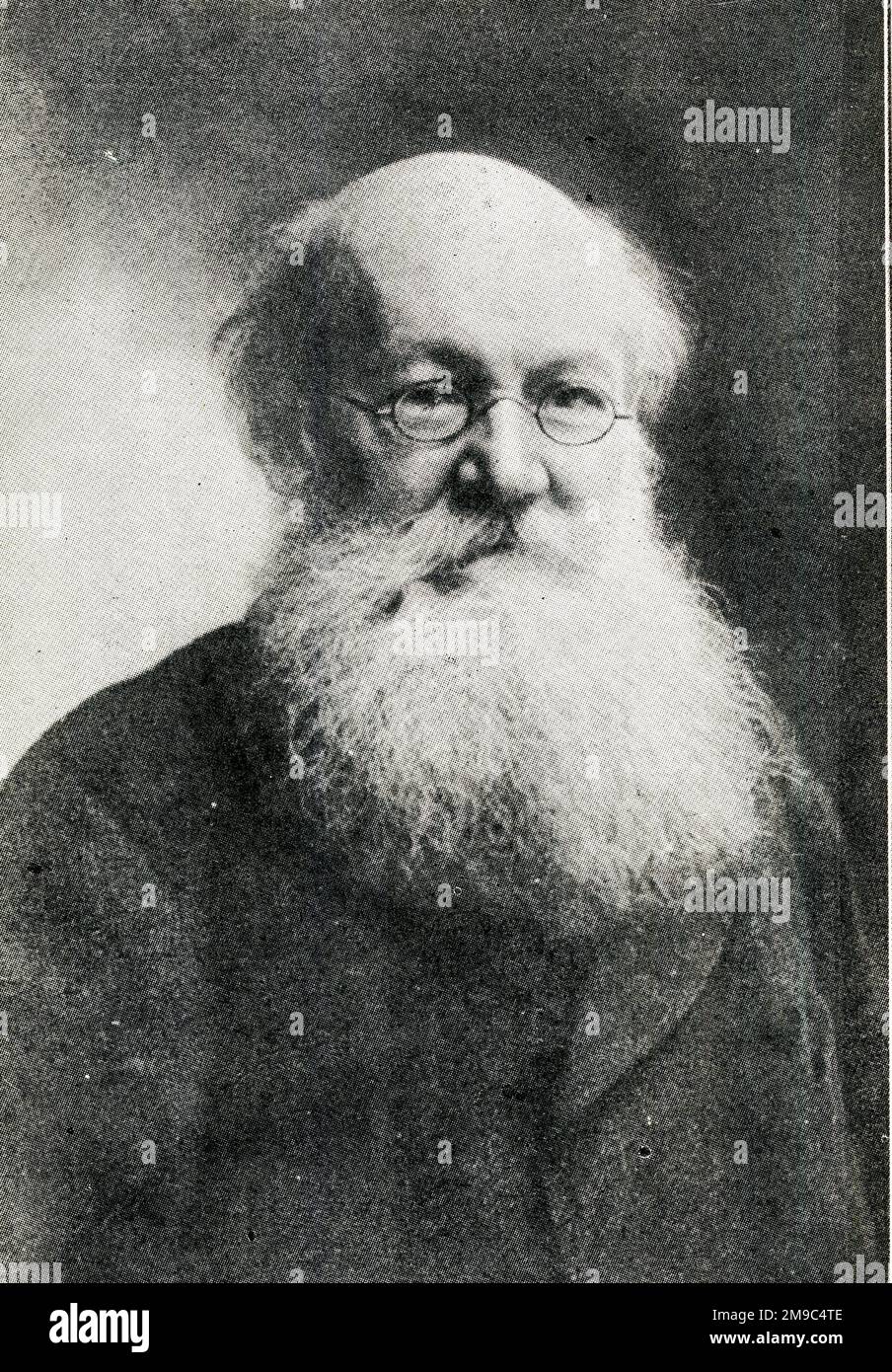
While mutual aid feels like a modern response to current crises, its roots are deep. The term was popularized in 1902 by the Russian naturalist and philosopher Peter Kropotkin in his work Mutual Aid: A Factor of Evolution. Kropotkin argued that cooperation, rather than competition, was the primary driver of survival for many species, including humans. He posited that mutually beneficial cooperation is a biological and social necessity.
Long before Kropotkin, Indigenous communities worldwide practiced collective care as a cornerstone of survival. These ancestral systems of reciprocity ensured that resources were shared during lean times and that the elderly and infirm were cared for by the collective, rather than being left to the whims of an individual’s wealth.
In the United States, one of the most significant examples of sustainable mutual aid in the 20th century was organized by the Black Panther Party (BPP). Starting in 1966, the BPP recognized that the state was failing to provide basic healthcare and nutrition to low-income Black communities. In response, they established the “People’s Free Medical Clinics” (PFMC). These clinics provided preventive care, treated hypertension, and screened for lead poisoning at a time when these services were largely unavailable to the poor.
Perhaps the most enduring legacy of the BPP’s health activism was their 1971 campaign to address Sickle Cell Anemia. At the time, the medical establishment largely ignored the disease, which predominantly affects people of African descent. The Panthers created a national program to screen, educate, and provide care for those with the condition, forcing the broader medical community to acknowledge the systemic racism inherent in healthcare priorities. This model of community-led screening and education remains a gold standard for addressing neglected tropical diseases and marginalized health conditions today.
Mutual Aid in Times of Acute Crisis
Mutual aid often accelerates during disasters when official government responses are slow, inadequate, or exclusionary. The aftermath of Hurricane Katrina in 2005 serves as a pivotal moment in modern disaster relief. As federal agencies struggled to provide basic aid, grassroots organizers formed myriad mutual aid networks. This led to the creation of the Common Ground Clinic, a volunteer-run facility that provided free, holistic medical treatment to displaced residents who had been ignored by the formal healthcare system.

Similarly, the HIV/AIDS crisis of the 1980s saw the rise of powerful mutual aid networks within the LGBTQ+ community. Faced with a government that largely ignored the epidemic, activists and healthcare workers created their own support groups, provided clandestine medical care, and developed political strategies to demand research and treatment. These networks didn’t just save lives; they created a model for patient-led advocacy that continues to influence how we treat chronic and stigmatized illnesses.
More recently, the COVID-19 pandemic triggered a global surge in mutual aid. From “Mask Blocs” distributing N95 respirators to neighborhood pods delivering groceries to the elderly, millions of people stepped up to fill the gaps in the public health infrastructure. These efforts proved that local, rapid-response networks are often more efficient than centralized bureaucracies during the early stages of a crisis. In late 2025, this model evolved further in cities like Minneapolis, Chicago, and Los Angeles, where community members created block-by-block rapid response networks to support immigrants and asylum seekers facing sudden legal or medical emergencies, providing everything from rent relief to emergency medical transportation.
Disability Justice and Inclusive Care
A critical evolution in the practice of mutual aid is the framework of “Disabled Mutual Aid.” As defined by activist Patty Berne, the concept of Disability Justice emphasizes that collective care must be intentionally inclusive. Berne argues that “abled” mutual aid often inadvertently replicates the barriers of the formal system by assuming a certain level of mobility or cognitive function from its participants.
Disabled mutual aid is inherently adaptable. It prioritizes flexibility and sustainable, long-term care over the “rapid-fire” response typical of disaster relief. By centering the needs of the most disabled members of a community, the resulting systems of care become better for everyone. For example, a mutual aid network that prioritizes sensory-friendly communication and door-to-door transportation for a disabled neighbor inadvertently creates a more accessible system for an elderly neighbor or a parent with a stroller.
Centering accessibility is not just a matter of kindness; it is quality public health practice. When we design systems of care for the margins, we create a more robust safety net for the entire population. This shift from “accommodation” (which is often a legal checkbox) to “accessibility” (which is a community value) is a hallmark of the Disability Justice movement.
Integrating Mutual Aid into a Global Health Strategy
While mutual aid is a vital lifeline, it is vital to clarify that it is not a replacement for a functioning public health system. We cannot “mutual aid” our way out of the need for universal healthcare, affordable pharmaceuticals, or clean drinking water. The goal of mutual aid is to provide immediate survival and dignity while simultaneously working to dismantle the systemic barriers that make such aid necessary.
For those looking to engage with these networks, the process usually begins with a simple question: What do I have that others need, and what do I need that others have?
Practical ways to connect with local mutual aid include:
- Searching the Mutual Aid Hub: A digital directory designed to connect individuals with local networks.
- Engaging with Food Not Bombs: A global network founded in 1980 in Cambridge, MA, that provides free vegan and vegetarian food to the public.
- Connecting with local “Mask Blocs”: Grassroots groups that continue to distribute respirator masks and air purifiers to protect vulnerable populations from airborne pathogens.
- Partnering with immigrant advocacy groups: Supporting the rapid-response networks that provide legal and medical aid to asylum seekers.
- Consulting community leaders: Librarians, faith leaders, and local business owners often hold the “social map” of where the most active mutual aid pods are located.
Conclusion: The Future of Collective Care
Public health is, at its core, a collective endeavor. Whether it is the eradication of smallpox or the management of a local flu outbreak, we are only as healthy as the most vulnerable person in our community. Mutual aid reminds us that the most powerful tool we possess is not a specific drug or a new piece of technology, but our willingness to rely on one another.
By shifting our perspective from individual survival to collective flourishing, we can build communities that are not only more resilient to crises but more just in their everyday operations. Collective care is public health in its most honest form: love in action, organized for the benefit of all.
As we look toward the next year of global health challenges, the focus will likely remain on the intersection of climate change and health equity. We can expect further developments in community-led “climate resilience pods” as cities face increasing extreme weather events. We encourage readers to seek out their local mutual aid networks now, before the next crisis arrives.
Do you have a local mutual aid group in your city? Share your experiences or the resources you use in the comments below to help others find a network of care.
Keep reading