Myanmar’s Controversial Election: A Nation Grappling with Crisis and a Fragile Hope for the Future
Myanmar is heading towards a widely disputed election, sparking debate and raising serious questions about it’s legitimacy amidst ongoing turmoil. The vote, limited to areas under military control – estimated to be less than half the country – is occurring against a backdrop of economic collapse, widespread displacement, and brutal repression. This article delves into the complexities of the situation, exploring the perspectives of those within Myanmar and the potential implications for the nation’s future.
A Climate of Despair and Disillusionment
Many within Myanmar view this election with deep skepticism. Independent analyst Kyaw Saw Han,based in Yangon,expresses a common sentiment: “I don’t think this is an election that I should vote in,” believing it will simply perpetuate the status quo. This feeling reflects a profound loss of faith in the electoral process, overshadowed by the military’s grip on power.
The current situation is a stark contrast to any semblance of democratic progress. Since the 2020 coup, Myanmar’s economy has contracted by 9%. The military’s response – printing an estimated 30 trillion kyat ($21.3 billion) to fund its operations – has fueled rampant inflation, reaching 34%. Consequently, essential goods like eggs and cooking oil are now beyond the reach of average families.
The human Cost of Conflict
The consequences of the coup extend far beyond economic hardship. Brutal airstrikes targeting citizens have become commonplace, forcing over 3.5 million people to flee their homes and become internally displaced. Major cities, including Yangon, struggle with limited resources, experiencing only eight hours of power per day.
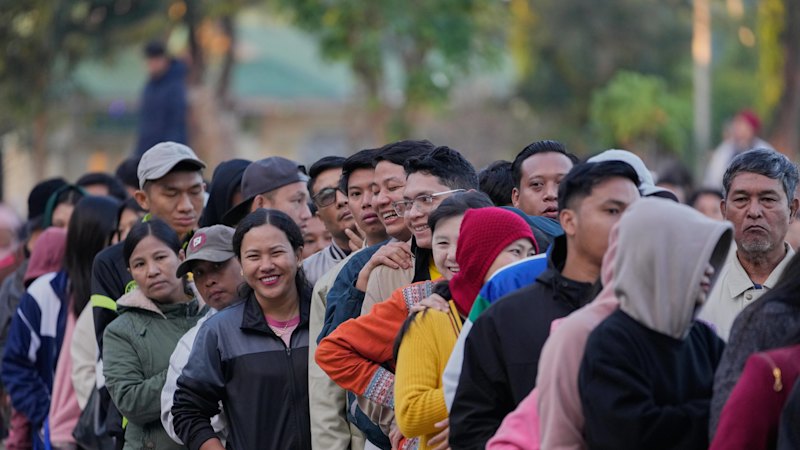
Health experts are increasingly concerned about the potential for disease outbreaks, like malaria, to spread beyond Myanmar’s borders. You can see the devastating impact of this crisis on the lives of ordinary citizens.
Seeking Alternatives to Armed Resistance
Amidst the chaos, some are advocating for a different path. Kyaw Min Htet, 30, a parliamentary candidate with the People’s Pioneer Party, believes armed revolution is not the answer. He witnessed firsthand how taking up arms only led to increased violence, targeting of civilians, and destruction of vital infrastructure.
His party’s platform focuses on “reconstruction,rehabilitation and recovery,” a vision for a future built on rebuilding rather than further conflict. This approach highlights a growing desire for peaceful solutions.
The Power of Collective Action
Htet Htet Soe Oo, 34, a candidate for the lower house and a recent addition to the People’s Pioneer Party, emphasizes the importance of unity. She decided to join the party believing that collective action holds more power than individual efforts.
“We should stop arguing,” she asserts, advocating for dialog and negotiation as the key to resolving Myanmar’s deep-seated issues. Her perspective underscores the need for a unified front in seeking a peaceful and enduring future.
A Long Road Ahead
Regardless of the election’s outcome, the challenges facing Myanmar are immense. The country needs a comprehensive strategy to address the economic crisis, provide humanitarian aid to displaced populations, and foster a genuine path towards reconciliation and democratic governance.
The hope remains that, despite the current darkness, a brighter future is absolutely possible for Myanmar and its people. Though, achieving this will require a commitment to dialogue, negotiation, and a willingness to prioritize the well-being of all citizens.
Related reading