
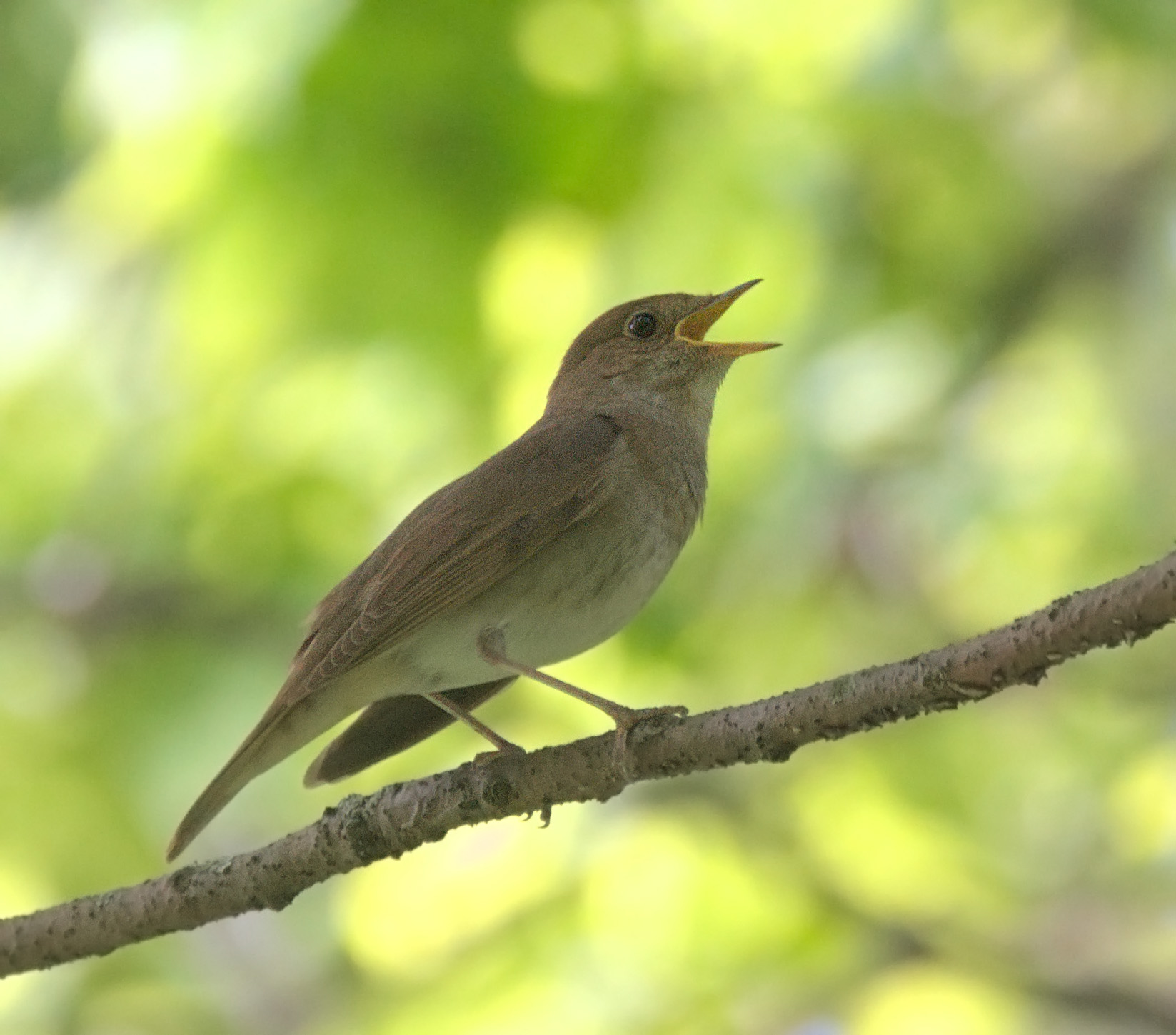
The nightingale’s haunting song has long captivated poets and listeners across Europe, but recent research reveals a hidden chapter in its life: a grueling annual migration across some of the world’s most unforgiving deserts. Far from the woodlands of Sweden where it breeds, the bird undertakes a perilous journey southward each autumn, crossing the Sahara Desert to reach wintering grounds in northeastern Africa. This extraordinary feat of endurance, once shrouded in mystery, is now being illuminated through advances in tracking technology and decades of ornithological study.
Scientists have long known that the nightingale (Luscinia luscinia) breeds in northern and eastern Europe, extending into western Asia, and migrates to the Middle East and northeastern Africa for winter. What remained unclear until recently was the precise route taken across the Sahara and how the bird survives such an arduous crossing. New findings, based on data from tiny light-level geolocators attached to individual birds, have mapped these flights in unprecedented detail, showing that nightingales follow specific corridors through the desert, often flying non-stop for hundreds of kilometers over sand and rock with minimal access to food or water.
The research, conducted by teams including ornithologists from the Swedish Museum of Natural History and Lund University, reveals that nightingales time their departure to coincide with favorable wind patterns and rely on fat reserves built up during the breeding season. These energy stores, accumulated through intense feeding on insects, larvae, and spiders in the short northern summer, are critical for powering the trans-Saharan leg of their journey. Without this preparatory phase, the crossing would be impossible.
One of the most striking discoveries is the high mortality rate among young nightingales during their first migration. Studies indicate that up to 75 percent of birds hatched in a given year do not survive to return to their breeding grounds the following spring. Of those that do make it back, another 50 percent perish annually thereafter, meaning only a small fraction reach ancient age. Despite this, individuals have been documented living up to eight or nine years—a remarkable lifespan for a small passerine—testament to the resilience of those that successfully navigate the dangers of migration, predation, and environmental challenges.
The nightingale’s ability to thrive in such contrasting environments—from the lush forests of northern Europe to the stark expanses of the Sahara—highlights its ecological adaptability. Its famous song, delivered primarily by males at night during the breeding season, serves not only to attract mates but likewise to establish territory in dense woodland habitats where visibility is low. This vocal prowess, produced by the specialized avian vocal organ known as the syrinx, allows for a remarkable range of notes and complex sequences that have earned the bird its reputation as one of nature’s finest singers.
While the nightingale remains widespread and is currently classified as a species of least concern by conservation authorities, its long-distance migration makes it vulnerable to habitat changes across multiple regions. Degradation of stopover sites in the Sahel, climate shifts affecting insect availability, and alterations to breeding grounds in Europe all pose potential threats. Ongoing monitoring through bird ringing programs and geolocation studies continues to provide vital data for understanding how these pressures may affect populations over time.
As research progresses, scientists hope to uncover more about the physiological mechanisms that enable nightingales to endure such extreme journeys, including how they regulate water loss, manage energy expenditure, and navigate using celestial or magnetic cues. Each new finding adds depth to our understanding of a bird that, despite its unassuming appearance, leads one of the most extraordinary lives in the avian world.
Stay informed about developments in ornithological research and conservation efforts by following updates from trusted scientific institutions and wildlife monitoring organizations.