
NASA Accelerates Mars Exploration with Next-Generation Propulsion Systems
The National Aeronautics and Space Administration (NASA) is intensifying its efforts to reach Mars, focusing on the development and testing of advanced propulsion systems designed to significantly reduce travel times and increase payload capacity. Recent advancements, including successful tests of a high-power electric propulsion system and ongoing research into nuclear technologies, signal a renewed commitment to human and robotic exploration of the Red Planet. These developments come as the agency continues to analyze data from its current Martian rovers, Curiosity and Perseverance, which are providing unprecedented insights into the planet’s geological history and potential for past or present life.

The push for more efficient propulsion comes as NASA aims to establish a sustainable presence on Mars, a goal that requires overcoming significant logistical challenges. Traditional chemical rockets, while powerful, are limited by their fuel efficiency, resulting in lengthy transit times and substantial fuel requirements. New technologies, such as electric propulsion and potentially nuclear thermal propulsion, offer the promise of faster, more economical journeys, paving the way for more ambitious missions. The agency’s long-term vision includes sending humans to Mars, a feat that demands a paradigm shift in space travel capabilities. According to NASA, the current focus is on developing technologies that will make these ambitious goals achievable within a reasonable timeframe.
Electric Propulsion Breakthroughs: A Leap Towards Faster Mars Travel
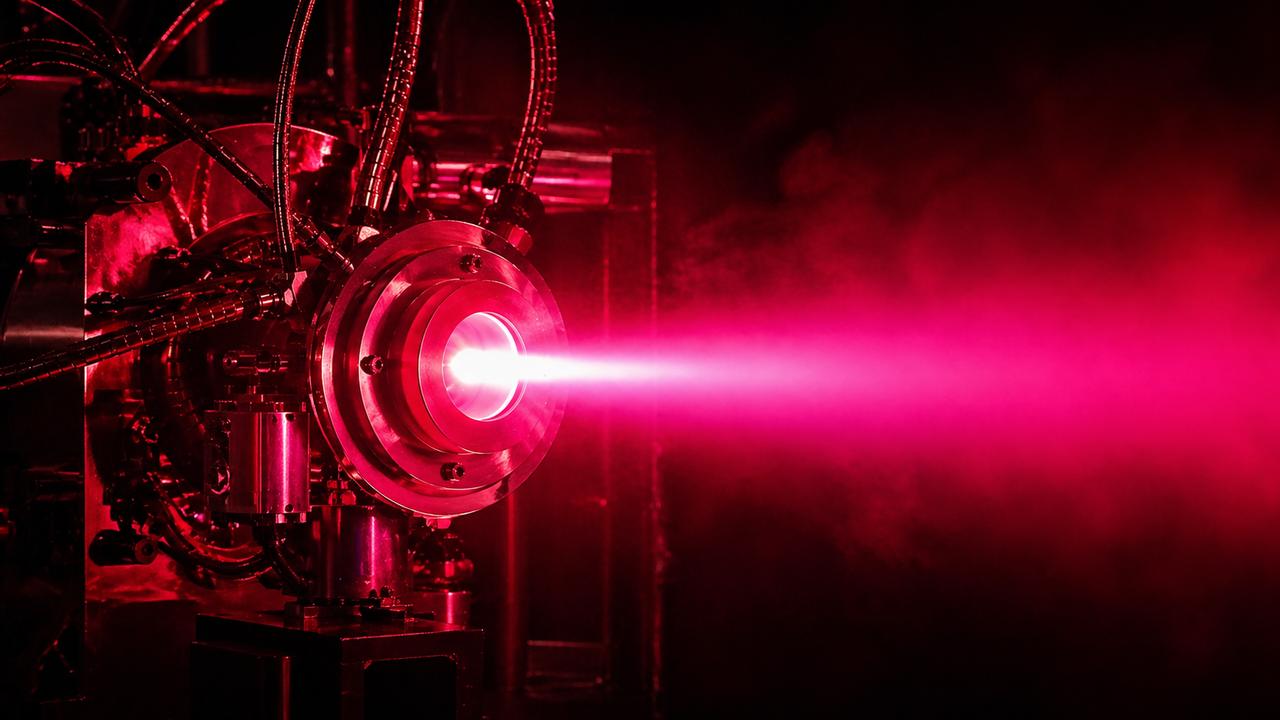
A key area of progress lies in electric propulsion, specifically a new type of engine utilizing lithium liquid. NASA recently conducted successful tests of a high-power Hall thruster, a type of electric propulsion system, demonstrating a record-breaking level of performance. Les Numériques reported that this technology could dramatically reduce travel times to Mars. Hall thrusters work by ionizing a propellant, typically xenon, and accelerating the ions using an electric field. This creates thrust, albeit at a lower level than chemical rockets, but with significantly higher fuel efficiency.
The recent tests focused on a 12.5-kilowatt Hall thruster, achieving unprecedented levels of power and performance. This advancement is crucial since higher power levels translate to greater thrust and faster acceleration. While still in the development phase, this technology represents a significant step towards enabling faster and more efficient interplanetary travel. NASA’s Jet Propulsion Laboratory (JPL) is leading the research and development efforts, with a focus on scaling up the technology and integrating it into future spacecraft designs. The agency is also exploring the use of alternative propellants, such as lithium, to further enhance performance and reduce costs.
Exploring Alternative Propulsion: The Promise of Nuclear Technologies
Beyond electric propulsion, NASA is also investigating the potential of nuclear technologies to revolutionize space travel. Nuclear thermal propulsion (NTP) and nuclear electric propulsion (NEP) offer the potential for even greater performance gains than electric propulsion alone. NTP systems use a nuclear reactor to heat a propellant, such as hydrogen, to extremely high temperatures, creating a high-velocity exhaust and generating thrust. NEP combines a nuclear reactor with an electric propulsion system, offering a balance of high thrust and high efficiency. L’Usine Nouvelle reports that NASA is prioritizing research into these technologies as part of its broader strategy for space exploration.
The development of nuclear propulsion systems faces significant technical and regulatory hurdles. Ensuring the safety and reliability of these systems is paramount, and extensive testing and validation are required. The use of nuclear materials in space raises concerns about proliferation and environmental impact, necessitating strict international oversight and adherence to safety protocols. Despite these challenges, the potential benefits of nuclear propulsion are substantial, offering the possibility of drastically reducing travel times to Mars and enabling more ambitious missions to other destinations in the solar system.
Current Martian Missions Continue to Yield Valuable Data
While NASA develops these next-generation propulsion systems, its current missions to Mars, led by the Curiosity and Perseverance rovers, continue to provide invaluable data about the planet’s history and potential for habitability. NASA recently released stunning 360-degree panoramas captured by both rovers, showcasing the diverse landscapes of Mars. Curiosity, exploring the foothills of Mount Sharp, is examining ancient rock formations that reveal clues about the planet’s watery past. Perseverance, located in Jezero Crater, is searching for signs of past microbial life and collecting samples for potential return to Earth.

The rovers’ findings are helping scientists to reconstruct the history of Mars and understand the conditions that may have once supported life. Curiosity’s exploration of the “boxwork terrain” has revealed intricate rock formations created by groundwater flowing through fractures in the bedrock. Perseverance’s investigation of the Jezero Crater rim has uncovered ancient rocks that may hold clues about the crater’s formation and its potential to have harbored life. These discoveries are not only advancing our understanding of Mars but also informing the search for life beyond Earth. The data collected by Curiosity and Perseverance will be crucial in guiding future missions and informing the development of technologies needed to establish a sustainable human presence on Mars.
Looking Ahead: The Next Steps in Mars Exploration
NASA’s plans for Mars exploration extend beyond the current rover missions. The agency is actively developing the Mars Sample Return campaign, a complex undertaking to retrieve the samples collected by Perseverance and bring them back to Earth for detailed analysis. This mission, a collaboration with the European Space Agency (ESA), is considered a top priority and is expected to provide unprecedented insights into the potential for past life on Mars. The agency is also working on technologies for in-situ resource utilization (ISRU), which involves using Martian resources to produce fuel, water, and other essential supplies, reducing the reliance on Earth-based logistics.
The development of advanced propulsion systems, coupled with ongoing robotic exploration and the ambitious Mars Sample Return campaign, represents a concerted effort to unlock the secrets of the Red Planet and pave the way for human exploration. The next major milestone will be the completion of the Mars Sample Return mission architecture review, expected in the coming months, which will outline the detailed plan for retrieving the samples and bringing them back to Earth. Continued investment in research and development, coupled with international collaboration, will be essential to achieving these ambitious goals and realizing the dream of a sustainable human presence on Mars.
What are your thoughts on NASA’s accelerated push towards Mars? Share your comments below and let us know what aspects of Martian exploration you find most exciting.