
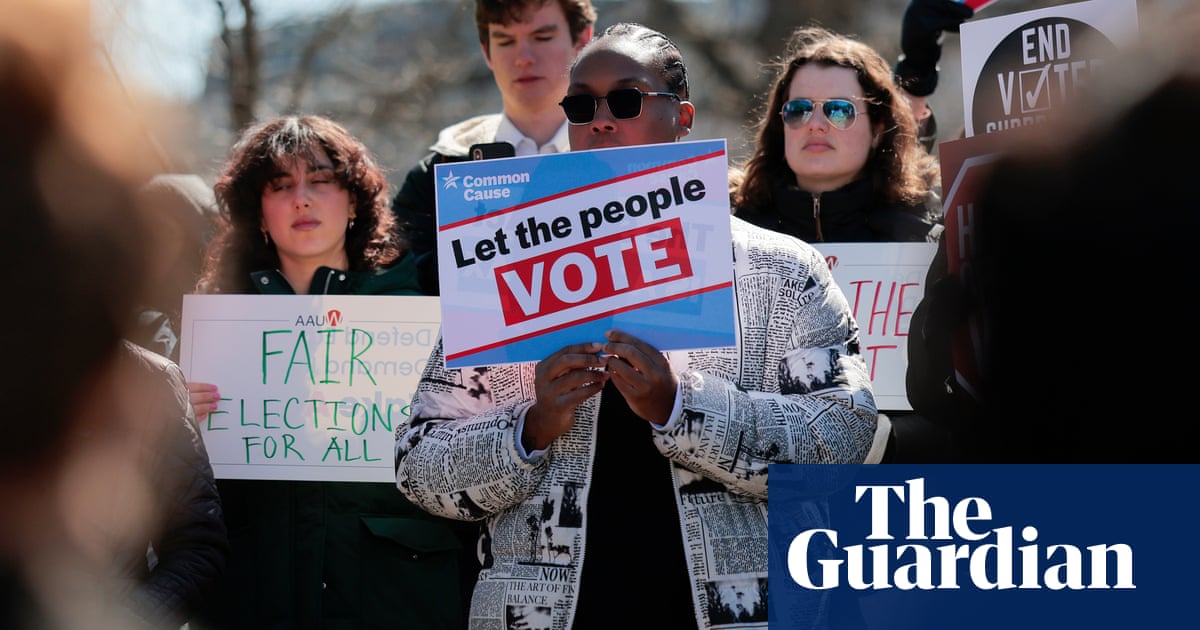
The United States Supreme Court has delivered a significant blow to the protections afforded to minority voters, ruling that efforts to ensure proportional representation for Black citizens in Louisiana’s congressional districts constitute an illegal practice. The decision in Louisiana v. Callais marks a pivotal moment in the ongoing legal dismantling of the 1965 Voting Rights Act, a piece of legislation long regarded as the “crown jewel” of the American civil rights movement.
At the center of the dispute was the attempt to create a second electoral district in Louisiana designed to provide African American voters—who make up approximately one-third of the state’s population—the opportunity to elect representatives proportionate to their numbers. Although, the Court found that these efforts amounted to “unconstitutional racial gerrymandering,” effectively stripping away a legal mechanism used for decades to prevent the dilution of Black voting power in the American South.
This ruling is not an isolated event but the culmination of a sustained legal strategy. It represents the fifth major decision authored by Chief Justice John Roberts and Justice Samuel Alito that restricts the democratic rights of Black and other minority Americans. By targeting Section 2 of the Voting Rights Act, the Court has eviscerated a critical tool that has been utilized for 40 years to challenge electoral maps drawn by largely Republican southern states to minimize the political influence of minority communities.
The Legal Erosion of Section 2
For four decades, Section 2 of the Voting Rights Act of 1965 served as the primary legal weapon against “vote dilution.” This occurs when electoral boundaries are drawn to split minority communities into multiple districts (cracking) or concentrate them into a single district to limit their overall influence (packing). Section 2 allowed plaintiffs to challenge these maps if they could prove that the resulting districts deprived minority voters of an equal opportunity to elect candidates of their choice.
In the case of Louisiana v. Callais, the Court pivoted toward a stricter interpretation of racial gerrymandering. By labeling the creation of a second majority-Black district as unconstitutional, the Court has created a legal paradox: while the Voting Rights Act was designed to ensure minority representation, the act of drawing a map to achieve that representation can now be characterized as an unconstitutional use of race in redistricting.
The impact of this shift is immediate. By removing the ability to mandate districts that reflect a state’s actual demographics, the ruling opens the door for states to redraw congressional maps in ways that may significantly decrease the number of Black representatives in the U.S. House of Representatives.
A Pattern of Judicial Dismantling
Legal analysts point to a coordinated effort within the Court’s conservative majority to roll back civil rights protections. Chief Justice John Roberts and Justice Samuel Alito have emerged as the primary architects of this transition, acting as a “double act” in a long-term campaign to strangle the efficacy of the Voting Rights Act.
This latest ruling follows a series of decisions that have steadily chipped away at the law’s pillars. While earlier attacks focused on the “preclearance” formula—which required certain states with histories of discrimination to secure federal approval before changing voting laws—the current focus has shifted to the substantive protections of Section 2. By neutralizing Section 2, the Court is removing the last remaining tool for federal oversight of how states draw their electoral boundaries.
Key Implications of the Ruling
- Dilution of Power: Republican-led southern states now have greater leeway to draw maps that dilute the voting strength of minority populations.
- Reduced Representation: The inability to create districts proportionate to a state’s Black population (such as Louisiana’s one-third Black demographic) likely leads to fewer minority representatives in Congress.
- Legal Precedent: The “racial gerrymandering” label provides a blueprint for other states to challenge minority-majority districts.
What This Means for Minority Voters
The practical result of the Louisiana v. Callais decision is a reduction in the political agency of minority voters. When districts are drawn to dilute voting power, the preferences of these voters are less likely to be reflected in the composition of the legislature. This creates a cycle where the people affected by policy decisions have the least amount of influence over who writes those policies.

For the residents of Louisiana, the ruling means that the push for a second district reflecting their population has been halted. For the broader U.S. Population, it signals that the federal government’s commitment to enforcing the Voting Rights Act has reached a nadir under the current Supreme Court.
Next Steps and Legal Checkpoints
The immediate aftermath of this ruling will likely see a rush of redistricting activity in several southern states as they seek to align their maps with the Court’s new interpretation of racial gerrymandering. Legal teams for voting rights organizations are expected to evaluate whether remaining protections within the Constitution or other federal statutes can be leveraged to prevent the total erasure of minority-majority districts.
The next critical checkpoint will be the filing of updated electoral maps in affected states and the subsequent challenges brought by civil rights groups to determine exactly where the Court has drawn the line between “representation” and “gerrymandering.”
World Today Journal encourages readers to share this report and join the conversation in the comments regarding the future of voting rights in the United States.