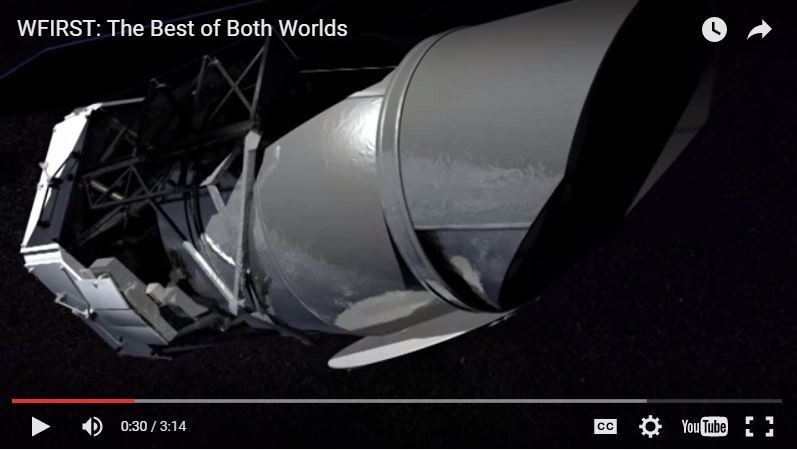
NASA has unveiled its newest space telescope, designed to survey vast portions of the universe in unprecedented detail and search for answers to some of cosmology’s most enduring mysteries. The Roman Space Telescope, named after pioneering astronomer Nancy Grace Roman, will scan wide swaths of the sky to study dark energy, dark matter, and exoplanets, offering what scientists describe as a new “atlas of the universe.”
Unlike the Hubble Space Telescope, which observes relatively tiny patches of sky in deep detail, Roman’s wide-field instrument will capture images more than 100 times larger than Hubble’s while maintaining comparable resolution. This capability allows it to map cosmic structures across vast distances, helping researchers understand how the universe has evolved over billions of years. Positioned at the second Lagrange point (L2), approximately 1.5 million kilometers from Earth, the telescope will operate in a stable gravitational environment ideal for long-term observations.
The mission’s primary goals include investigating the nature of dark energy—the mysterious force driving the accelerated expansion of the universe—and mapping the distribution of dark matter through gravitational lensing effects. By observing how light from distant galaxies bends around massive foreground objects, Roman will create a three-dimensional map of matter distribution across cosmic time. These observations could help determine whether dark energy is constant or changes over time, addressing one of the biggest questions in fundamental physics.
In addition to cosmology, Roman will conduct extensive surveys for exoplanets using both the transit method and microlensing techniques. The transit method detects planets as they pass in front of their host stars, causing periodic dips in brightness, while microlensing identifies planets by measuring how their gravity temporarily magnifies the light of background stars. Together, these approaches are expected to reveal thousands of new exoplanets, including rogue planets that drift freely through space without orbiting any star.
According to NASA officials, the telescope’s coronagraph instrument—a technology demonstration designed to block starlight and reveal faint nearby objects—will enable direct imaging of large exoplanets and study their atmospheric properties. This capability represents a significant step toward future missions aimed at characterizing Earth-like worlds for signs of habitability.
The Roman Space Telescope is scheduled for launch no earlier than May 2027 aboard a SpaceX Falcon Heavy rocket from Launch Complex 39A at NASA’s Kennedy Space Center in Florida. Once operational, it will join other observatories at L2, including the James Webb Space Telescope, though its mission focuses on broad surveys rather than targeted observations. Data collected by Roman will be made publicly available, supporting research by astronomers worldwide.
Development of the telescope has involved collaboration between NASA’s Goddard Space Flight Center, various industrial partners, and international contributors. The project builds on decades of work in wide-field infrared astronomy, incorporating lessons learned from previous missions such as Hubble and the planned Wide Field Infrared Survey Telescope (WFIRST) concept, which evolved into the Roman mission.
As preparations continue for launch and commissioning, scientists anticipate that Roman’s unique combination of wide-field imaging, spectroscopic capabilities, and advanced coronagraphy will open new discovery space in astrophysics. By creating a detailed atlas of the universe’s structure and contents, the telescope aims to transform our understanding of cosmic evolution, planetary systems, and the fundamental laws governing the cosmos.
For updates on the Roman Space Telescope’s development, testing milestones, and launch timeline, NASA maintains a dedicated mission page with regular news releases and technical briefings. The agency encourages public engagement through educational resources and citizen science opportunities related to the mission’s scientific goals.
Worth a look