
Recent discussions about solar activity and space debris have sparked public interest in celestial events near our star. While headlines occasionally suggest dramatic explosions beside the Sun followed by fragments bombarding Earth, verified astronomical observations show no such occurrences have taken place. Scientists continuously monitor the Sun and near-Earth space for any unusual activity, relying on a global network of observatories and space-based instruments.
NASA and other space agencies maintain constant vigilance over solar flares, coronal mass ejections, and near-Earth objects. These phenomena are well-understood aspects of space weather, with established protocols for observation and public notification when significant events occur. The Solar Dynamics Observatory (SDO) and the Solar and Heliospheric Observatory (SOHO) provide real-time data on solar behavior, accessible to researchers worldwide.
Current scientific consensus indicates that while the Sun regularly releases energy through solar flares and coronal mass ejections, these events do not produce solid fragments that survive intact to reach Earth’s surface. Solar material consists primarily of plasma and charged particles, which interact with Earth’s magnetosphere and atmosphere, often creating auroras rather than impact events.
Near-Earth objects, including asteroids and comets, are tracked through programs like NASA’s Near-Earth Object Observations (NEOO) Program. This initiative uses ground-based telescopes and space-based assets to discover, characterize, and monitor objects whose orbits bring them close to Earth. As of early 2026, over 30,000 near-Earth asteroids have been cataloged, with ongoing efforts to identify potentially hazardous objects.
The process of verifying celestial events involves multiple independent observatories confirming observations through different instruments and locations. No single source constitutes definitive proof; instead, scientific consensus builds through peer-reviewed research and cross-verification among international space agencies.
Understanding Solar Activity and Space Weather
Solar activity follows an approximately 11-year cycle, with periods of increased sunspot formation, flares, and coronal mass ejections. During solar maximum, the Sun exhibits heightened magnetic activity, which can influence space weather conditions throughout the heliosphere. The current solar cycle, Cycle 25, began in December 2019 and is progressing toward its predicted maximum around 2025.
Coronal mass ejections (CMEs) involve massive bursts of solar wind and magnetic fields rising above the solar corona or being released into space. When directed toward Earth, these CMEs can interact with the planet’s magnetosphere, potentially causing geomagnetic storms. However, the energetic particles from CMEs do not constitute solid debris capable of creating impact craters on Earth’s surface.
Space weather forecasting has improved significantly with advances in satellite technology and computational modeling. Organizations like the National Oceanic and Atmospheric Administration’s (NOAA) Space Weather Prediction Center provide forecasts and alerts for various sectors affected by space weather, including aviation, power grids, and satellite operations.
Near-Earth Object Monitoring and Planetary Defense
NASA’s Planetary Defense Coordination Office oversees efforts to detect and characterize near-Earth objects that could pose an impact hazard to Earth. The office collaborates with international partners through the International Asteroid Warning Network (IAWN) and the Space Mission Planning Advisory Group (SMPAG).
Recent advancements in detection technology have improved the ability to identify smaller near-Earth objects. The Vera C. Rubin Observatory, expected to initiate full operations in 2025, will significantly enhance survey capabilities for detecting faint, fast-moving objects in the solar system.
Impact hazard assessments consider both the probability of impact and the potential consequences. Objects larger than 140 meters in diameter are of particular concern due to their potential for regional devastation. However, the likelihood of impact from any known hazardous object remains extremely low on human timescales.
Public Communication and Scientific Literacy
Clear communication about space phenomena helps prevent unnecessary alarm while promoting public understanding of genuine scientific discoveries. Space agencies routinely publish explanatory materials about solar events, meteor showers, and asteroid flybys to contextualize observations for non-specialist audiences.
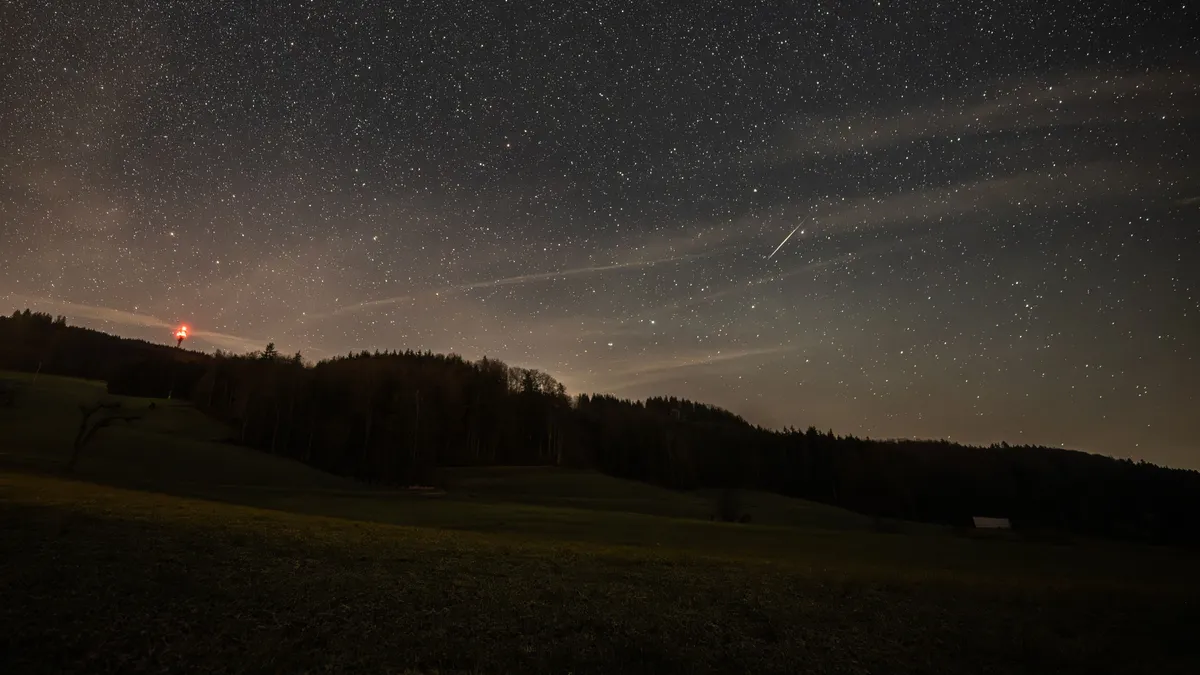
Meteor showers occur when Earth passes through debris trails left by comets, resulting in numerous modest particles entering the atmosphere and creating visible streaks of light. These events are predictable and pose no threat to the surface, as the particles typically disintegrate completely in the upper atmosphere.
Fireballs, or exceptionally bright meteors, occasionally reach lower altitudes before disintegrating. While rare, surviving fragments (meteorites) can be recovered for scientific study. Networks like the Global Meteor Network and national fireball observation programs assist track these events and recover specimens when possible.
Verified Information Sources for Space Events
For accurate, up-to-date information on solar activity and near-Earth objects, several authoritative sources provide reliable data:
- NASA’s Space Weather Prediction Center offers real-time solar data and forecasts: NOAA Space Weather Prediction Center
- The NASA Near-Earth Object Program maintains comprehensive asteroid and comet data: NASA CNEOS
- The International Astronomical Union’s Minor Planet Center serves as the global repository for observational data on minor planets: Minor Planet Center
- The European Space Agency’s Space Safety Programme provides European perspectives on space weather and planetary defense: ESA Space Safety
These resources offer scientific data, educational materials, and notification services for significant space weather events. They represent the consensus view of the international scientific community on solar and near-Earth object phenomena.
Ongoing Research and Future Developments
Scientific investigation into solar behavior and near-Earth object populations continues to advance. Current research priorities include improving prediction models for coronal mass ejections, enhancing detection capabilities for smaller near-Earth objects, and developing potential mitigation strategies for hypothetical impact scenarios.
The Double Asteroid Redirection Test (DART) mission, which successfully impacted the asteroid moonlet Dimorphos in September 2022, demonstrated kinetic impactor technology as a potential planetary defense technique. Follow-up observations by the European Space Agency’s Hera mission, scheduled to arrive at the Didymos system in late 2026, will provide detailed characterization of the impact’s effects.
Solar exploration missions like NASA’s Parker Solar Probe and the joint ESA/NASA Solar Orbiter continue to provide unprecedented close-up observations of the Sun’s corona and solar wind origins. These missions contribute to fundamental understanding of solar processes that drive space weather.
As detection technologies improve and observational datasets grow, scientists refine their understanding of the near-Earth object population and solar behavior. This ongoing work supports both scientific discovery and practical applications in space situational awareness and planetary defense.
For those interested in following verified space news, official agency websites and peer-reviewed scientific journals provide the most reliable information. Social media and unverified websites may occasionally sensationalize routine space phenomena, making consultation of authoritative sources essential for accurate understanding.
To stay informed about legitimate space weather alerts and near-Earth object discoveries, consider bookmarking the verified sources mentioned above. Engaging with the scientific community through public lectures, citizen science projects, and educational programs offers additional pathways to learn about our solar system’s dynamics.