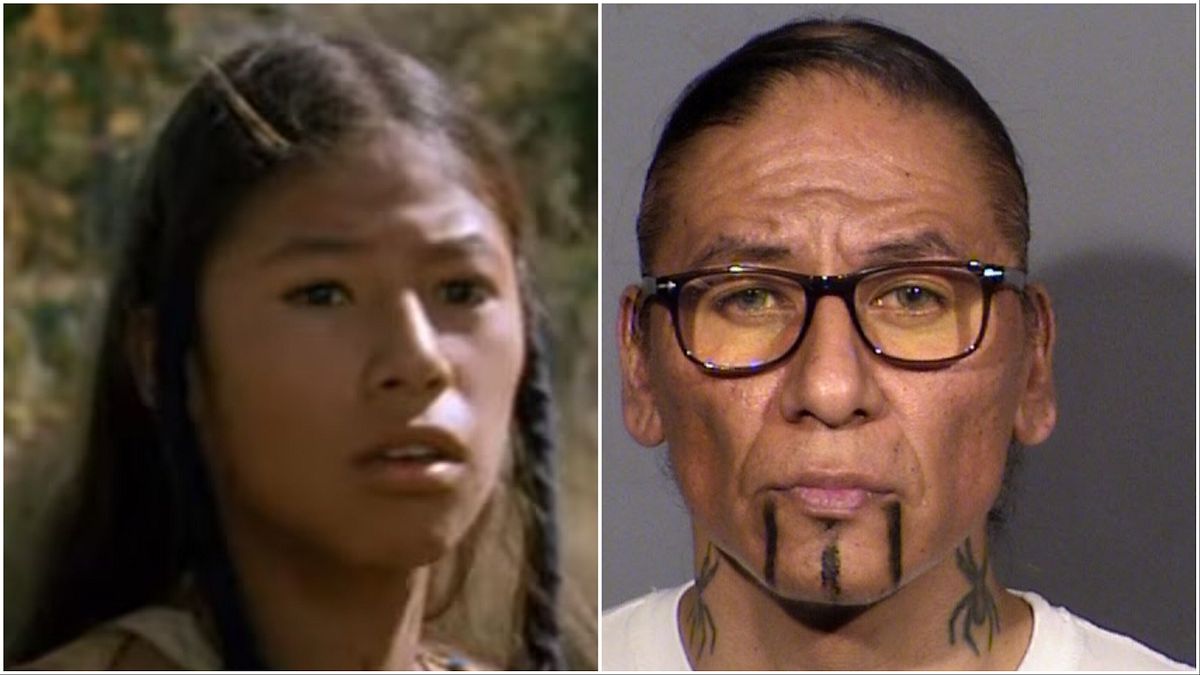
From Hollywood Stardom to Life Imprisonment: The Fall of Nathan Chasing Horse
In a dramatic fall from grace that has shocked both Hollywood and Indigenous communities worldwide, Nathan Chasing Horse—once celebrated for his role in the Oscar-winning film Dances With Wolves—has been sentenced to life in prison for sexually assaulting minors while posing as a spiritual healer. The case, which concluded in a Nevada courtroom on April 24, 2026, exposes the dark intersection of celebrity, cultural exploitation, and systemic vulnerabilities within Indigenous communities. Chasing Horse, 49, was convicted on 13 counts, including sexual assault of a minor, after a jury found he systematically abused his position as a self-proclaimed “medicine man” to manipulate and assault young Indigenous women, and girls.
The sentencing marks the culmination of a years-long investigation that revealed a pattern of predatory behavior spanning multiple states and tribal nations. According to court documents and victim testimonies, Chasing Horse leveraged his Hollywood fame and fabricated spiritual authority to establish a cult-like following known as “The Circle,” where he allegedly committed his crimes under the guise of sacred rituals. He will be eligible for parole after serving 37 years, though the severity of the crimes and the emotional testimony of survivors suggest he may spend the remainder of his life behind bars.
A Star’s Ascent and a Predator’s Descent
Nathan Chasing Horse’s journey from Hollywood actor to convicted sex offender is a stark reminder of how fame can be weaponized. Born on the Rosebud Reservation in South Dakota, home to the Sicangu Sioux tribe, Chasing Horse first gained national recognition in 1990 when he played the role of “Smiles a Lot” in Kevin Costner’s Dances With Wolves. The film, which won seven Academy Awards, including Best Picture, catapulted Chasing Horse into the public eye and imbued him with a veneer of authenticity as a representative of Lakota culture. However, as his acting career waned, he reinvented himself as a spiritual leader, a transformation that prosecutors would later describe as a calculated scheme to exploit vulnerable individuals.
By the early 2000s, Chasing Horse had cultivated a reputation as a “Holy Person” within Indigenous communities across the United States and Canada. He performed healing ceremonies, claimed to communicate with higher powers, and amassed a devoted following through “The Circle,” a group that investigators have since labeled a cult. His dual identity—as both a Hollywood actor and a self-styled spiritual guide—allowed him to operate with impunity for years, as victims and their families hesitated to challenge someone perceived as a cultural and spiritual authority. As one prosecutor noted during the trial, “He didn’t just abuse bodies; he abused trust, culture, and faith.”
The Crimes and the Cult
The case against Chasing Horse centered on allegations from three Indigenous women and girls, who testified that he sexually assaulted them when they were minors. The youngest victim, Corena Leone-LaCroix, was just 14 years ancient at the time of the abuse. During her emotional testimony, she described the lifelong trauma inflicted by Chasing Horse, stating, “There’s no way to recover the youth, the loss of childhood, my first time, my first kiss, the diploma I never got on time. The life that little girl could have lived was taken from me forever.” Her words, reported by CNN, underscored the devastating impact of Chasing Horse’s actions on his victims.
Prosecutors presented evidence that Chasing Horse used his position within “The Circle” to isolate victims, manipulate their families, and silence dissent. Former followers described a climate of fear and control, where Chasing Horse enforced loyalty through intimidation and threats. In 2015, tribal leaders on the Fort Peck Reservation in Montana took the unprecedented step of banishing Chasing Horse from their land, citing allegations of sexual abuse, human trafficking, drug dealing, and spiritual manipulation. The banishment motion, obtained by ICT News, detailed a pattern of behavior that included “guns being used to maintain tribal members out of ceremonies” and “disrespecting the land” where sacred Sundance rituals were held. Despite this, Chasing Horse continued to operate in other communities until his arrest in 2023.
A Systemic Failure and a Call for Accountability
Chasing Horse’s case has reignited conversations about the systemic failures that allow predators to exploit Indigenous communities. Advocates for survivors of sexual violence have pointed to the unique vulnerabilities faced by Indigenous women and girls, who experience sexual violence at rates higher than any other demographic in the United States. The case too highlights the dangers of cultural appropriation, where non-Indigenous individuals—and even those with Indigenous heritage—exploit sacred traditions for personal gain.
During the sentencing hearing, Nevada District Judge Maria Lopez addressed Chasing Horse directly, stating, “You have betrayed the very people you claimed to serve. You have weaponized their spirituality, their trust, and their hope. There is no place in our society for those who prey on the vulnerable, and today, justice has been served.” The judge’s remarks echoed the sentiments of many Indigenous leaders, who have called for greater protections against spiritual exploitation and stronger support systems for survivors.
The case has also prompted discussions about the role of Hollywood in perpetuating harmful stereotypes. While Dances With Wolves is often praised for its portrayal of Native American culture, critics argue that the film—and Chasing Horse’s subsequent career—reinforced the “noble savage” trope, which can be used to legitimize false claims of spiritual authority. As one Indigenous scholar noted in a Guardian op-ed, “When a film like Dances With Wolves elevates an actor to cultural icon status, it creates a dangerous illusion of authenticity. Chasing Horse’s crimes are a stark reminder of what happens when that illusion goes unchecked.”
The Aftermath and the Path Forward
For the survivors of Chasing Horse’s abuse, the life sentence offers a measure of closure, though the scars remain. Corena Leone-LaCroix and the other victims have become vocal advocates for Indigenous women’s rights, working with organizations like the National Indigenous Women’s Resource Center to raise awareness about sexual violence in Native communities. Their bravery in coming forward has inspired others to share their stories, leading to a broader reckoning with abuse within spiritual and cultural spaces.
Chasing Horse’s legal team has indicated they plan to appeal the conviction, though legal experts suggest the overwhelming evidence—including victim testimonies, tribal records, and digital communications—makes a successful appeal unlikely. In the meantime, authorities are urging anyone who may have been victimized by Chasing Horse or his associates to arrive forward. The FBI has set up a dedicated tip line for the case, which can be reached at 1-800-CALL-FBI.
As for “The Circle,” the group has largely disbanded following Chasing Horse’s arrest, though former members have reported ongoing efforts to regroup under new leadership. Tribal leaders and law enforcement agencies are monitoring the situation closely, warning communities to remain vigilant against similar predatory schemes.
Key Takeaways
- Life Sentence for Abuse: Nathan Chasing Horse was sentenced to life in prison on April 24, 2026, for sexually assaulting three Indigenous minors. He will be eligible for parole after 37 years.
- Exploitation of Spiritual Authority: Chasing Horse used his Hollywood fame and fabricated role as a “medicine man” to establish “The Circle,” a cult-like group where he committed his crimes.
- Systemic Vulnerabilities: The case highlights the higher rates of sexual violence against Indigenous women and girls, as well as the dangers of cultural appropriation and spiritual exploitation.
- Tribal Banishment: In 2015, the Fort Peck Reservation in Montana banished Chasing Horse for alleged sexual abuse, human trafficking, and intimidation, though he continued to operate elsewhere.
- Survivor Advocacy: Victims, including Corena Leone-LaCroix, have become advocates for Indigenous women’s rights, working to raise awareness and support other survivors.
- Hollywood’s Role: The case has sparked discussions about the impact of films like Dances With Wolves in perpetuating harmful stereotypes and legitimizing false claims of spiritual authority.
What Happens Next?
Chasing Horse’s legal team has until May 24, 2026, to file an appeal. Meanwhile, the FBI continues to investigate potential additional victims and associates of “The Circle.” For survivors and their families, the focus now shifts to healing and advocacy, with organizations like the National Indigenous Women’s Resource Center offering resources and support.
As this case demonstrates, the fight against sexual violence in Indigenous communities requires not only legal accountability but also cultural and systemic change. For those affected by Chasing Horse’s crimes or similar situations, help is available. The StrongHearts Native Helpline provides confidential support for Native survivors of domestic and sexual violence at 1-844-7NATIVE (1-844-762-8483).
We invite our readers to share their thoughts on this case and its broader implications. How can communities better protect against spiritual exploitation? What role should Hollywood play in preventing the misuse of cultural representation? Join the conversation in the comments below and share this article to raise awareness.