Nathan Chasing Horse Sentenced to Life in Prison for Sexual Assault of Indigenous Women and Girls
LAS VEGAS — Nathan Chasing Horse, the former Hollywood actor best known for his role in *Dances With Wolves*, was sentenced to life in prison on Monday for the sexual assault of Indigenous women and girls, a case that has sent shockwaves through Native communities across North America. Clark County District Judge Jessica Peterson delivered the sentence after a jury convicted Chasing Horse in January on 13 charges, including multiple counts of sexual assault involving minors. He will be eligible for parole after serving 37 years.
The 49-year-old, who once leveraged his Hollywood fame and Lakota heritage to build a reputation as a spiritual leader, was accused of exploiting his position to prey on vulnerable women and girls over nearly two decades. During the sentencing hearing, three women—including one who was just 14 when the abuse began—delivered emotional victim impact statements, describing the lasting trauma inflicted by Chasing Horse’s actions. One survivor, Corena Leone-LaCroix, told the court, “There is no way to get back the youth, the childhood loss, my first time, my first kiss, the graduation I never got to have. The life that little girl could have lived has been taken from me forever.”
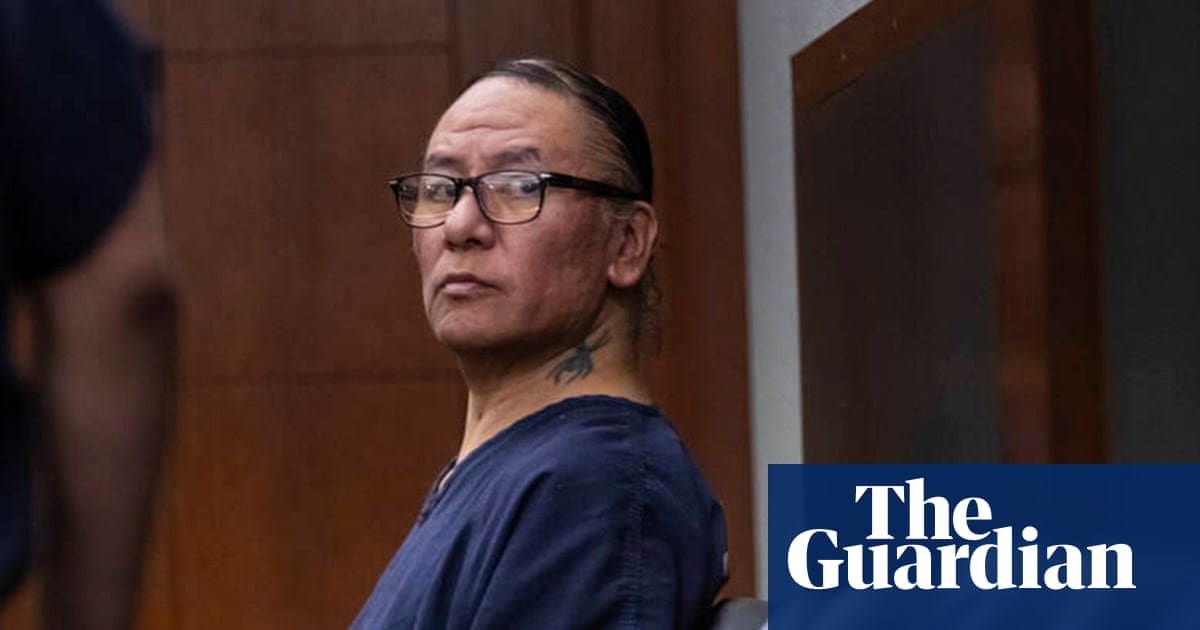
The Associated Press, which does not typically name alleged sexual assault victims unless they come forward publicly, confirmed Leone-LaCroix’s identity and statement. Chasing Horse, dressed in a navy blue Clark County Detention Center uniform, sat impassively as the statements were read, maintaining his long-standing denial of the charges. “This is a miscarriage of justice,” he told Judge Peterson during the hearing, a claim that contradicts the jury’s unanimous verdict and the extensive evidence presented during the 11-day trial.
The Trial and Conviction
Chasing Horse’s conviction in January marked the culmination of a yearslong effort by prosecutors to hold him accountable for crimes that spanned multiple states and Canada. The case first gained public attention in 2023, when he was arrested in Nevada and indicted on 21 charges, including sexual assault, coercion and child abuse. The trial, held in Las Vegas, revealed a pattern of abuse in which Chasing Horse allegedly used his status as a self-proclaimed medicine man to manipulate and assault Indigenous women and girls, some of whom sought his spiritual guidance.
Prosecutors argued that Chasing Horse weaponized cultural traditions and spiritual beliefs to isolate his victims, often convincing them that his actions were part of sacred rituals. The jury ultimately found him guilty of 13 charges, acquitting him on eight others, including some related to a victim who was older and living with him at the time of the alleged assaults. The verdict was described by authorities as a rare moment of accountability for a man who had evaded consequences for years, despite widespread rumors of misconduct within Indigenous communities.
During the trial, jurors heard testimony from three women who detailed their experiences of abuse, including one who said the assaults began when she was just 14 years old. The prosecution presented evidence that Chasing Horse had groomed his victims over time, often targeting those who were struggling with personal or family issues. His defense attorney, Craig Mueller, argued that the relationships were consensual and that the accusations were motivated by financial gain or personal vendettas. However, the jury rejected this defense, siding instead with the survivors and the prosecution’s portrayal of Chasing Horse as a predator who exploited his cultural influence.
A Pattern of Abuse and Exploitation
Chasing Horse’s case has drawn attention to the broader issue of sexual violence within Indigenous communities, where perpetrators often exploit positions of trust to commit crimes with impunity. As a member of the Lakota Sioux tribe, Chasing Horse cultivated an image as a spiritual leader, conducting ceremonies and offering guidance to those seeking cultural connection. However, survivors and advocates say his actions were a perversion of sacred traditions, used to control and silence his victims.
“He used our own culture against us,” said one survivor who testified under the condition of anonymity. “He made us believe that speaking out would betray our people, that it would bring shame to our families. That’s how he kept us quiet for so long.” The case has prompted discussions within Native communities about the need for better protections against spiritual leaders who abuse their authority, as well as the challenges of reporting such crimes to law enforcement, particularly in rural or reservation-based areas where resources are limited.
The sentencing also highlighted the emotional toll the case has taken on survivors and their families. During the hearing, several family members of the victims described the ongoing struggle to rebuild their lives in the wake of Chasing Horse’s crimes. “We trusted him,” said the mother of one survivor. “He was supposed to be a healer. Instead, he destroyed our daughter’s life.” Judge Peterson, visibly moved by the statements, called the case “one of the most disturbing” she had presided over, noting that Chasing Horse’s continued denial of the charges only compounded the harm inflicted on his victims.
Pending Charges in Canada and the Road Ahead
While Monday’s sentencing brings a measure of closure to the Nevada case, Chasing Horse still faces additional legal challenges. In February 2023, he was charged with sexual assault in British Columbia, Canada, related to an alleged incident in September 2018 near Keremeos, a village about four hours east of Vancouver. The case was temporarily paused due to Chasing Horse’s U.S. Legal proceedings but resumed in 2024. According to Damienne Darby, communications counsel for the British Columbia Prosecution Service, prosecutors will assess next steps once all of Chasing Horse’s U.S. Appeals have been exhausted.
The Canadian charges underscore the transnational nature of Chasing Horse’s alleged crimes, as well as the challenges of prosecuting cases that cross international borders. Advocates for Indigenous women’s rights have pointed to the case as an example of the need for stronger cooperation between law enforcement agencies in the U.S. And Canada, particularly when dealing with crimes that disproportionately affect Native communities. “This is not just a Nevada problem or a Canadian problem,” said Sarah Deer, a Muscogee (Creek) Nation citizen and professor at the University of Kansas who specializes in tribal law and gender violence. “It’s a systemic issue that requires a coordinated response.”
For now, Chasing Horse remains incarcerated at the Clark County Detention Center in Las Vegas, where he will begin serving his life sentence. His legal team has indicated that they plan to appeal the conviction, though legal experts say the chances of overturning the verdict are slim, given the strength of the evidence presented at trial. In the meantime, survivors and their families are focusing on healing and rebuilding their lives, with many expressing hope that the case will serve as a catalyst for change within Indigenous communities.
What This Case Means for Indigenous Communities
Chasing Horse’s conviction and sentencing have resonated deeply within Native communities, where the case has sparked conversations about accountability, cultural exploitation, and the intersection of spirituality and abuse. Many Indigenous leaders and activists have praised the verdict as a rare instance of justice for survivors, particularly in cases where perpetrators hold positions of power or cultural authority.
“This case is a wake-up call,” said Mary Kathryn Nagle, a Cherokee Nation citizen and attorney who specializes in tribal sovereignty and violence against Native women. “It shows that no one is above the law, no matter how much influence or fame they have. But it also shows how much work we still have to do to protect our communities from predators who hide behind tradition.”
The case has also highlighted the role of media in amplifying the voices of survivors. Chasing Horse’s Hollywood connections—particularly his role in *Dances With Wolves*, the 1990 film that won seven Academy Awards—brought national attention to the case, but advocates say it should not have taken a celebrity’s involvement to make the public care. “These crimes happen every day in our communities, and they often go unnoticed,” said Abigail Echo-Hawk, director of the Urban Indian Health Institute. “The fact that this case made headlines given that of Chasing Horse’s fame is both a blessing and a curse. It’s a blessing because it’s bringing attention to an issue that desperately needs it. But it’s a curse because it shouldn’t capture a famous name to make people listen.”
For survivors of Chasing Horse’s abuse, the sentencing offers a sense of validation, though many say the road to healing is far from over. “Justice doesn’t erase what happened,” said Leone-LaCroix in her victim impact statement. “But it does signify that he can’t hurt anyone else. And for that, I’m grateful.”
Next Steps and How to Follow the Case
While Chasing Horse’s Nevada case is now closed, the legal proceedings in Canada remain ongoing. The British Columbia Prosecution Service has not yet announced a timeline for the next phase of the case, but updates will likely be posted on the BC Prosecution Service website. Survivors and advocates are also urging Indigenous communities to remain vigilant against spiritual leaders who abuse their authority, with many organizations offering resources and support for those affected by sexual violence.
For those seeking more information about the case or resources for survivors, the following organizations provide support and advocacy for Indigenous women and girls:
- National Indigenous Women’s Resource Center (NIWRC)
- Urban Indian Health Institute (UIHI)
- StrongHearts Native Helpline
The next major development in the case will likely come after Chasing Horse’s appeals in the U.S. Are exhausted, at which point Canadian prosecutors will decide whether to proceed with the sexual assault charges in British Columbia. Until then, the survivors and their families continue to navigate the complex emotions of a case that has left an indelible mark on their lives and their communities.
We encourage readers to share this story and engage in thoughtful discussions about the issues it raises. If you or someone you know has been affected by sexual violence, resources and support are available through the organizations listed above. Leave your comments below, and let us know how this case has impacted your perspective on justice and accountability.
Keep reading