
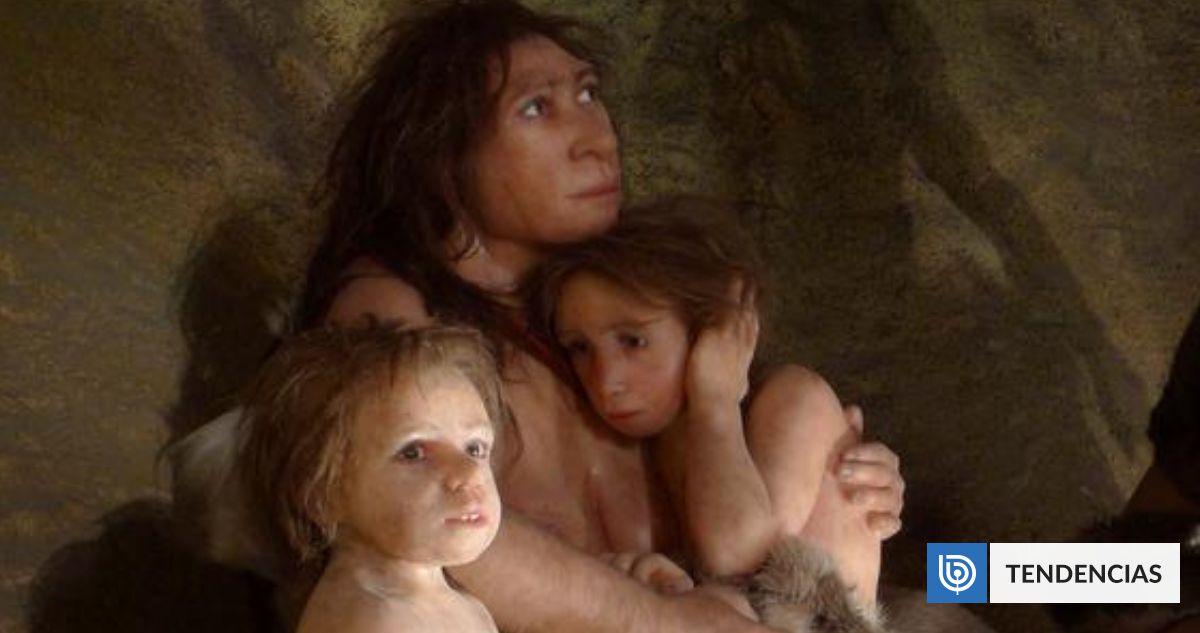
Recent archaeological findings have revealed that Neanderthal infants experienced significantly accelerated growth compared to modern humans, with a six-month-old Neanderthal displaying the physical development of a 14-month-old Homo sapiens child. This discovery, based on the analysis of a well-preserved infant skeleton known as Amud 7, challenges previous assumptions about Neanderthal childhood and offers new insights into how this extinct human species adapted to harsh Ice Age environments.
The remains of Amud 7 were originally uncovered in 1960 from the Amud Cave in northern Israel, a site overlooking the Sea of Galilee. Though the bones had been known to researchers for decades, it was only recently that a team of scientists conducted a detailed examination using advanced dental and skeletal analysis techniques. By studying the growth lines in the infant’s teeth—similar to tree rings—researchers were able to estimate the child’s age at death with precision, confirming that Amud 7 had lived for approximately six months.
Despite this young age, the skeletal measurements indicated a level of physical development far beyond what would be expected in a modern human infant of the same age. The long bones, skull size, and limb proportions all corresponded to those of a modern child aged between 12 and 14 months. This suggests that Neanderthal infants grew at roughly twice the rate of their Homo sapiens counterparts, a trait likely shaped by evolutionary pressures in cold, resource-scarce climates where rapid maturation could improve survival odds.
The study, published in the journal Current Biology, represents one of the most comprehensive analyses ever conducted on a Neanderthal infant skeleton. Researchers noted that not only were the bones larger than expected, but the cranial volume was also above average for the estimated age, indicating early brain development. These anatomical features point to a distinct developmental trajectory in Neanderthals, one that diverged significantly from the growth patterns seen in modern human infants from the earliest stages of life.
According to Ella Been, a professor at the Ono Academic College in Israel and lead author of the study, the findings fundamentally alter our understanding of Neanderthal infancy. “The discovery of the Amud 7 skeleton changes radically our view of Neanderthal childhood,” she stated in interviews with international media outlets. “These babies were not only larger but matured much faster than modern human infants, likely as an adaptation to survive in extremely cold and demanding environments.”
This accelerated development may have allowed Neanderthal children to turn into self-sufficient sooner, reducing the burden on caregivers in mobile hunter-gatherer groups facing frequent environmental stress. Yet, such rapid growth could also have reach with trade-offs, potentially requiring higher caloric intake and placing greater metabolic demands on both infants and their mothers during lactation.
While Neanderthals are often portrayed as brutish and primitive, recent discoveries over the past two decades have painted a far more nuanced picture. Evidence of symbolic behavior, burial practices, tool complexity, and even interbreeding with early Homo sapiens suggests that Neanderthals were cognitively and socially sophisticated. The Amud 7 findings add another layer to this evolving narrative, highlighting biological adaptations that enabled them to thrive in Europe and western Asia for over 300,000 years before their disappearance around 40,000 years ago.
Scientists continue to study Neanderthal remains across Eurasia to better understand the full scope of their biology and behavior. Sites in France, Germany, Croatia, and the Caucasus have yielded additional juvenile specimens, though few are as complete or well-preserved as Amud 7. Advances in imaging technology, isotopic analysis, and ancient DNA sequencing are allowing researchers to reconstruct not only physical traits but also diet, mobility, and genetic relationships with unprecedented detail.
As research progresses, the story of the Neanderthals is being rewritten—not as evolutionary dead ends, but as a highly adaptable human lineage that coexisted with, and contributed to, the genetic makeup of modern populations. Non-African humans today carry between 1% and 4% Neanderthal DNA, a lasting legacy of ancient encounters that occurred tens of thousands of years ago.
The investigation into Amud 7 underscores how much remains to be learned from the fossil record. Each new discovery refines our understanding of what it meant to be human in the deep past, revealing that traits once thought unique to Homo sapiens—such as rapid infant growth or complex social structures—may have deeper roots in the human family tree than previously believed.
For those interested in following developments in paleoanthropology, major institutions such as the Max Planck Institute for Evolutionary Anthropology in Leipzig and the Spanish National Research Council regularly publish updates on ongoing excavations and genomic studies. Open-access journals like PLOS ONE and eLife also provide peer-reviewed research accessible to both scientists and the public.
As our knowledge of ancient humans expands, so too does our appreciation for the diversity and resilience of the human lineage. The story of Amud 7—a baby who lived over 50,000 years ago but whose bones still speak today—reminds us that even the smallest fossils can carry profound implications for who we are and how we came to be.
We invite readers to share their thoughts on this fascinating discovery in the comments below and to spread the word by sharing this article with others curious about our shared human origins.