
Modern humans who carry a specific gene variant inherited from Neanderthal interbreeding around 47,000 years ago possess slightly greater muscle mass, distinct jaw shapes, and shorter tooth roots. Published in Current Biology, the new study bridges laboratory cell tests with population data from more than a million people.
Our ancient cousins are often pictured as stockier and more powerful than modern humans. While Homo sapiens held the advantage in reach, Neanderthals carried a dense, robust build defined by heavier muscles and barrel-shaped chests. New research now explains a piece of that physiological difference by tracking how a tweaked genetic receptor affects muscle growth.
An international research team discovered that a Neanderthal version of the growth hormone receptor contains two specific amino acid changes and one small deletion. When tested in laboratory-grown cells, the receptors reacted more strongly to human growth hormone.
Laboratory Tests Match Population Data Across Millions of Carriers
Scientists frequently struggle to connect biochemical reactions in petri dishes to real-world anatomy. In this case, however, the laboratory evidence aligned directly with population metrics drawn from more than a million individuals.
“What struck me most was that two very different types of evidence told the same story. Cells grown in the laboratory responded more strongly, while data from more than a million people showed signs of the same effect in the body. It is rare to see laboratory and population evidence fit together so clearly.”
Philipp Kanis, Max Planck Institute for Evolutionary Anthropology
The physical traits tied to the receptor do not appear early in life. Researchers examining body measurements from more than 6,000 children found no differences in growth or development up to the age of 11. The genetic influence appears to kick in around puberty, when human growth hormone production surges.
Geographic Distribution Spans South and East Asia While Remaining Rare in Europe
Among non-African populations, however, the distribution varies depending on geography.
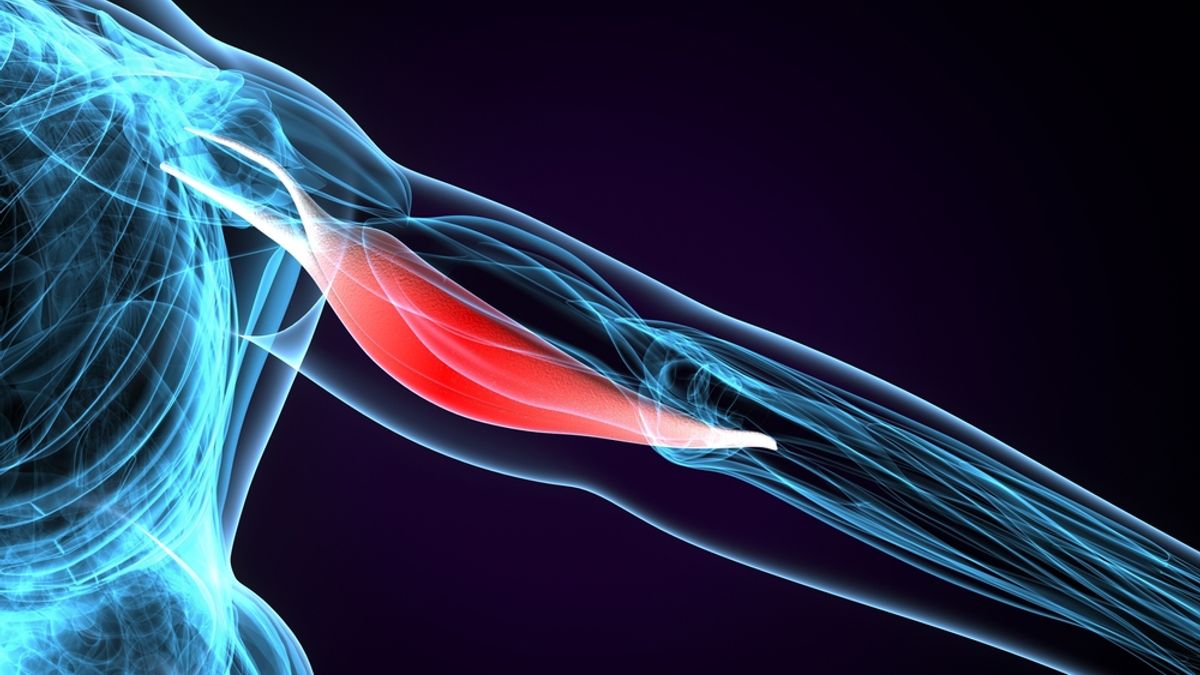
The variant is common across South and East Asia. In parts of South Asia, nearly one in four people—up to 24 percent of the population—carries the Neanderthal growth hormone receptor variant. By contrast, just 0.5 percent of modern Europeans carry the muscle-boosting adaptation, according to Dailymail.
Subtle Skull and Jaw Changes Accompany the Extra Muscle
Extra muscle mass is not the only physical marker left behind by the archaic receptor. Anthropologists analyzing adult carriers also noted distinct changes in dental and facial structures that mirror known Neanderthal features.
Carriers exhibit slightly shorter tooth roots and subtle differences in jaw shape, specifically a shorter lower jaw. While the variant influences morphology, senior researchers caution against viewing it as a sole blueprint for ancient anatomy.
“It is fascinating that one genetic change inherited from Neandertals can still have an effect on the human body today. But this is only one of many genetic influences on growth and body shape. It cannot explain the Neandertal body type on its own, and it certainly does not determine a person’s overall appearance.”
Hugo Zeberg, Karolinska Institutet
As co-author Miriam Berreiter of the Karolinska Institutet observed, As someone who does CrossFit, I was delighted to find Neandertal genetics and muscle mass coming together in the same study
while noting that even a Neandertal growth hormone receptor is no substitute for training.
Worth a look