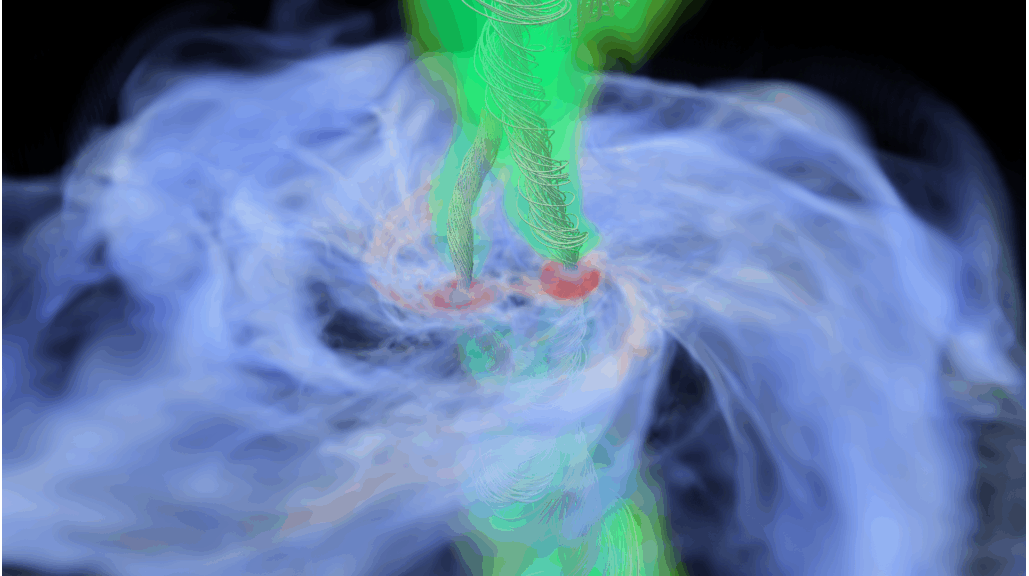
In the vast, often violent landscape of deep space, binary systems—two celestial objects locked in a gravitational dance—have long fascinated astrophysicists. A collaborative research team comprised of scientists from Hosei University, the University of Tokyo, and Peking University has recently proposed a new theoretical framework to explain the orbital evolution of these stellar pairs. Their work offers fresh insight into the complex mechanisms that drive binary systems toward catastrophic, high-energy collisions, including the eventual merger of black holes.
As a technology editor, I find this study particularly compelling because it bridges the gap between abstract gravitational theory and the observable data provided by modern gravitational wave observatories. Understanding how two massive objects—whether they are stars or black holes—slowly spiral inward until they coalesce is essential for mapping the history of our universe. The research, which focuses on the orbital evolution of binary systems, provides a clearer picture of the pathways that lead to gravitational wave events, an area of study that has seen significant advancement through organizations like the Laser Interferometer Gravitational-Wave Observatory (LIGO).
Deciphering the Orbital Dance
The core challenge in astrophysics regarding binary systems has always been the “missing link” in their evolution. While we have observed binaries at great distances and have detected the final “chirp” of their collisions, the intermediate phases—where the orbit slowly decays—are notoriously challenging to model. The team’s proposal suggests that specific environmental factors and interactions within the binary system play a more decisive role than previously anticipated. By modeling these orbital changes, the researchers aim to explain how systems that start as widely separated pairs eventually overcome the gravitational barriers that keep them apart.
This study is significant because it provides a roadmap for how stellar-mass black holes might form binary systems that are destined to merge within the age of the universe. According to recent data from the European Gravitational Observatory, the population of binary black holes detected by current instruments suggests that there are efficient evolutionary channels at work, and this new theoretical model helps narrow down those possibilities.
Why This Matters for Future Research
The implications of this research extend far beyond theoretical physics. As our ability to detect gravitational waves improves, the need for accurate models becomes paramount. If we can predict the orbital evolution of these “twinned” celestial bodies, we can better interpret the signals captured by detectors on Earth. This is not merely an academic exercise; it is a fundamental shift in how we perceive the lifecycle of massive objects in the cosmos.
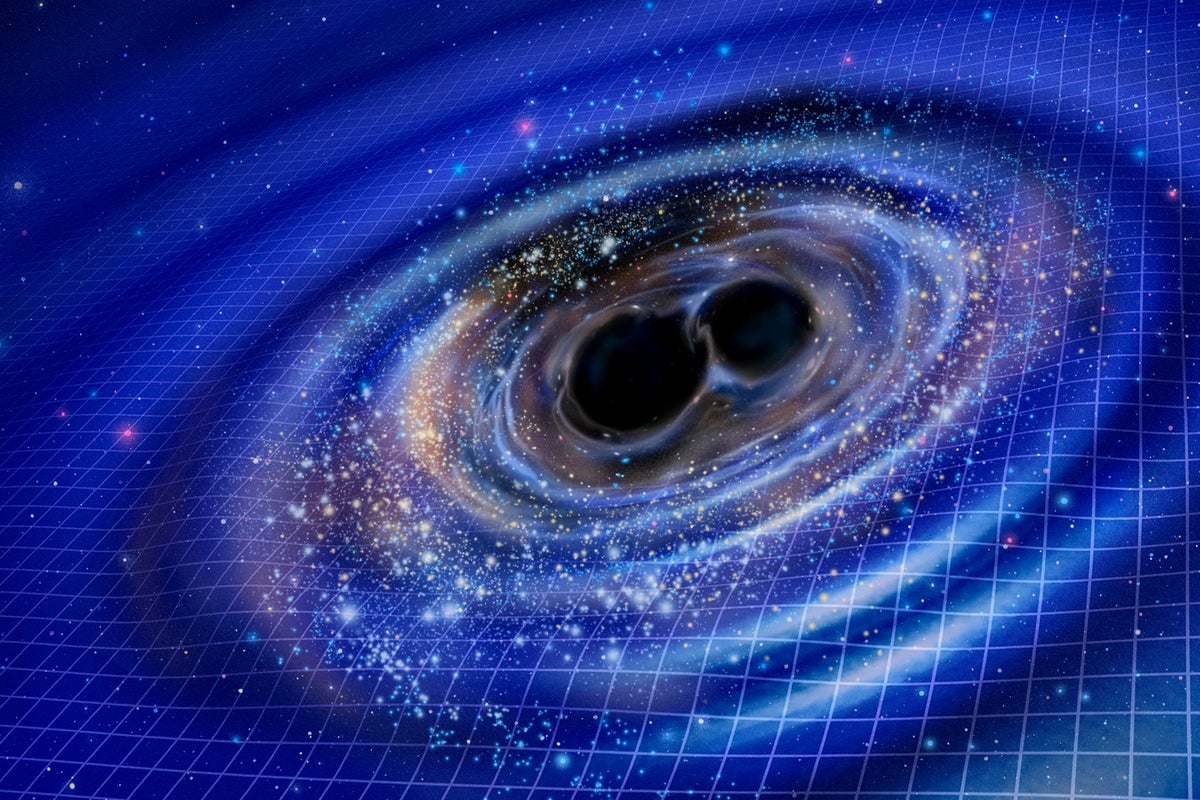
The collaboration between Hosei University, the University of Tokyo, and Peking University underscores the global nature of modern scientific inquiry. By combining resources and expertise from different institutions, the team has managed to address a long-standing question in orbital mechanics. Their approach relies on advanced computational simulations that account for the non-linear nature of gravitational interactions, which are essential for understanding the late-stage evolution of these systems. The European Space Agency (ESA) continues to emphasize that such theoretical work is critical for the next generation of space-based observatories that will track these events with unprecedented precision.
Key Takeaways for the Scientific Community
- Refined Evolutionary Pathways: The proposal offers a new model for how binary orbits decay, potentially explaining the frequency of black hole mergers observed to date.
- Cross-Institutional Collaboration: The partnership between Japanese and Chinese research institutions highlights the importance of multi-national efforts in tackling complex astrophysical problems.
- Bridging Theory and Detection: The model provides a framework that can be tested against future gravitational wave data, potentially validating or refining our understanding of stellar death and black hole formation.
While the mathematical models proposed by the team represent a significant step forward, the scientific community expects further peer-reviewed validation as this work is integrated into broader astrophysical simulations. The researchers have opened a door to a more nuanced understanding of the universe’s most violent events, and it is likely that this work will serve as a foundational reference for future studies in gravitational wave astronomy.
As we look toward the next generation of observatories, including the upcoming LISA mission, the work of these researchers ensures that we will have the theoretical tools necessary to decipher the signals coming from the furthest reaches of space. We will continue to follow any updates regarding the publication of this model in major scientific journals and any subsequent observational evidence that may arise from ongoing space-based surveys.
What are your thoughts on how these models might change our understanding of the early universe? Please share your insights in the comments section below, and stay tuned to World Today Journal for further developments in space science.
Keep reading