
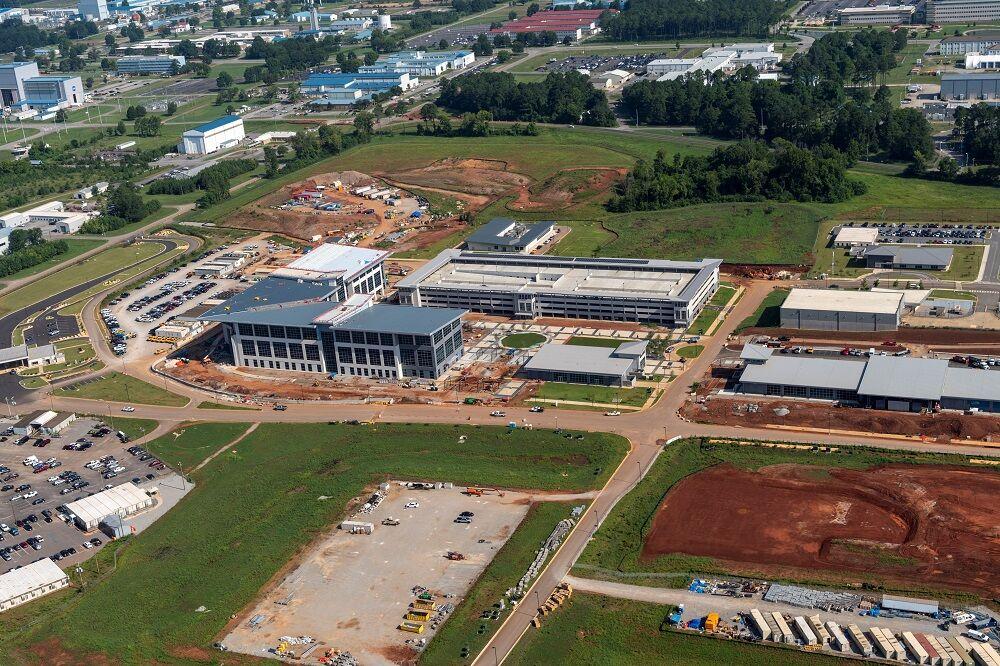
The FBI has built an exact replica of a city on its Huntsville, Alabama campus—a sprawling digital training ground where agents simulate cyberattacks to prepare for real-world threats. The facility, known as the Cyber Training Facility, spans over 10,000 square feet and includes scaled-down versions of urban infrastructure like power grids, water systems, and financial networks, according to official FBI documentation and statements from the agency’s cyber division.
Developed in collaboration with the Department of Homeland Security (DHS) and private cybersecurity firms, the replica city allows agents to practice responding to large-scale cyber incidents in a controlled environment. The facility’s creation follows a surge in cyber threats targeting critical infrastructure, including ransomware attacks on hospitals and power plants in 2021 and 2022, as tracked by the Cybersecurity and Infrastructure Security Agency (CISA).
Unlike traditional cybersecurity drills that rely on computer simulations, the Huntsville facility immerses agents in a physical space where they must navigate real-world challenges—such as coordinating with local law enforcement, managing public communications, and restoring services after an attack. “This isn’t just about coding or firewalls,” said FBI Deputy Director Paul Abbate in a 2023 press release. “It’s about preparing agents to think like attackers and respond like defenders in a crisis.”
Why This Matters: The Rise of Cyber Threats and the FBI’s Response
The Huntsville facility reflects a broader shift in how law enforcement agencies approach cybersecurity training. Traditional methods—such as tabletop exercises or virtual simulations—often fail to replicate the chaos of a real cyberattack, where time is critical and decisions must be made under pressure. The replica city addresses this gap by combining physical and digital elements, allowing agents to:

- Simulate large-scale attacks: Agents practice responding to scenarios like a coordinated ransomware assault on a city’s power grid or a data breach at a major financial institution.
- Test coordination: The facility includes mock versions of local government offices, emergency services, and private sector entities, forcing agents to work across jurisdictions.
- Improve public communication: Agents role-play press conferences and public announcements, a skill increasingly vital as cyber incidents make headlines.
- Adapt to evolving threats: The facility’s modular design allows for updates to reflect new attack vectors, such as AI-driven cyberattacks or supply-chain compromises.
The Facility’s Design: A City Built for Cyber Warfare
The replica city in Huntsville is not a static model but an interactive environment where agents can manipulate systems in real time. Key features include:
- Critical Infrastructure Models: Replicas of power plants, water treatment facilities, and transportation hubs, all connected to a simulated national grid. Agents can trigger “attacks” such as shutting down a virtual dam or hijacking a traffic control system.
- Financial Systems: A mock stock exchange and banking network where agents practice detecting and mitigating fraud or cyber-enabled theft.
- Emergency Operations Centers: Agents work in a replica of a state or local emergency management office, coordinating responses with “first responders” played by other trainees.
- Public Spaces: Streets, parks, and buildings where agents can conduct “field investigations,” such as interviewing witnesses or securing crime scenes in a digital environment.
According to a report by Nextgov, the facility cost approximately $12 million to construct and equip, funded through a combination of FBI budgets, DHS grants, and partnerships with tech companies like Palo Alto Networks and CrowdStrike. The investment reflects the FBI’s recognition that cyber threats now rival traditional crimes in scale and impact.
How It Works: A Day in the Life of a Cyberattack Simulation
Training sessions at the Huntsville facility typically last between three and five days, depending on the complexity of the scenario. Here’s how a simulation might unfold:
- Scenario Setup: Agents receive a briefing on the fictional cyberattack—perhaps a state-sponsored group has infiltrated a city’s water supply system. The attack is staged using real-world tools and tactics, such as phishing emails or zero-day exploits.
- Detection Phase: Agents monitor the replica city’s systems, using tools like Splunk and FireEye to identify anomalies. They must decide whether to isolate affected systems or attempt to contain the breach.
- Response and Recovery: If the attack succeeds, agents work to restore services while preventing further damage. This may involve coordinating with “local authorities” (played by other trainees) to shut down affected areas or communicating with the public to avoid panic.
- Debrief and Analysis: After the simulation, agents review what went wrong and what worked. Lessons are documented and shared across FBI cyber divisions to improve future responses.
One of the facility’s most innovative aspects is its use of augmented reality (AR). Agents wear AR glasses that overlay digital data onto the physical replica, allowing them to see real-time attack vectors or system vulnerabilities as they move through the space. This technology, developed in partnership with Microsoft’s HoloLens team, is being tested for broader use in FBI cyber training programs.
Who Benefits: Agents, Cities, and the Public
The Huntsville facility isn’t just for FBI agents—it serves as a model for how law enforcement and private sector partners can collaborate in cybersecurity. Key stakeholders include:
- FBI Cyber Division: Agents gain hands-on experience in responding to complex cyber incidents, improving their readiness for real-world cases like the 2021 Colonial Pipeline attack, which disrupted fuel supplies across the U.S. East Coast.
- Local and State Governments: The facility offers training for municipal officials and emergency responders, helping them understand how cyber threats can disrupt critical services like power, water, and transportation.
- Private Sector Partners: Companies like IBM and Accenture contribute expertise and technology, ensuring the training stays ahead of emerging threats.
- The Public: By improving the FBI’s ability to respond to cyber incidents, the facility indirectly protects citizens from disruptions like power outages, data breaches, and financial fraud.
What Happens Next: Expanding the Model Nationwide
The Huntsville facility is part of a broader FBI initiative to modernize cybersecurity training. In a 2023 strategic update, the agency outlined plans to:
- Expand the Huntsville model to other FBI field offices, with smaller replica cities in key locations like New York, Los Angeles, and Washington, D.C.
- Increase partnerships with CISA and NSA to integrate classified threat intelligence into training scenarios.
- Develop a national cyber exercise program, where agents from multiple agencies can participate in coordinated simulations.
- Launch a public awareness campaign to educate citizens on recognizing and reporting cyber threats, leveraging the lessons learned in Huntsville.
The next major checkpoint for the Huntsville facility is a public demonstration event scheduled for late 2024, where the FBI will invite cybersecurity experts, policymakers, and media to observe training sessions. The event aims to showcase the facility’s capabilities and gather feedback for future improvements.
Frequently Asked Questions
Q: Is the replica city open to the public?
A: No, the facility is restricted to authorized FBI personnel, DHS partners, and select private sector collaborators. Public access is not planned, as the simulations involve sensitive cybersecurity tools and tactics.
Q: How does this facility compare to other cybersecurity training programs?
A: Unlike traditional cyber ranges—such as those used by Lockheed Martin or Booz Allen Hamilton—which focus on technical skills, the Huntsville facility emphasizes operational response, coordination, and public communication. It also integrates physical infrastructure, making it unique in law enforcement training.
Q: What types of cyber threats are agents training for?
A: The facility prepares agents for a wide range of threats, including:
- Ransomware attacks on critical infrastructure (e.g., hospitals, power grids).
- State-sponsored cyber espionage or sabotage.
- Supply-chain attacks targeting software or hardware vendors.
- AI-driven cyberattacks, such as deepfake scams or automated hacking tools.
- Cyber-physical attacks, where digital intrusions lead to real-world damage (e.g., disabling traffic lights or medical devices).
Q: How can cities prepare for cyber threats?
A: Cities can take several steps to improve their cyber resilience, including:
- Investing in CISA-certified cybersecurity frameworks for municipal systems.
- Conducting regular tabletop exercises to simulate cyber incidents.
- Partnering with local law enforcement and FBI field offices for training and threat intelligence sharing.
- Educating residents on recognizing phishing scams and reporting suspicious activity.
The FBI’s Huntsville cyber training facility represents a significant leap forward in preparing law enforcement for the digital age. As cyber threats grow more sophisticated, so too must the strategies to counter them. For readers interested in cybersecurity, the next step is to stay informed about emerging threats and support initiatives that strengthen national resilience.
Have insights or questions about cybersecurity training? Share your thoughts in the comments below or on our contact page. For official updates on the FBI’s cyber programs, visit FBI Cyber Division.