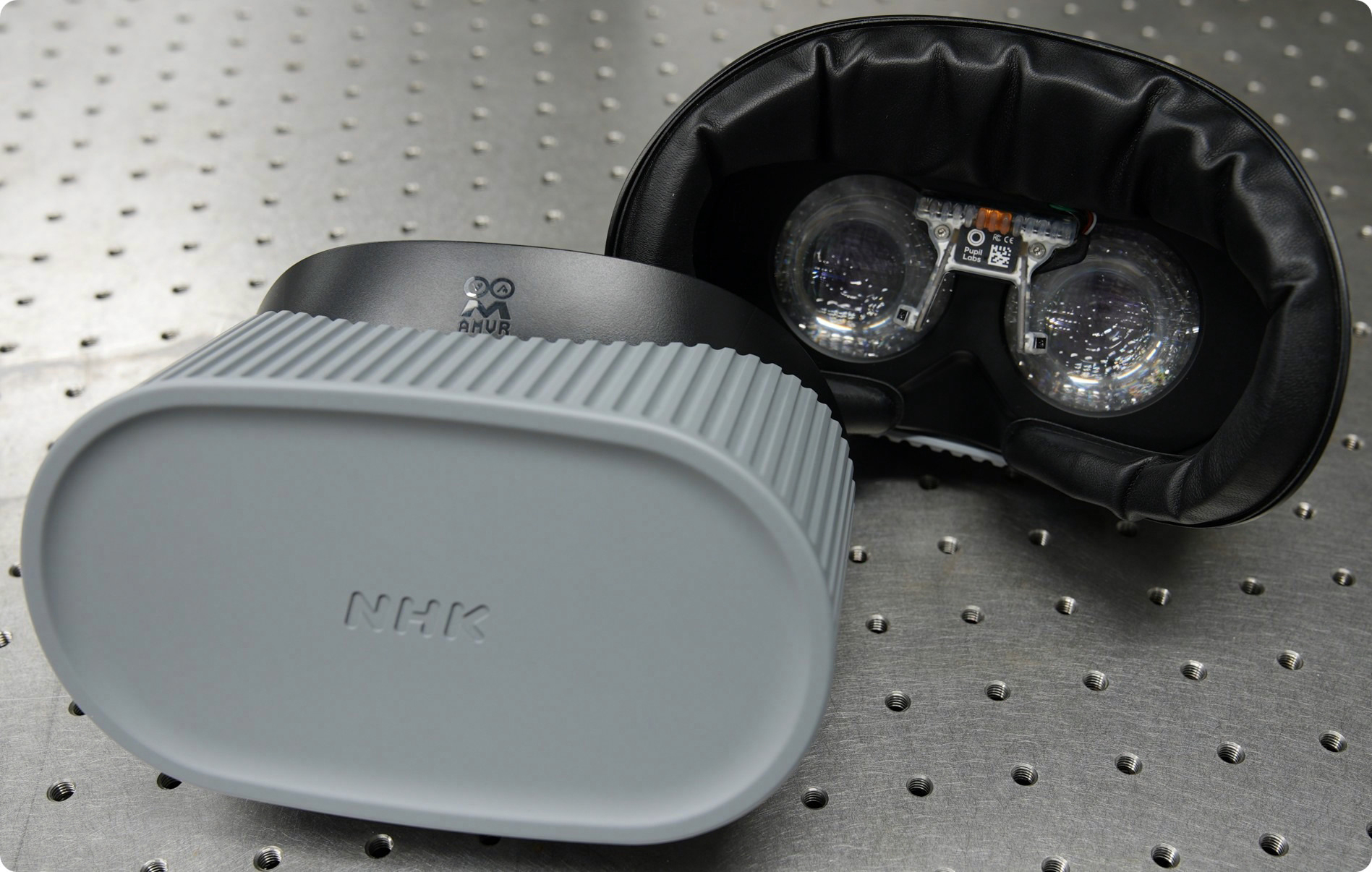
As the landscape of virtual reality (VR) continues to evolve, the challenge of visual fatigue remains a persistent hurdle for both developers and users. At the forefront of addressing this issue, Japan’s public broadcaster, NHK, has unveiled a new technological advancement: a light-field head-mounted display (HMD) designed to offer a more natural and comfortable 3D viewing experience. This development is set to be showcased at the upcoming NHK Science & Technology Research Laboratories (STRL) Open House, scheduled to begin on May 28, 2026.
The core of this innovation lies in its approach to light-field technology, which aims to replicate the way human eyes perceive depth in the real world. By presenting light rays that accurately mimic natural depth cues, the device seeks to mitigate the “vergence-accommodation conflict”—a common phenomenon in traditional stereoscopic displays where the eyes focus on a screen plane while the brain attempts to resolve depth, often leading to eye strain and headaches. According to official NHK Science & Technology Research Laboratories documentation regarding their ongoing research initiatives, the organization has long prioritized the development of high-fidelity, user-friendly visual systems to enhance the accessibility of next-generation media formats.
Understanding Light-Field Technology in VR
Unlike standard VR headsets that use two slightly offset images to create an illusion of 3D, a light-field display reproduces the actual light field of a scene. This allows the user’s eyes to focus at different depths naturally, just as they would when observing an object in physical space. For users, this means a significant reduction in the cognitive load associated with extended VR sessions. The integration of this technology into a wearable HMD format represents a major step in making long-term virtual immersion a practical reality for consumers.
The research conducted by NHK’s technical arm focuses on optimizing the optical path and display density required to deliver these light fields without compromising the form factor of the headset. By refining the hardware, the researchers have aimed to create a device that is not only effective at reducing visual strain but is also lightweight enough for sustained use. This aligns with broader industry trends toward “ergonomic immersion,” where the physical comfort of the hardware is treated with as much importance as the graphical fidelity of the software.
The STRL Open House Exhibition
The upcoming exhibition at the NHK STRL Open House serves as a critical platform for the organization to demonstrate its latest contributions to media technology. Attendees will have the opportunity to experience the prototype firsthand, providing a rare look at how academic and public-sector research can directly influence the consumer electronics market. The event is widely regarded as a barometer for future broadcasting and display standards, often showcasing innovations that take years to reach mass-market adoption.
For those interested in the technical specifications, the exhibition is expected to provide detailed insights into the display panel resolution, the field of view (FOV) achieved by the current prototype, and the specific optical methods used to project the light field. Previous iterations of such research have emphasized the balance between high-resolution imagery and the processing power required to render light-field data in real-time, a challenge that remains central to the evolution of the platform.
Why This Matters for the Future of Tech
The implications of a “natural and fatigue-free” 3D display extend far beyond gaming and entertainment. In fields such as remote surgery, tele-education, and professional design, the ability to maintain focus in a virtual environment for extended periods is essential. By solving the physiological discomfort associated with current-generation VR, NHK’s research could pave the way for more widespread adoption of virtual workspaces and immersive communication tools.
this development highlights the vital role of public research institutions in exploring high-risk, high-reward technologies that private companies might deem too speculative. As the tech industry moves toward more sophisticated augmented and virtual reality interfaces, the foundational work being displayed at the STRL Open House provides a glimpse into the standards that will likely govern the next decade of digital interaction.
The NHK Science & Technology Research Laboratories Open House is scheduled to commence on May 28, 2026. Visitors are encouraged to monitor the official NHK STRL website for registration details and updates on the exhibition schedule. As the industry looks toward these advancements, the conversation surrounding user comfort in VR is poised to shift from a secondary concern to a primary design requirement.
What are your thoughts on the future of virtual reality comfort? Are you looking forward to seeing how light-field displays perform in real-world applications? Share your insights and join the discussion in the comments section below.