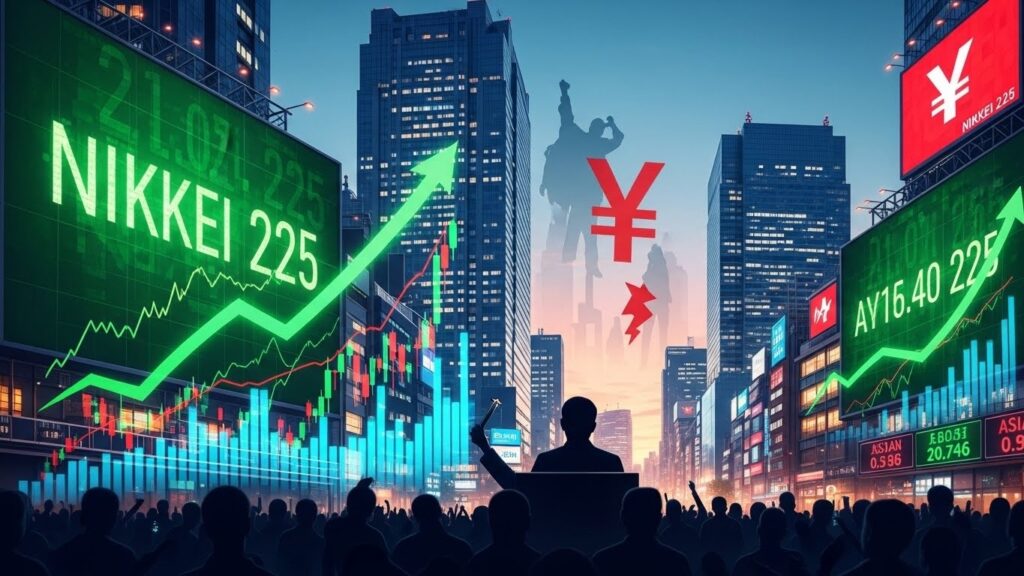
TOKYO, May 7, 2026 — The Nikkei 225 index soared past the 60,000 mark for the first time in history on Thursday, extending its record-breaking rally as investors bet on sustained momentum in the artificial intelligence sector and cautious optimism about a potential easing of tensions in the Iran conflict. The surge reflects a broader global trend, with U.S. Tech stocks also reaching new highs amid expectations of strong earnings growth in the AI-driven economy.
Trading on the Tokyo Stock Exchange opened with strong buying pressure, with the Nikkei 225 futures contract settling at 61,440 points on Wednesday, May 6, during holiday trading—a level not seen since the index’s inception. Analysts attribute the rally to a combination of factors: the weak yen environment, which boosts the value of yen-denominated assets for foreign investors, and robust demand for Japanese tech stocks tied to the global AI boom.
Yet beneath the surface optimism, market participants are closely monitoring three key risks that could derail the rally: escalating geopolitical tensions in the Middle East, persistent yen volatility, and upcoming U.S. Tech earnings reports. The Nikkei’s advance has been particularly pronounced in high-beta stocks—those with greater sensitivity to market movements—including semiconductor manufacturers and AI infrastructure providers.
Source: Nikkei Inc. | Nikkei 225 historical performance (May 2026)
AI Stocks Drive the Rally: Japan’s Tech Sector Leads the Charge
The Nikkei’s record high is being propelled primarily by the technology sector, which has benefited from the global AI capex cycle. Japanese companies specializing in semiconductors, testing equipment, and AI infrastructure have seen their stocks rise sharply, with Advantest, the index’s largest constituent by weight, contributing significantly to the gains. Advantest, which accounts for roughly 10% of the Nikkei 225, reported strong earnings last quarter, reinforcing investor confidence in the sector’s growth trajectory.
“The AI revolution is not just a U.S. Story—it’s a global phenomenon, and Japan is well-positioned to capitalize on it,” said Dr. Takashi Morimoto, Chief Economist at Mitsubishi UFJ Research and Consulting. “Companies like Advantest, Renesas, and Sony are at the forefront of this shift, supplying critical components for data centers and AI training infrastructure.”
Beyond domestic fundamentals, the rally has been amplified by foreign capital inflows. A weaker yen—currently trading near 157 yen per U.S. Dollar, according to recent Bank of Japan estimates—has made Japanese stocks more attractive to international investors. The Bank of Japan’s decision to maintain its ultra-loose monetary policy has also supported risk appetite in the region.
Geopolitical Risks Hang Over the Market
Despite the record highs, the Nikkei’s rally is not without its challenges. The ongoing conflict in Iran has disrupted global energy markets, with an estimated 10–12 million barrels of oil per day diverted from the Strait of Hormuz, a critical shipping route for Asia. Japan, which imports nearly all its energy, remains vulnerable to supply disruptions and price volatility.
“The market’s resilience is remarkable given the geopolitical backdrop,” noted Dilin Wu, Research Strategist at Pepperstone. “However, any unexpected escalation in the Iran conflict could trigger a sharp reversal, particularly if it leads to further disruptions in oil supplies or shipping lanes.”
Investors are also keeping a close eye on the U.S. Federal Reserve’s stance on interest rates, which could impact global capital flows. Upcoming earnings reports from major U.S. Tech companies, including those in the AI space, will be closely scrutinized for signs of slowing growth or margin pressures.
Yen Volatility and the Path Forward
The yen’s weakness has been a double-edged sword for Japanese markets. While it benefits exporters and boosts the value of overseas earnings, it also increases the cost of importing energy and raw materials. The Bank of Japan has signaled that it will continue to monitor currency movements closely, though it has not ruled out further intervention if necessary.
Market analysts are divided on whether the Nikkei can sustain its record levels. Some argue that the rally has legs, pointing to strong corporate earnings and continued foreign inflows. Others warn that the market may be overvalued, particularly if geopolitical risks materialize or if the U.S. Economy shows signs of cooling.
“The Nikkei’s performance is a testament to the strength of Japan’s tech sector, but it’s also a reflection of the global risk-on environment,” said Dr. Olivia Bennett, Chief Editor at World Today Journal. “Investors should remain vigilant about the risks—geopolitical, monetary, and earnings-related—that could test this rally in the coming weeks.”
Key Takeaways
- Record High: The Nikkei 225 surpassed 60,000 for the first time, driven by AI-related stocks and a weak yen.
- AI Boom: Japanese tech companies, including Advantest, are benefiting from the global AI capex cycle.
- Geopolitical Risks: The Iran conflict and its impact on energy markets remain a wild card for Asian equities.
- Yen Weakness: The currency’s depreciation supports exporters but raises import costs and inflation concerns.
- Foreign Inflows: Sustained capital from overseas investors is a key driver of the rally.
- Upcoming Risks: U.S. Tech earnings and Fed policy decisions could influence market sentiment.
What Happens Next?
The next major checkpoint for Japanese markets will be the release of U.S. Tech earnings reports in the coming weeks, particularly from companies heavily exposed to the AI sector. Developments in the Iran conflict—such as reports of ceasefire talks or further escalation—will be closely watched by investors.
The Bank of Japan is also expected to provide further clarity on its monetary policy stance at its next meeting on June 12, 2026. Traders will be particularly focused on whether the central bank signals any intent to tighten policy or intervene in foreign exchange markets to stabilize the yen.
For investors, the question remains: Is this rally the beginning of a new bull market, or a temporary spike fueled by sentiment and technical factors? The answer may hinge on whether the AI boom can deliver sustained earnings growth—and whether geopolitical risks remain contained.
What are your thoughts on the Nikkei’s record high? Do you think the rally can last, or are we due for a correction? Share your views in the comments below.
Worth a look