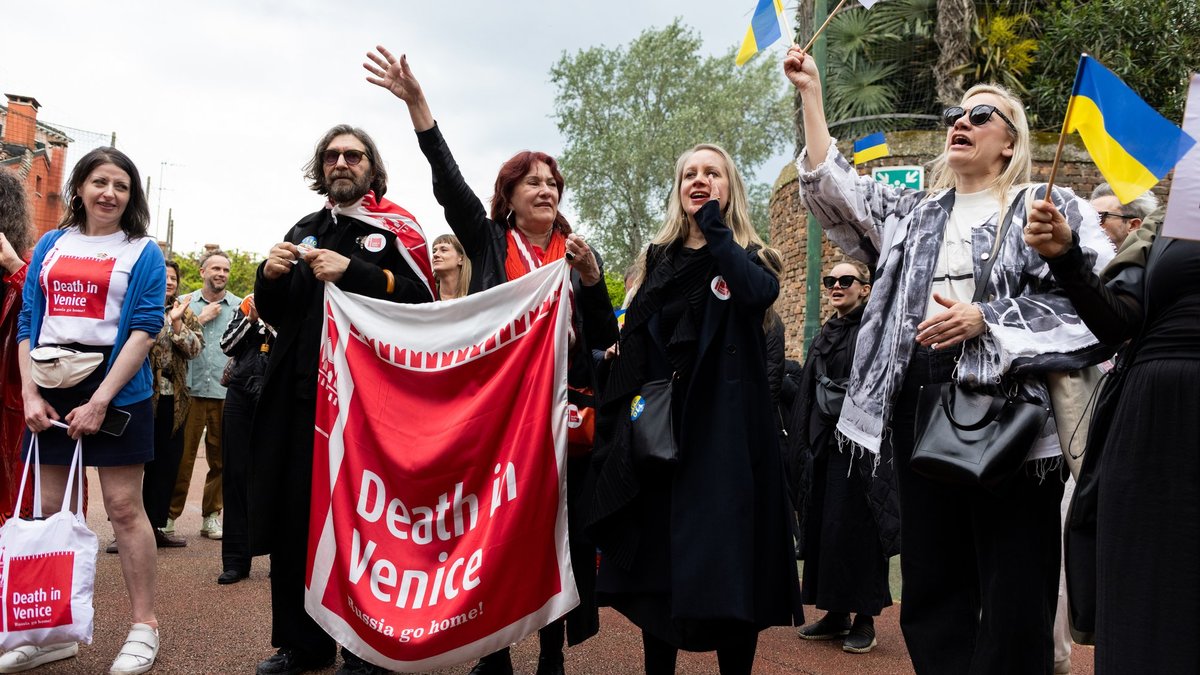
The intersection of high art and geopolitical conflict has reached a boiling point at the Venice Biennale, as Baltic nations coordinate a high-profile protest against the inclusion of Russia in the prestigious arts festival. This diplomatic and cultural clash highlights a deepening divide between the Biennale’s organizers and several European governments over the ethical implications of maintaining cultural ties with Moscow during the ongoing conflict in Ukraine.
The coordinated effort, led by the pavilions of Latvia, Estonia, and Lithuania, seeks to signal a unified Baltic front against what they describe as an unacceptable normalization of Russian state influence within European cultural spaces. The protest is not merely a symbolic gesture but part of a broader strategic push by the Baltic states to ensure that European cultural platforms do not provide a venue for Russian soft power while aggression continues in the region.
This movement coincides with an escalating financial dispute between the European Commission and the Fondazione Biennale. The European Union has signaled that its support for the festival is contingent upon the adherence to ethical standards and democratic values, leading to a direct confrontation over the festival’s decision to allow Russian participation in the 2026 exhibition.
The European Commission’s Financial Ultimatum
The tension has transitioned from diplomatic disagreement to financial risk. The European Commission has explicitly threatened to withdraw a €2 million grant if the organizers of the Venice Biennale proceed with plans to include Russia. This funding is specifically earmarked to support film projects at the contemporary arts show, making the potential loss a significant blow to the festival’s cinematic programming.
Commission spokesperson Thomas Régnier has been clear about the EU’s stance, stating that the decision to include Russia is “not in line with European values and ethical standards.” According to Régnier, culture in Europe is intended to “promote and safeguard democratic values” and “foster open dialogue, diversity and freedom of expressions”—values he asserts are “currently in today’s Russia not honoured.”
The Commission has warned that any breach of ethical standards will be treated as a violation of the contract. Régnier told reporters, “If there is a breach of the contract … the commission will terminate or suspend the contract.” This ultimatum places the Fondazione Biennale in a precarious position, forcing a choice between its tradition of artistic inclusivity and the financial and political requirements of its primary European backers.
Baltic Unity and the Protest March
While the EU applies financial pressure, the Baltic states are utilizing the physical space of the Biennale to voice their dissent. The pavilions of Latvia, Estonia, and Lithuania have agreed to a joint protest action, which includes a coordinated march against Russia’s participation. This unity reflects the unique vulnerability of the Baltic region to Russian geopolitical ambitions and a shared belief that cultural diplomacy cannot be decoupled from military and political reality.
The protest aims to draw international attention to the contradiction of hosting a Russian pavilion while the region remains under the shadow of Russian aggression. For the Baltic representatives, the presence of Russia at the Biennale is viewed not as a neutral artistic exchange, but as a calculated move by the Russian state to maintain a facade of legitimacy and cultural prestige on the world stage.
This coordinated action serves as a visual and political manifestation of the “Baltic Bloc’s” influence within the EU, pushing other member states to reconsider their own stances on Russian cultural participation. By organizing a physical protest, the Baltic pavilions are attempting to shift the narrative from a contractual dispute over funding to a moral imperative regarding human rights and international law.
Diplomatic Maneuvers at the EU Level
Beyond the streets of Venice, the battle is being fought in the halls of Brussels. Latvia has taken a leading role in elevating this issue to the EU Council of Culture Ministers. The Latvian government is proposing the necessity of a “unified approach” regarding the participation of Russia in European cultural platforms.
The objective of this proposal is to move away from a fragmented, case-by-case approach where individual festivals or museums decide whether to engage with Russian institutions. Instead, Latvia is advocating for a standardized EU policy that aligns cultural engagement with the broader sanctions regime and diplomatic isolation imposed on the Russian Federation.
This push for a unified front suggests that the Baltic states view the Venice Biennale as a litmus test for European resolve. If the EU fails to establish a consistent policy on cultural participation, the Baltic nations argue that it creates loopholes that the Russian government can exploit to bypass political isolation through “cultural diplomacy.”
The Stakes of Cultural Diplomacy in a Divided Europe
The conflict at the Venice Biennale underscores a fundamental tension in the art world: the belief in the autonomy of art versus the reality of political accountability. For decades, international art exhibitions have operated on the principle that culture should transcend borders and politics, providing a bridge between adversarial nations.
However, the current geopolitical climate has rendered this “art for art’s sake” approach untenable for many. The Baltic states and the European Commission are arguing that when a state actively suppresses freedom of expression and violates the sovereignty of its neighbors, its cultural representatives cannot be viewed as independent artists, but rather as extensions of the state’s propaganda apparatus.
The outcome of this dispute will likely set a precedent for how other major European cultural events—from music festivals to film premieres—handle Russian participation in the coming years. The decision by the Fondazione Biennale will determine whether the festival remains a sanctuary for global dialogue or becomes a site of political contestation.
Key Takeaways:
- The European Commission has threatened to suspend a €2 million grant if Russia participates in the Venice Biennale.
- Baltic pavilions (Latvia, Estonia, Lithuania) are coordinating a joint protest march against Russia’s inclusion.
- EU spokesperson Thomas Régnier stated that Russia’s participation contradicts European values of democracy and freedom of expression.
- Latvia is lobbying the EU Council of Culture Ministers for a unified EU-wide policy on Russian participation in cultural platforms.
The next critical development will occur during the upcoming session of the EU Council of Culture Ministers, where Latvia’s proposal for a unified approach to Russian cultural participation will be discussed. This meeting will determine whether the EU moves toward a formal policy of cultural isolation or continues to allow member states and institutions to decide on a case-by-case basis.
World Today Journal encourages readers to share their views on the intersection of art and politics in the comments below. Do you believe cultural exchange should continue during geopolitical conflicts, or should art be used as a tool for political accountability?
Related reading