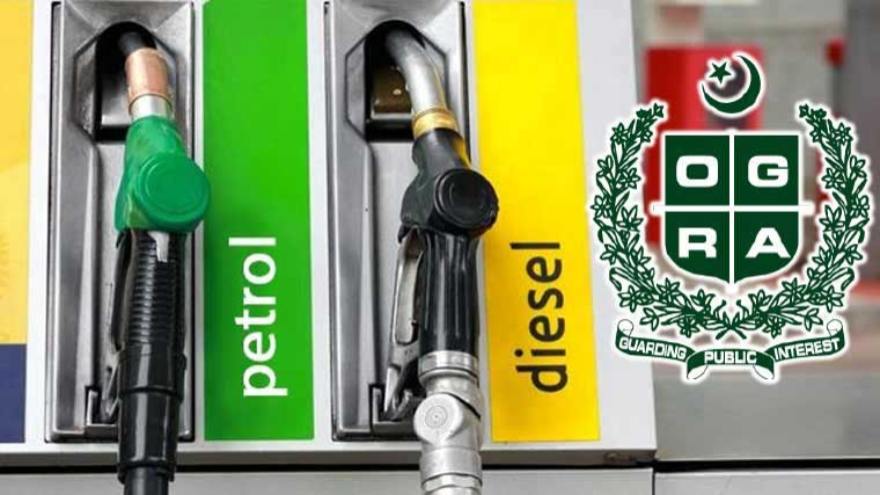
The federal government adjusted petroleum prices in Pakistan on July 31, 2026, raising petrol to Rs336.15 per litre and high-speed diesel to Rs393.04 per litre following recommendations from the Oil and Gas Regulatory Authority under a daily review mechanism.
Federal authorities in Pakistan revised consumer fuel rates on July 31, 2026, implementing increases across the country’s primary petroleum products. According to a notification issued by the Petroleum Division, the adjustments followed recommendations submitted by the Oil and Gas Regulatory Authority under the government’s established pricing mechanism.
The latest revisions increased the cost of Motor Spirit, commonly referred to as petrol, by Rs1.09 per litre, pushing the new ex-depot price from Rs335.06 to Rs336.15 per litre. At the same time, high-speed diesel rose by Rs2.42 per litre, moving from a previous rate of Rs390.62 to Rs393.04 per litre. The revised consumer rates took effect at midnight and remained applicable until the next scheduled administrative review.
Daily Price Review Mechanism and Global Oil Volatility
The July 31 adjustment arrived on the heels of frequent administrative changes. Just a day prior, the government had reduced petrol by Rs0.75 per litre while lifting high-speed diesel by Rs2.24 per litre. Market observers and government notifications trace the swift cadence of revisions back to July 17, when a daily fuel price review mechanism was introduced to track international market volatility sparked by renewed Middle Eastern hostilities.
Under this system, daily domestic pricing calculations rely on a seven-day rolling average of international benchmark rates. Throughout July, these calculations produced a cumulative increase of more than Rs20 per litre for petrol, alongside significant upward movement for diesel. Ministry officials attributed the shifting costs directly to global crude oil price fluctuations, currency movements against the dollar, and localized import expenses.
Levies, Duties, and the IMF Framework
Pakistan’s fuel pricing structure incorporates heavy government levies and duties designed to meet domestic revenue targets. Commitments made under an International Monetary Fund program doubled the Climate Support Levy to Rs5 per litre on July 1, running alongside a petroleum levy that stands at approximately Rs70 per litre for petrol and around Rs80 per litre for high-speed diesel.
Total government charges collected on a litre of high-speed diesel—spanning customs duties, the petroleum levy, the climate support levy, and the Inland Freight Equalisation Margin—reach roughly Rs101 on high-speed diesel through petroleum levy, customs duty, climate levy and the Inland Freight Equalisation Margin. For petrol, cumulative state charges total about Rs95 per litre. These products serve as the country’s principal transport and industrial fuels, generating combined monthly sales ranging between 700,000 and 800,000 tonnes that make them critical pillars of state revenue collection.
Public Trust and the Mechanics of Supply
Analysts watching the daily pricing shifts argue that public trust depends on symmetry in how prices are adjusted. While increases based on international rates are passed along immediately, market observers maintain that downward corrections must reach consumers at an identical pace. Pakistan does not maintain multi-month strategic petroleum reserves, leaving domestic requirements dependent on commercial stocks managed by oil marketing companies, local refineries, and incoming cargo shipments.
Worth a look