
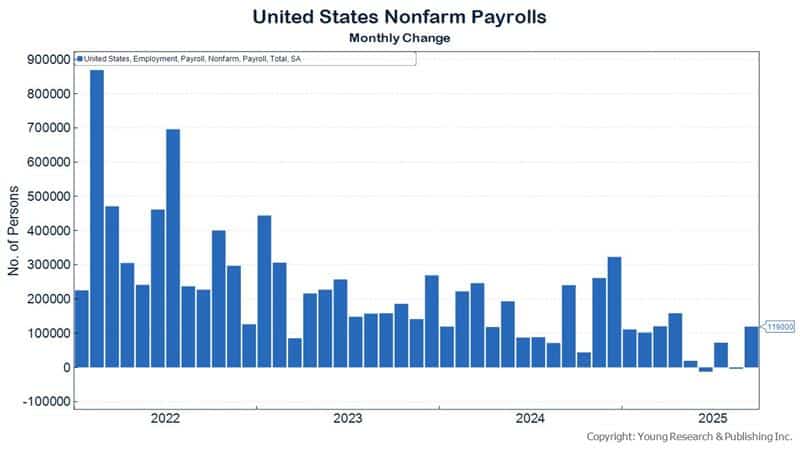
In the wake of the latest labor market data, global financial markets are recalibrating as investors digest the implications of a robust U.S. Nonfarm payroll report. The recent data, which exceeded expectations, has triggered a significant shift in monetary policy expectations, leading to a sharp repricing of risk assets. For market participants, the primary question remains how the Federal Reserve will navigate this economic resilience against the backdrop of persistent inflation.
The U.S. Bureau of Labor Statistics (BLS) maintains the Current Employment Statistics (CES) program, which serves as the foundational source for tracking payroll employment across nonfarm industries. When these reports deviate from analyst consensus, they frequently act as a catalyst for volatility across asset classes, including equities, commodities, and fixed-income securities. As we analyze the current market reaction, it is essential to distinguish between immediate price discovery and long-term economic trends.
Market Volatility and the Yield Curve Shift
Following the release of the stronger-than-anticipated employment figures, the U.S. Treasury market experienced a notable upward trajectory in yields. When investors perceive that the economy is running hotter than expected, the anticipated path for the federal funds rate often adjusts upward. This repricing of the interest rate outlook typically places upward pressure on yields, as investors demand higher compensation for holding government debt in an environment where central bank rates may remain elevated for a longer duration.
The nonfarm payroll statistic, by excluding agricultural workers, provides a focused lens on the health of the broader U.S. Industrial and service sectors. In the current cycle, the interplay between employment growth and inflation remains the central focus for the Federal Open Market Committee (FOMC). When payroll numbers “surprise” to the upside, it often diminishes the perceived probability of near-term rate cuts, fundamentally changing the risk-reward profile for growth-oriented assets like technology stocks.
Equity Markets and the Technology Sector
The recent pullback in the Nasdaq Composite reflects this broader shift in sentiment. High-growth sectors, particularly those heavily exposed to artificial intelligence, are highly sensitive to changes in the discount rate. As yields on risk-free assets rise, the present value of future cash flows for growth companies is compressed, often leading to a disproportionate impact on valuations within the technology sector.
Investors are currently weighing the sustainability of AI-driven capital expenditure against the reality of a restrictive monetary environment. While the long-term potential of these technologies remains a subject of intense focus, the immediate market reaction highlights how macroeconomic liquidity conditions can temporarily override individual company narratives. The volatility observed in semiconductor and software indices serves as a reminder of the historical correlation between rising rates and multiple contraction in the tech sector.
Commodities and Global Macro Factors
The movement in commodity prices, including energy and precious metals, further underscores the complexity of the current economic environment. WTI crude oil prices have faced downward pressure, reflecting concerns that a prolonged period of high interest rates could weigh on global industrial demand. Conversely, the reaction in gold and silver markets—often viewed as hedges against currency debasement or geopolitical uncertainty—indicates a rapid reassessment of safe-haven positioning as the U.S. Dollar strengthens in response to higher Treasury yields.
These movements are not happening in a vacuum. As global markets remain interconnected, the U.S. Employment picture serves as a bellwether for international trade and monetary policy. When the U.S. Economy signals unexpected strength, it often forces other central banks to reconsider their own policy trajectories to manage currency volatility and capital flows.
Key Considerations for Market Participants
- Data-Dependency: The Federal Reserve has emphasized its commitment to a data-dependent approach. Future employment reports will continue to be closely scrutinized for signs of cooling or persistent tightness.
- Interest Rate Sensitivity: Fixed-income portfolios are currently navigating a high-volatility environment where yield curve positioning is critical.
- Valuation Re-assessment: Equity investors are increasingly focusing on balance sheet strength and free cash flow generation rather than speculative growth metrics.
Looking ahead, market participants should monitor the next scheduled releases from the Bureau of Labor Statistics and the upcoming FOMC meeting minutes for further guidance on the central bank’s perspective. As the economic landscape continues to evolve, maintaining a long-term view remains the most prudent strategy for navigating short-term market turbulence. We encourage our readers to participate in the conversation by sharing their analysis of the current rate environment in the comments section below.
Insight/2025/07.2025/07.02.2025_Jobs%20Report/01-nonfarm-payrolls-12-months.png?width=1008&height=576&name=01-nonfarm-payrolls-12-months.png "Nonfarm Payrolls Surpass Expectations Bureau of Labor Statistics")
Worth a look