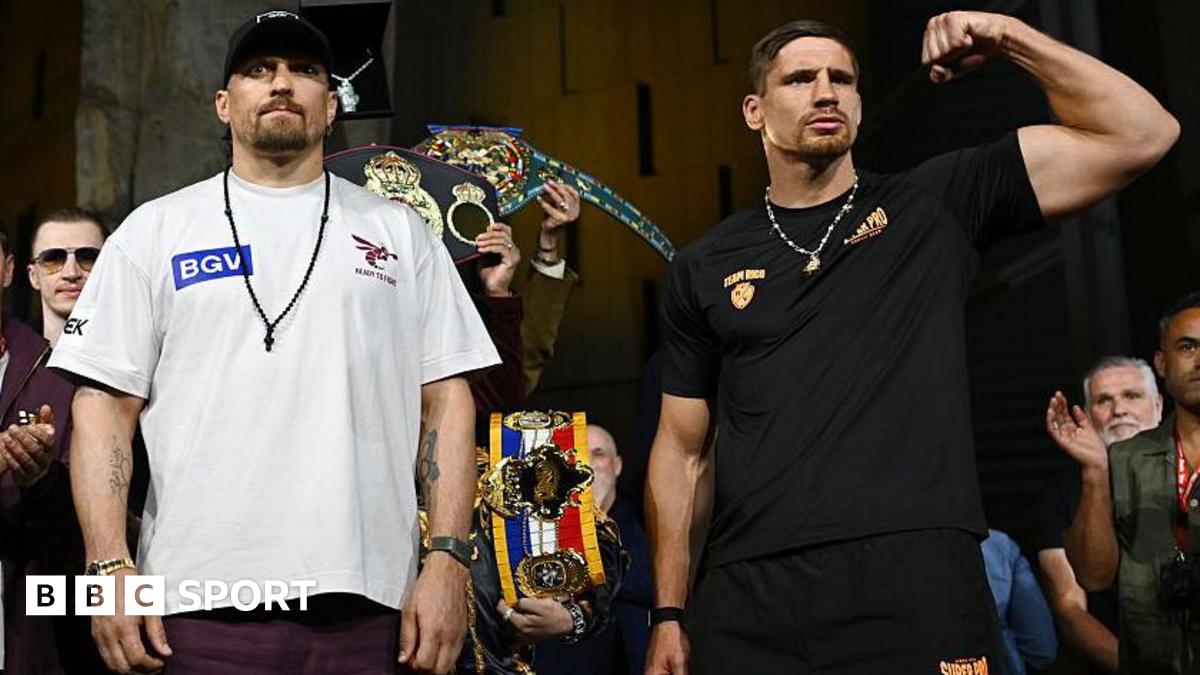
As the boxing world turns its attention to the upcoming title defense in Egypt, the physical disparity between the combatants has become the primary point of discussion. Oleksandr Usyk, the unified heavyweight champion, has officially registered a career-heavy weight of 16st 9lb for this weekend’s contest. While Usyk hits the scales at his highest-ever fighting weight, the focus remains firmly fixed on the significant 25lb gap separating him from his challenger, the formidable kickboxing legend Rico Verhoeven.
The weigh-in, which serves as the final procedural step before Saturday’s headline event, underscored the strategic challenge presented by Verhoeven. In professional boxing, weight classes are designed to ensure parity, but when elite athletes from different disciplines meet, the physical profiles often diverge sharply. Analysts are now closely monitoring how this weight advantage will influence the tactical approach of both fighters as they prepare to step into the ring.
Understanding the Weight Disparity
The 25lb difference represents a substantial margin in heavyweight competition. Oleksandr Usyk, known for his technical prowess and mobility, has historically operated at a lower weight range compared to traditional “super heavyweights.” By moving up to 16st 9lb, the Ukrainian champion is clearly aiming to bolster his durability and punch resistance against a larger, physically imposing opponent. This tactical shift is a common maneuver for fighters moving up in weight, intended to prevent being bullied by larger challengers during clinch work and prolonged exchanges.
Rico Verhoeven, a titan of the kickboxing world, brings a different set of physical attributes to the ring. His size, combined with his extensive experience in high-stakes striking matches, makes him a dangerous proposition for any heavyweight. For fans and analysts alike, the central question remains whether Usyk’s refined boxing pedigree will be enough to neutralize the raw physical pressure that Verhoeven is expected to exert throughout the bout.
Strategic Implications for the Title Defense
For Usyk, the challenge is twofold: maintaining his legendary footwork while carrying the additional mass required to compete with a heavier challenger. In sports science, the addition of body mass can often lead to a trade-off in cardiovascular efficiency. However, Usyk’s camp has historically emphasized rigorous conditioning, which will be tested significantly over the course of a 12-round championship fight.
Verhoeven, conversely, will likely look to utilize his weight to dictate the pace of the fight. By forcing the champion into tight quarters, the challenger can potentially sap the energy of the smaller man. The ability to manage distance will be the deciding factor in Egypt. If Usyk can keep the fight at range, he maximizes his chances; if Verhoeven succeeds in turning the contest into a physical brawl, the weight advantage becomes a much more potent weapon.
What Happens Next
Following the final face-off, both fighters have entered the final stage of their preparation protocols, focusing on hydration and rest before the opening bell. The fight is scheduled to proceed on Saturday, with the boxing community awaiting the outcome of this clash between two distinct fighting philosophies. Official updates regarding the fight schedule and broadcast information can be tracked through the official DAZN platform, which is hosting the event.

As we look forward to the opening round, the narrative of the “smaller, technical champion versus the larger, powerful challenger” remains one of the most compelling storylines in modern combat sports. We invite our readers to share their predictions in the comments section below—will Usyk’s career-heavy preparation pay off, or will Verhoeven’s size advantage prove too much to overcome?