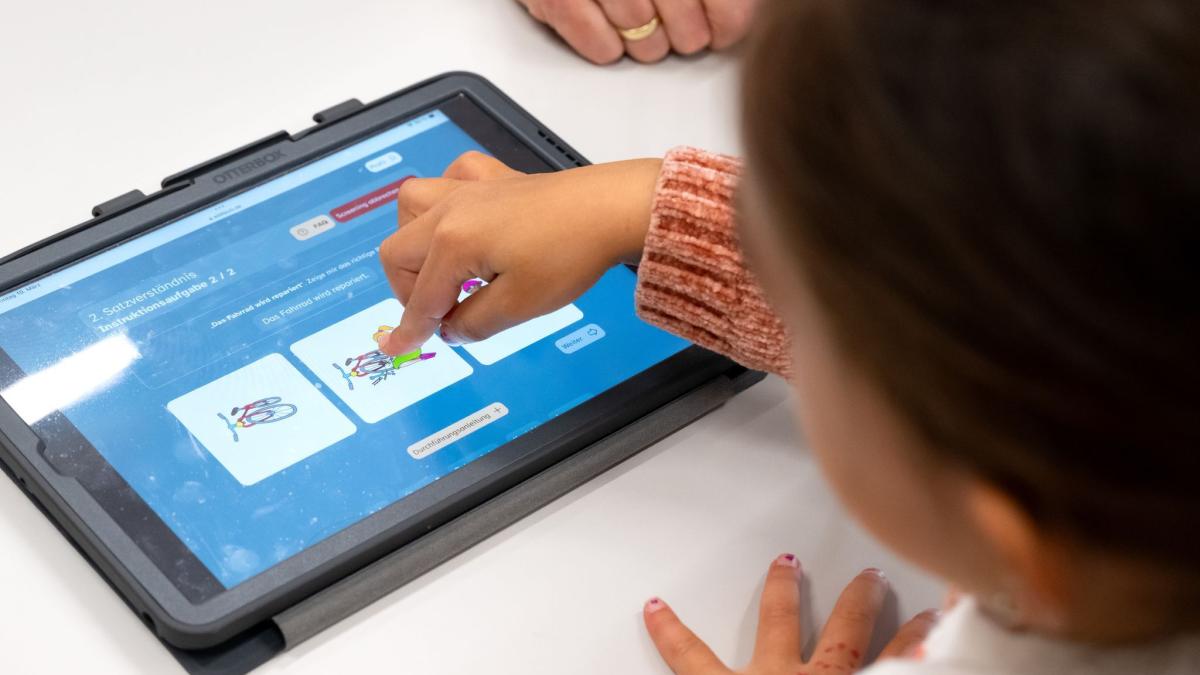
In Germany’s Bavarian region, a growing concern over early childhood language development has led to a policy shift that now requires one in four preschool children to undergo mandatory language screening before entering primary school. The measure, implemented across several districts including Augsburg, aims to identify potential speech and language delays early, allowing for timely intervention before formal education begins. While the initiative has been framed as a preventive step to support educational equity, it has also sparked debate among parents, educators, and child development experts about the appropriateness of standardized testing at such a young age.
The policy stems from broader national efforts to address disparities in school readiness, particularly among children from migrant backgrounds or socioeconomically disadvantaged households. Officials argue that early detection of language difficulties can significantly improve long-term academic outcomes, especially in literacy and numeracy. However, critics caution that over-reliance on screening tools risks pathologizing normal developmental variation and may place undue pressure on families navigating complex educational systems.
According to data from the Bavarian State Ministry of Education and Cultural Affairs, approximately 25% of children in the region’s preschool programs were referred for mandatory language assessment during the 2023–2024 school year. The screenings, conducted by trained specialists at local primary schools, evaluate vocabulary, grammar comprehension, phonological awareness, and expressive language skills. Children identified as needing support are typically offered targeted language enrichment programs, often delivered in small-group settings within kindergartens or community centers.
“The goal isn’t to label children, but to ensure no child starts school already behind,” said Dr. Martina Huber, a pediatric speech-language pathologist at the University Hospital Augsburg, in a recent interview with Bayerischer Rundfunk. “Early intervention works best when it’s seamless and stigma-free. We’ve seen measurable improvements in school adjustment among children who received support before first grade.” Her comments align with findings from a 2022 longitudinal study published in the European Journal of Special Needs Education, which found that children who received early language support were 40% less likely to require special education services by third grade.
Nevertheless, the policy has drawn skepticism from some parent advocacy groups. The German Association for Early Childhood Education (Bundesverband für Frühkindliche Bildung e.V.) has called for greater transparency about the screening tools used and more involvement of families in the assessment process. “Parents need to understand what these tests measure and what they don’t,” said Lena Fischer, a spokesperson for the organization. “A child who speaks a dialect or is shy in unfamiliar settings might score lower, not since of a disorder, but because of context. We need assessments that are culturally responsive and developmentally appropriate.”
In response to such concerns, Bavarian education authorities have emphasized that the screenings are diagnostic, not determinative, and that results are reviewed holistically with input from kindergarten teachers and parents. Official guidelines state that no child can be denied school enrollment based solely on screening outcomes. Instead, the data is used to allocate resources and tailor support plans within the framework of Germany’s inclusive education model.
The initiative reflects a broader trend across German states toward proactive educational monitoring in early childhood. Similar programs have been piloted in Baden-Württemberg and North Rhine-Westphalia, though implementation varies widely. Nationally, the Standing Conference of the Ministers of Education and Cultural Affairs (Kultusministerkonferenz) has encouraged states to adopt standardized early language screening as part of its 2021 strategy to reduce educational inequality.
Funding for the program comes from a combination of state and federal sources, including the federal “Kita-Qualitätsgesetz” (Daycare Quality Act), which allocated €1 billion over four years to improve early childhood education quality, with specific provisions for language integration. According to the Federal Ministry for Family Affairs, Senior Citizens, Women and Youth, over 300,000 children nationwide benefited from targeted language support programs in 2023 under this framework.
As the policy enters its second full year of implementation, officials in Augsburg report plans to expand outreach to immigrant families through multilingual informational materials and community liaison officers. The next official update on participation rates and outcomes is expected in the autumn of 2024, when the Bavarian Ministry of Education releases its annual report on early childhood education metrics.
For parents seeking more information about language screening procedures or support services in Bavaria, the State Ministry of Education provides detailed guidelines and contact information through its official portal. Additional resources on early language development are available via the German Youth Institute (Deutsches Jugendinstitut), which offers evidence-based guidance for families and educators.
What do you think about early language screening in preschool? Share your thoughts in the comments below and help others understand this important issue by sharing this article on social media.
Keep reading