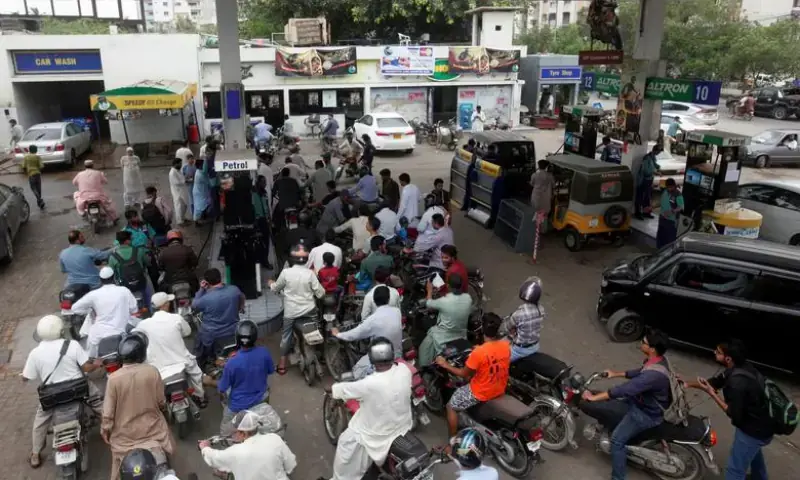
Islamabad, Pakistan – Amidst escalating global oil prices and growing economic concerns, the Pakistani government is taking steps to shield consumers from further fuel costs, announcing a ban on petroleum exports and considering a freeze on domestic prices. The move, revealed on Friday, March 13, 2026, comes as the nation grapples with a precarious economic situation and seeks to navigate the complexities of a volatile international energy market. The government intends to utilize a substantial emergency fund – totaling Rs389 billion – to absorb potential price increases, a measure signaling the severity of the economic pressures facing the country.
The decision to halt petroleum exports is a direct response to the rising cost of fuel on the international stage. Current retail prices in Pakistan stand at Rs322 per litre for petrol and Rs337 per litre for high-speed diesel. However, calculations based on existing tax rates and the standard pricing formula suggest potential increases of Rs56 per litre for diesel and Rs41 per litre for gasoline. Kerosene and light diesel oil are also projected to spot price hikes of Rs7 and Rs53 per litre, respectively. These figures underscore the significant financial burden that could be passed on to Pakistani consumers without government intervention. The next scheduled price review was slated for March 15, but officials have indicated a possible acceleration to March 13, reflecting the urgency of the situation.
Government Intervention and Economic Considerations
Prime Minister Shehbaz Sharif, in a high-level consultative session attended by both federal and provincial officials, and crucially, Field Marshal Asim Munir, reportedly signaled a commitment to limit further price increases, at least in the short term. This decision, according to sources familiar with the discussions, was made jointly with the military leadership, highlighting the strategic importance placed on maintaining fuel affordability. The government plans to draw upon the Rs389 billion emergency fund to mitigate the impact of rising global prices, effectively subsidizing fuel costs for the population. This approach, however, is not without its critics, particularly among economic technocrats who advise caution regarding the nation’s fiscal stability.
The move to freeze or limit price increases comes at a critical juncture for Pakistan’s economy. The country is currently engaged in negotiations with the International Monetary Fund (IMF) for a bailout package, and any deviation from established pricing mechanisms could potentially jeopardize those talks. As reported by Pakistan Today, tensions exist within the cabinet, with technocrats expressing concerns about disrupting the existing pricing buffers. The IMF typically advocates for cost-reflective pricing to ensure fiscal discipline and market efficiency. The failure to reach a staff-level agreement with the IMF, as reported earlier this week, adds further complexity to the economic landscape.
Supply Chain Disruptions and Regional Instability
The decision to intervene in the petroleum market is also influenced by broader regional instability and potential supply chain disruptions. Pakistan relies heavily on oil imports, with over 95% originating from the Middle East. The transportation of oil through the Strait of Hormuz, a vital shipping lane, remains a concern, particularly given ongoing geopolitical tensions. Recent attacks on Qatar’s LNG processing facilities by Iran, leading to Qatar declaring force majeure on LNG supplies, have further exacerbated the situation, prompting the Pakistani government to halt exports of furnace oil and naphtha to bolster domestic power generation reserves.
the government is reportedly preparing for potential gas rationing after Eidul Fitr to minimize electricity load shedding and conserve foreign exchange reserves. The gas supply to fertilizer plants is also being curtailed as part of these measures. While current petrol and diesel stocks are sufficient for 22-23 days, diesel supplies are particularly vulnerable due to longer import transportation times from alternative sources. Saudi Arabia is reportedly providing support by offering crude supplies for local refineries, but logistical challenges remain, including significantly increased rates for Very Large Crude Carriers (VLCCs).
Impact on Consumers and the Economy
The potential freeze on fuel prices, while offering short-term relief to consumers, raises questions about the long-term sustainability of the government’s approach. Absorbing the price increases through the emergency fund will undoubtedly strain public finances and could potentially lead to increased borrowing or cuts in other essential spending areas. The government’s decision to defend the March 7 price increase of Rs55 per litre, citing the need to prevent supply disruptions similar to those seen in Bangladesh and India, underscores the delicate balance it is attempting to strike between affordability and availability.
The situation is further complicated by the emergence of informal channels for Liquefied Petroleum Gas (LPG) supplies from Iran, which have reportedly doubled since the outbreak of conflict in the region. This suggests a growing demand for alternative fuel sources and a willingness to circumvent formal channels, potentially impacting government revenue and regulatory oversight. The interplay between global oil prices, regional conflicts, and domestic economic pressures creates a complex and challenging environment for Pakistan’s energy policy.
Brent vs. Dubai Pricing and Market Dynamics
Understanding the nuances of oil pricing is crucial to grasping the situation in Pakistan. While benchmark Brent crude prices are often cited in public discourse, Pakistan’s oil imports are primarily linked to Dubai-based Middle East pricing, which currently stands at $135 per barrel compared to $105 for Brent. This difference reflects the specific regional dynamics and supply chains that influence Pakistan’s fuel costs. Fluctuations in Brent prices, often influenced by geopolitical events and statements from global leaders, can indirectly impact Pakistan, but the direct correlation is less pronounced than with Dubai-based pricing.
The government’s decision to ban petroleum exports is also aimed at ensuring sufficient domestic supply, particularly given the potential for disruptions in LNG imports. This move, while intended to protect consumers, could have implications for Pakistan’s trade balance and its relationships with other countries. The long-term effects of these policies will depend on a variety of factors, including the evolution of the global energy market, the outcome of negotiations with the IMF, and the overall stability of the regional geopolitical landscape.
Key Takeaways:
- Pakistan has banned petroleum exports to ensure domestic supply.
- The government is considering freezing domestic fuel prices despite rising global costs.
- A Rs389 billion emergency fund will be used to absorb potential price increases.
- Regional instability and disruptions to LNG supplies are contributing factors.
- Negotiations with the IMF remain critical to Pakistan’s economic stability.
The next key date to watch is March 15, 2026, when the government is scheduled to review fuel prices. However, officials have indicated a possible review as early as March 13. Further updates on the IMF negotiations and the evolving geopolitical situation in the Middle East will also be crucial in determining the future of Pakistan’s energy policy. We encourage readers to share their thoughts and perspectives on this critical issue in the comments below.
Related reading